10 3D Collaboration Platforms for Apparel Teams
Centralized 3D workspaces help apparel teams review samples, approvals, vendor feedback, and seasonal plans in one shared environment.
Key takeaways
- Apparel brand teams should prioritize one 3D workspace for viewing, comments, approvals, vendor feedback, and seasonal review visibility.
- Style3D Cloud, VNTANA, Onbrand PLM, Browzwear Stylezone, and other platforms support different parts of 3D review, external collaboration, sample management, collection planning, and digital asset workflows.
- Measure your own sample costs, sample rounds and review times. Published customer savings describe particular deployments, not a guaranteed result for another brand.
The Heavy Toll of Traditional Physical Sampling
Physical garment sampling creates direct cost, review delays, and avoidable waste when teams rely on shipped prototypes for every decision.
Physical sampling costs include materials, construction, fit rounds and shipping. Record those costs for your own styles, suppliers and revisions before estimating what digital review could save.
Samples can also be produced for styles that are revised or never ordered. Track these separately so your budget accounts for development work as well as products that reach production.
For apparel brand teams, this creates three recurring problems:
- Product developers wait for physical samples before consolidating fit, construction, and trim feedback.
- Sourcing teams manage vendor questions in email threads without a shared visual reference.
- Merchandising teams review assortments with static images, spreadsheets, or presentation decks that may not reflect the latest 3D asset.
The ROI of Digital-First 3D Collaboration
Digital-first collaboration can reduce sample spend and shorten review cycles when teams replace repeated physical rounds with 3D review.
Compare the cost and time of the current sampling process with a representative digital-review pilot. Include setup, training, software, revisions and the physical checks that remain necessary.
The ROI comes from operational changes rather than from 3D visualization alone.
A practical ROI model for an apparel brand should account for:
- Fewer physical sample rounds before fit confirmation.
- Faster consolidation of comments from design, technical design, sourcing, merchandising, and vendors.
- Earlier detection of mismatched expectations between the tech pack, 3D render, and vendor interpretation.
- Less duplicated communication across email, chat, spreadsheets, and presentation files.
- More reliable seasonal status visibility for leaders who need to know which styles are approved, delayed, or waiting for vendor input.
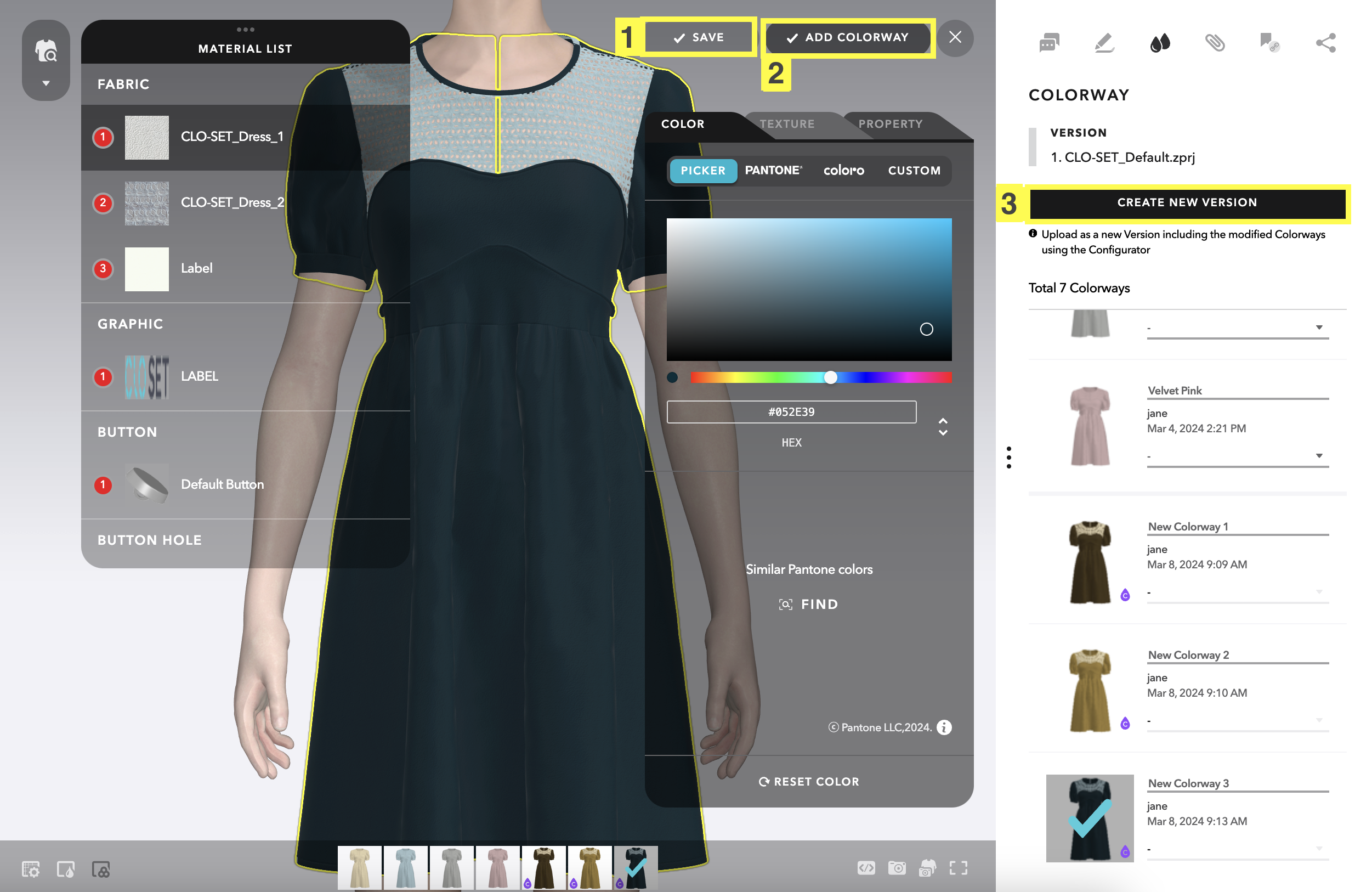
Explore CLO-SET’s 3D collaboration workspace.
What is a 3D collaboration platform?
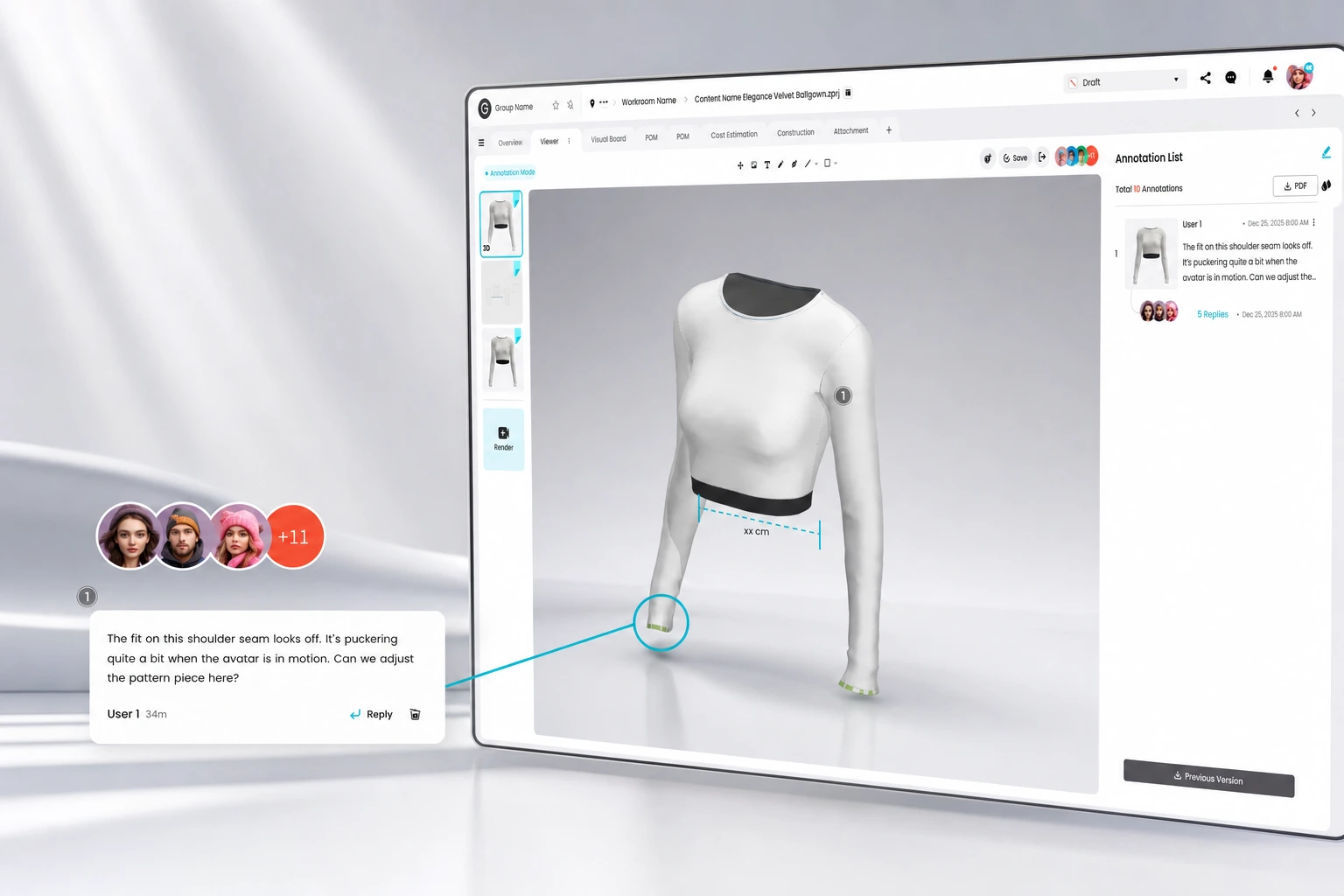
A 3D collaboration platform is a shared product development workspace where apparel teams can review 3D assets, manage comments and review status, coordinate vendor feedback, and maintain visibility across collections.
Leading 3D Collaboration and Management Platforms
The following platforms support different parts of 3D creation, review, collaboration, product development, and digital asset management for apparel teams.
| Platform | 3D Viewing / Review | Review & Approval Workflow | External / Partner Collaboration | Collection / Seasonal Visibility |
|---|---|---|---|---|
| CLO-SET | Web 3D viewing, comments and annotations | Content Workflow and Colorway Status; version history | Permissions depend on workspace level and role | Season, Workroom and Assortment organization |
| Style3D Cloud | Online 3D model review and comments | Shared feedback on design, colorways, prints and fit | Controlled sharing with team members and suppliers | Virtual and physical-showroom presentation with 360-degree views |
| VNTANA | 3D viewing and annotations | Review and Client Review states with role restrictions | Workspace Client and restricted-access roles | Projects, Showrooms and Variant Groups |
| Onbrand PLM | Confirm the required interactive 3D viewing with the vendor | Sample status, comments and approvals | Vendor Portal with sample communication and style/colorway quotes | Assortment Planning on Pro and above |
| Browzwear Stylezone | Web 3D review where a GLB is uploaded; pinned comments | Style status and version history | Moderator, Contributor and Reviewer comments; comments remain within their board | Boards, Collections and presentation mode |
| CLO | Desktop garment creation and simulation | Pattern and simulated-garment revision | Can be used with CLO-SET for shared review | Evaluate CLO’s garment-authoring tools and CLO-SET’s collection workspace as separate parts of the workflow |
| TUKA3D + TUKAStyleHub | Browser review of TUKA3D samples through StyleHub | Approvals and rejections recorded against a specific version | Role-based access for internal teams, vendors and customers | Style folders organized by brand, season, category, gender, garment type and fit |
| AIMS360 | Confirm the required interactive 3D viewing with the vendor | Sample tracking, fit comments and approval workflows | Supplier collaboration and contractor/factory orders | Season data, line sheets, assortments and season calendars |
| Fashion Cloud Digital Showroom | Product presentations; API support for 3D links | Customer selection and draft-order preparation | In-person or remote brand-to-retailer presentations | Collection presentations, selections and delivery drops |
| Adobe Substance 3D Reviewer | Browser and VR-based review | Comments, pinned feedback and resolved comments | Shared 3D review with an Adobe account | Confirm any required apparel collection or seasonal workflow separately |
CLO-SET supports cross-functional apparel teams that need to connect 3D creation, product review, vendor communication, and seasonal review in a shared environment. As a fashion product development platform, it brings together 3D garment assets, review comments, Workflow, Colorway Status, version management, and collection-level organization across multiple stakeholders.
CLO 3D focuses on garment creation and simulation, while CLO-SET supports product development collaboration around the resulting digital assets, including review, sharing, version management, comments, and workflow coordination.
Style3D Cloud describes online 3D model review, shared comments and feedback on design, colorways, prints and fit. Test the review and decision process with your intended users and files.
In a VNTANA case example, an unnamed footwear brand managing more than 10,000 3D SKUs reportedly halved its sell-in timeline and reduced sample production by 40%. These are vendor-reported outcomes for that deployment, not a benchmark for all fashion brands.
Onbrand PLM is relevant when a team’s collaboration bottleneck sits inside product data, tech packs, and development cycle management.
CLO, Browzwear and TUKA3D document garment creation and simulation workflows. For shared review, compare CLO-SET, Stylezone and Tukatech’s current TUKAStyleHub against the permissions, version context and decisions your team needs.
Next-Gen Workflows: AI-Assisted Product Development
AI-assisted workflows can accelerate the early stages of digital product development. CLO’s AI Pattern Drafter (Beta), for example, can help designers generate initial patterns from sketches or image-based inputs and bring those concepts into a 3D garment workflow (CLO).
From there, teams can use CLO-SET to share the digital sample, collect comments and review feedback, manage versions, and coordinate decisions across product development stakeholders. That feedback can then inform the next iteration in CLO, creating a more connected workflow from early pattern creation to sample refinement and approval.
In practice, this creates a connected cycle: initial pattern and 3D sample creation in CLO, collaborative review in CLO-SET, and continued sample iteration in CLO.
How Top Brands Are Scaling Digital Product Creation
Large apparel brands are scaling digital creation by replacing physical material rounds and setting measurable digital development targets.
adidas reported in 2014 that virtual sampling helped it avoid close to 1.5 million samples during 2010–2013. In its 2024 annual report, HUGO BOSS stated a target of developing more than 90% of products digitally by 2025 and reported an actual share of around 65% for 2024. The target should not be read as an achieved result.
These examples show why 3D collaboration is becoming a management issue, not only a design issue. Once a brand creates more digital garments, it needs ways to organize reviews across departments, vendors, seasons, categories, and regions. A folder of 3D files is not enough. Teams need status, comments, permissions, review and approval visibility, and range-level context.
Dedicated 3D collaboration platforms can provide more garment-specific context than generic task tools when the garment asset itself is the center of the decision. General task tools can help teams assign tasks, while apparel-focused platforms are designed to keep garment context, fit comments, construction notes, colorway review, and vendor handoff information closer to the product development workflow.
For sample review coordination between product and sourcing, a practical approach is to use the 3D asset as the shared reference point. Product teams should define which details require approval, sourcing teams should route vendor questions back to the same asset, and merchandising teams can review range decisions using the latest relevant garment versions and review status.
FAQS
Frequently asked questions
What are the best 3D design collaboration platforms for brand teams?
Brand teams should evaluate platforms based on shared 3D review, review status, vendor collaboration, version management, and collection-level visibility across the product development workflow.
Which tools provide clearer vendor feedback?
Shared 3D workspaces can help make vendor feedback clearer by keeping communication and review context connected to the same digital garment.
How can a collaboration tool cut down email threads in collection planning?
A collaboration tool can reduce dependence on email threads by making the 3D asset the shared reference for comments, versions, review status, and vendor questions. This can reduce reliance on outdated screenshots, forwarded attachments, or disconnected chat messages.
What are the best practices for sample review coordination between product and sourcing?
A practical approach is to keep fit comments, construction notes, sourcing questions, vendor replies, and review status connected to the same 3D asset context. Teams should also define review stages, assign clear owners, and separate decisions that need a physical sample from decisions that can be resolved digitally.
Source note
Feature descriptions in this comparison are based on publicly available information from each vendor’s official website, Help Center, or product documentation, reviewed in September 2026. Product capabilities may vary by plan, configuration, region, or subsequent product updates. Where a capability could not be confirmed in the reviewed official materials, it is described as “not verified” rather than assumed to be unavailable.
Official sources reviewed:
- CLO-SET comments, workflow and versions
- Style3D Cloud
- VNTANA permissions and review states
- Onbrand Vendor Portal and plans
- Stylezone Style page and comments
- CLO Simulation
- TUKAStyleHub
- AIMS360 apparel software
- Fashion Cloud Showroom guide and integration API
- Adobe Reviewer getting started and comments
Disclaimer: This comparison reflects official vendor documentation available at the time of review. Features, availability, and terms may change; verify current details on each vendor’s official website before making a decision.