5 PLM and Product Development Platforms Compared for 3D Sample Signoff and Launch Readiness
Compare five apparel workflow platforms across product data, 3D review, sample decisions, approval reporting, and launch readiness; choose visual collaboration, a flexible data layer, or enterprise PLM according to the governance your team needs.
Choose the platform model before choosing a platform
- CLO-SET: CLO-SET is relevant for fashion product development teams that need to directly review 3D garments and 2D patterns while connecting Content Versions, reusable Libraries, Annotations, Comments, Workflow, Tech Pack information, and Collection Review in the same environment.
- Airtable: Airtable is relevant when teams need a flexible data and operations layer for product data, workflows, dashboards, roadmaps, and launch management. Apparel-specific 3D review and Tech Pack workflows may require separate tools or implementation.
- Lifecycle: Lifecycle is relevant for teams that want to manage Tech Packs, samples, suppliers, costing, purchase orders, and shipment activities within a Fashion PLM record. If 3D garment review or a specific CLO workflow is important, teams should confirm the required capabilities directly.
- Propel: Propel is relevant for organizations where engineering change control, BOM governance, CAD workflows, and ERP or manufacturing integrations are important. Teams should validate apparel-specific sample review, Tech Pack, and collection workflows for their use case.
- Surefront: Surefront is relevant for retail and wholesale teams that want to connect product development, merchandising, vendor collaboration, and PLM/PIM workflows. Surefront supports 3D model files and commenting. Teams should confirm whether its 3D review capabilities meet their specific garment-review requirements.
No platform category is automatically right for every governance model. Comments and statuses coordinate work. Formal approvals require defined approvers, evidence, and reporting rules.
Five platforms compared
| Platform | Intended fit | 3D review and asset model | Product data and tech packs | Decisions and approval evidence | Launch visibility and system boundary |
|---|---|---|---|---|---|
| Airtable | Flexible workspace for connected product workflows, roadmaps, launches, and feedback | Apparel-specific 3D review requires a separate tool or implementation. | Shared product-workflow data | Built-in automation supports coordination; define approval requirements during implementation | Connect roadmap, launch and feedback work; design apparel CAD, ERP and tech-pack handoffs for your process |
| CLO-SET | Fashion product-development collaboration centered on browser-based 3D garment and 2D pattern review, product data, asset organization, and collection review | Native browser-based 3D garment and 2D pattern review, Content Versions, reusable Libraries, Annotations, Comments, Search, and shared assets | BOM/POM and cost tabs; Excel/PDF tech packs and POM CSV | Comments, annotations and workflow states; define and test approval evidence | Assortment, workflow filters and Line Sheet; identify downstream transaction owners |
| Lifecycle | Fashion PLM for product specifications, suppliers, costing and production | 3D garment review and specific CLO workflows should be validated for the intended use case. | Tech packs, BOMs, measurements, revisions and supplier collaboration | Sample rounds connect measurements, annotated feedback, vendors and approvals | Collection planning, cost scenarios, tasks, purchase orders and shipment tracking connect to the product record; validate required integrations |
| Propel | PLM for structured product and change workflows | 2D/3D CAD visual collaboration is documented; apparel-specific garment review workflows should be validated for the intended use case. | BOMs, item revisions, documents and cost rollups | Configurable workflows and change control; test required approvers, access and decision history | Reports, dashboards and project tasks; validate apparel-specific sample, tech-pack and collection requirements |
| Surefront | Retail and wholesale PLM, PIM, CRM, sourcing, vendor, and factory collaboration | Supports 3D model files and commenting; teams should confirm whether its 3D review capabilities meet their specific garment-review requirements. | Product details, specifications, BOMs, costing, sample revisions, reusable tech-pack templates, and chat history | Custom workflows for milestones, reviews, and approvals; sample comments, revision notes, event logs, and audit trails are documented | Product milestones, ownership, vendor updates, production readiness, line-sheet work, and reporting support retail product development; specific CAD, 3D, and ERP handoffs need validation |
CLO-SET for 3D sample review and product-development context
CLO-SET can serve as the primary workspace when a digital sample decision begins with a garment, pattern, render, or colorway that reviewers need to inspect in a browser. The 3D Viewer supports garment inspection through rotation and zoom. The 2D Pattern Viewer gives pattern stakeholders a separate review surface. Quality Render, Strain Map, annotations, comments, and 3D Quality Check add review context around the content.
Use Content Version Upload for revisions of the same content record. Linked content represents a separate parent/child relationship. Libraries and search help locate reusable assets; check that a decision points to the actual reviewed revision.
CLO-SET connects 3D sample review, asset organization, product context, and collection review for teams that need those capabilities in the same platform. The team reviews the garment where the garment is visible. The feedback stays with the content. The product record can then carry the related tech-pack and workflow context.
Keep the product record and the decision record together
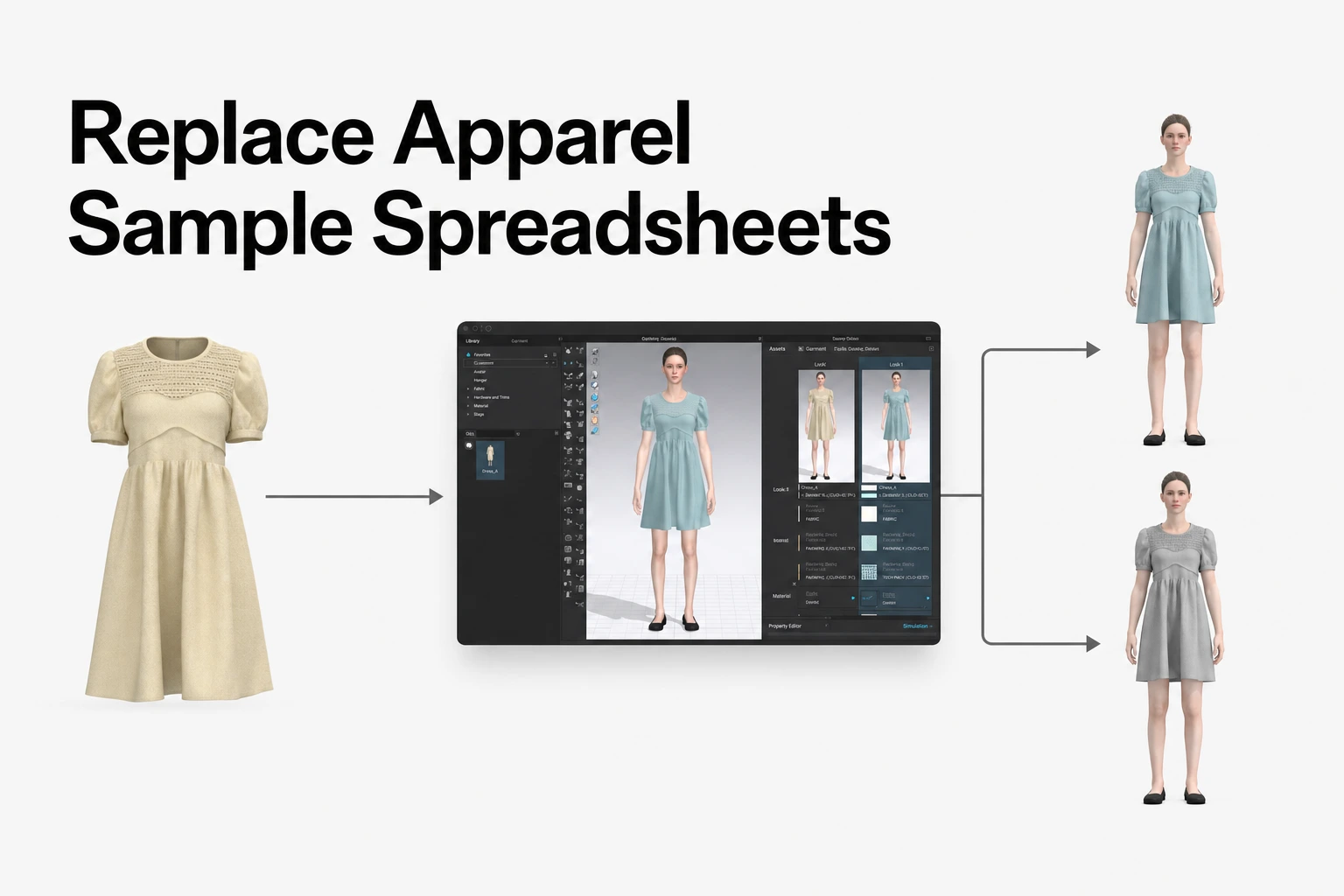
A spreadsheet process breaks when the product record and the decision record live in separate places. One file holds measurements. Another holds comments. A third lists sample status. A fourth becomes the launch tracker. The team then spends time reconciling fields instead of deciding what the style needs next.
Set one primary record for each style. That record needs a style identifier, season, owner, supplier or sourcing owner, current sample version, current decision stage, required decision date, tech-pack status, and exception reason. Add links to the reviewed 3D content and the working product documents. Do not copy those links into separate approval trackers.
CLO-SET’s new Content Page organizes product information into tabs described in the Web Tech Pack guide. Excel/PDF tech pack exports and POM CSV serve different handoff needs. Check the exported fields and the receiving system using a real style.
Lifecycle, Propel, and Surefront place more of the structured product record inside a PLM model. Lifecycle connects apparel product data with tech packs, samples, suppliers, costs, purchase orders, and delivery. Propel emphasizes revision-controlled items, BOMs, documents, and controlled changes. Surefront connects retail product details, BOMs, tech packs, revisions, costing, vendors, and product-development milestones.
Airtable can hold a useful operating record when the team designs the fields, relationships, views, and automations itself. That flexibility also means the team must define how a garment version, BOM change, supplier feedback, and decision status stay synchronized.
Review the exact 3D revision before recording a sample decision
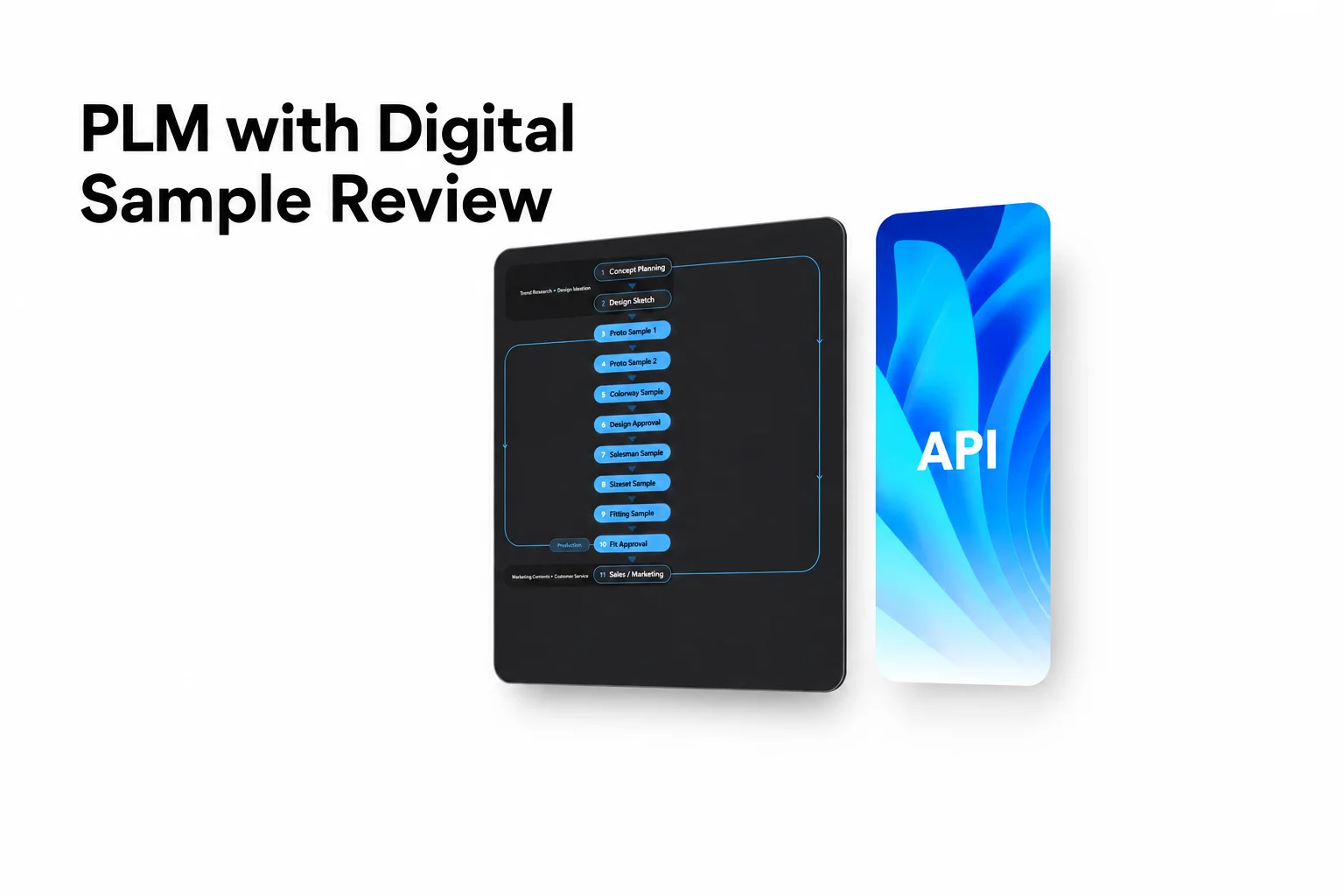
A sample decision is reliable only when the team can identify the item reviewed. The reviewer needs the garment or pattern artifact, its version, the feedback location, and the decision owner in the same working context.
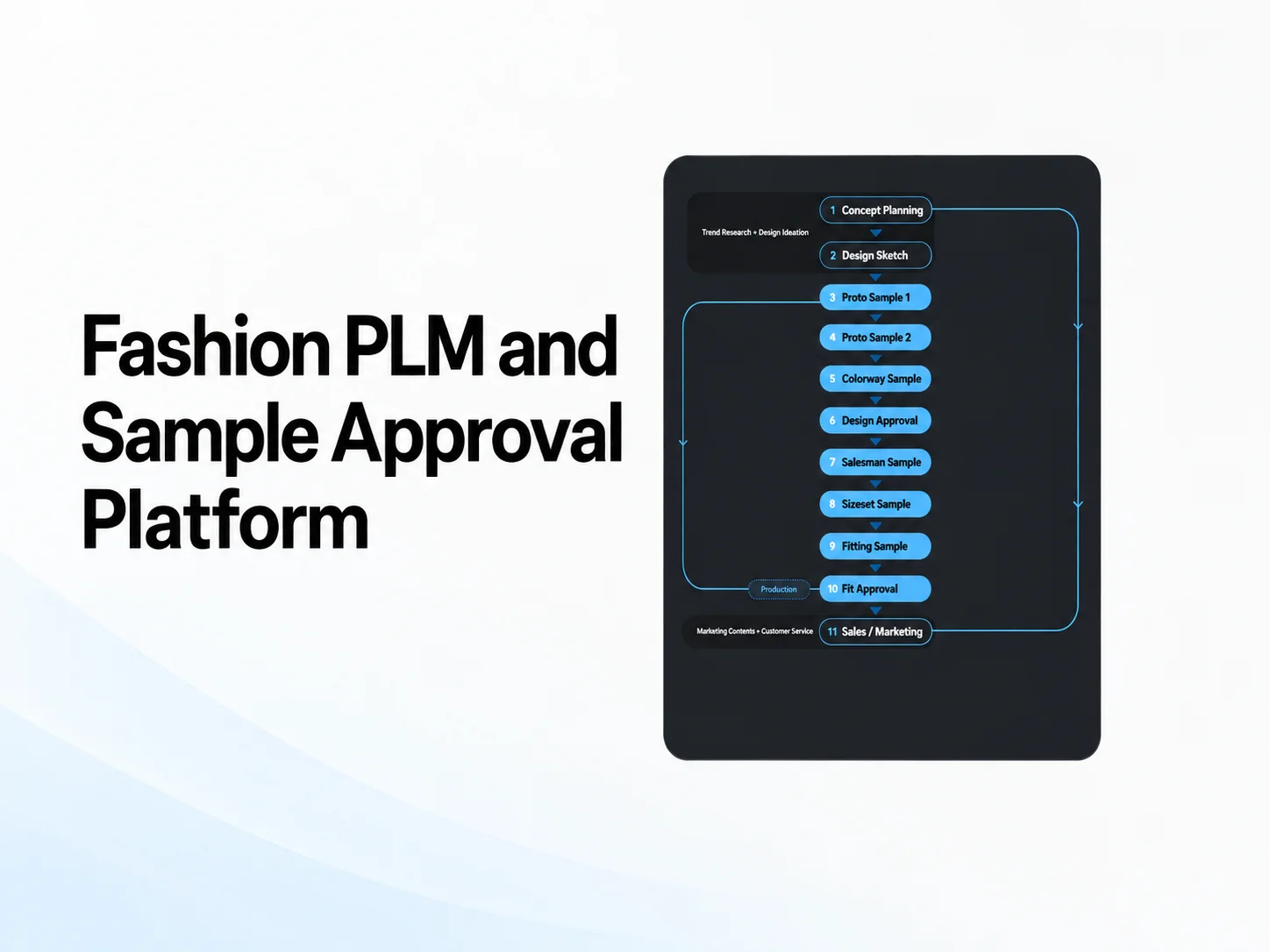
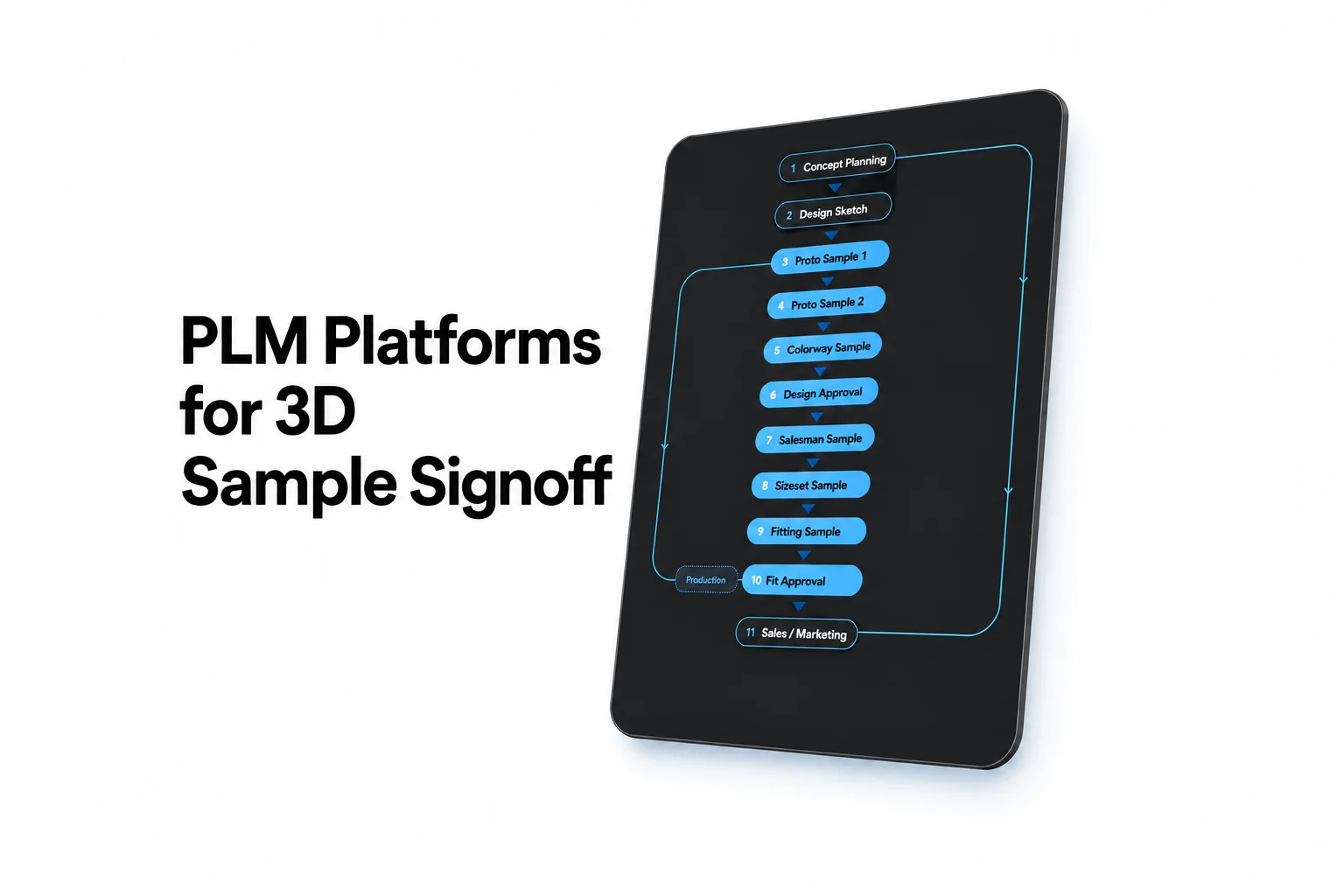
CLO-SET supports this sequence:
- A designer or pattern maker creates the garment in CLO.
- The content moves into CLO-SET for browser-based 3D or 2D pattern review.
- Reviewers use annotations and comments to place feedback against the content.
- The team uploads the next revision using Content Version Upload.
- The style moves through the configured workflow state.
- The team checks that the product-data tabs, assortment and handoff files reflect the intended revision.
This workflow is different from a generic attachment process. The garment, its review feedback, its version relationship, and its fashion product-development context are connected inside the platform.
Propel provides visual review for mechanical and electrical CAD formats, PDFs, and images. Its review and revision model fits controlled product changes. Propel’s visual collaboration is designed around mechanical and electrical CAD workflows, so teams should validate apparel-specific garment review requirements during evaluation. Surefront supports 3D model files and commenting. Teams should confirm whether its 3D review capabilities meet their specific garment-review requirements. If native 3D review or a specific CLO integration is required, confirm those capabilities directly with Lifecycle during the pilot. Airtable can organize records and attachments; teams should validate how apparel-specific 3D review would be handled for their intended workflow.
Treat comments, statuses, and formal approvals as different records
A comment says what someone observed. An annotation identifies where they observed it. A workflow status shows where a style sits in a process. A formal approval identifies the authorized approver, the approved object or version, the decision date, and the evidence retained for that decision.
CLO-SET provides comments, annotations, Workflow & Status, custom workflow states, notifications, activity logs, and review surfaces. These tools centralize communication and status coordination. They do not automatically mean that a formal approval has been completed.
Teams that use CLO-SET for digital sample signoff should define the evidence required at each milestone. A practical decision record includes:
- The style and season.
- The reviewed content version.
- The decision type, such as fit review, construction review, colorway review, or sample release.
- The named owner and required approver.
- The decision date.
- The outcome and required follow-up.
- The next workflow state.
- The link to any downstream PLM, ERP, sourcing, or production record.
Lifecycle connects sample-round feedback and approval history to the product. Propel documents configurable workflows and change control. Surefront describes milestone workflows, reviews, approvals, event logs and audit trails. Test the required approver, version, time and retention fields in each proposed setup.
Airtable supports configurable statuses and automation. A formal approval model depends on the base design, permissions, automations, and reporting rules the team implements.
Build launch readiness from milestones, owners, and exceptions
Launch readiness is not a single status. It is a view of whether each style has completed the decisions and handoffs required for its next business stage.
Create a launch-readiness view with fields for the current sample revision, tech-pack completeness, BOM status, measurement status, construction status, sample decision, sourcing owner, supplier response, target date, workflow state, and blocker. Assign one owner for each incomplete field. Use an exception view for styles that have passed a due date, lack a decision owner, or have a decision that does not match the current content version.
CLO-SET supports this work through Assortment, Workflow & Status filters, Line Sheet, Visual Board, and presentation workflows. Assortment provides a room for reviewing multiple styles together. This is useful when merchandising, design, product development, and sourcing need to inspect a line rather than a single garment.
Lifecycle connects collection work, costs, purchase orders and shipment tracking. Propel provides reports, dashboards, project tasks and cost rollups. Surefront describes product milestones, ownership, vendor updates and reporting. Validate the launch view your team needs.
A launch view does not complete ordering, ERP transactions, production release, or supplier execution by itself. The team must identify which system owns each downstream transaction and pass the approved product data to that system.
Compare adoption and governance before migration
Airtable offers a configurable operational layer for teams that need flexible planning and dashboards. The trade-off is that teams must design their own apparel data model, decision evidence, workflow rules, and integration boundaries.
CLO-SET fits teams that want contributors to review fashion content directly in a browser. Its documented roles include Group Admin, Company Admin, Brand Admin, Collaborator, Editor, and Viewer. When sharing a Workroom or Style, eligible Group Members can grant Viewers upload and download options. According to the CLO-SET Help Center, permissions can be set for Space, Room, Style, and Content controls.
For every shortlisted platform, define the implementation scope: roles, data migration, supplier access, integrations and the owner of each transaction.
Enterprise control is valuable when the organization requires formal change governance, controlled BOM structures, supplier processes, or connected ERP operations. It adds configuration work. A visual collaboration platform can support garment review from the 3D or pattern artifact. It does not replace enterprise governance by itself.
Pilot one style before selecting an architecture
Use one style to test the platform model. Do not begin with a full-season migration.
| Pilot test | What to verify |
|---|---|
| One 3D revision | Can reviewers identify the garment version, inspect it, and attach feedback in context? |
| One tech-pack change | Can the BOM, measurement, construction, or specification update remain connected to the correct style? |
| One sample decision | Can the team distinguish a comment, a status change, and a completed approval event? |
| One sourcing handoff | Can the source system, owner, supplier-facing information, and required export be identified? |
| One launch report | Can product and sourcing see incomplete milestones, overdue work, owners, and blockers without rebuilding the report in a spreadsheet? |
| One external collaborator | Can permissions restrict access to only the styles, files, and actions that collaborator needs? |
Score each platform against the evidence your team needs, not against a generic feature list. A platform should pass the test with your actual garment revision, your actual tech-pack change, and your actual decision owners.
FAQS
FAQ
Does a workflow status equal approval?
No. A workflow status communicates progress through a defined process. A formal approval requires the approval rules, authorized role, approved object or version, decision outcome, and retained evidence that your organization requires.
When should a lightweight data layer coexist with PLM?
Use a configurable data layer when teams need flexible planning, intake, dashboards, or cross-functional operating views. Keep the enterprise PLM as the source for controlled product records, changes, formal approvals, BOM governance, or downstream integrations when those functions are required.
Which spreadsheet data should migrate first?
Migrate the fields needed to run the current workflow: style identifier, season, owner, current sample version, workflow state, due date, blocker, supplier or sourcing owner, and links to the reviewed content and tech pack. Do not begin by migrating historical fields that no team uses to make a current decision.
How should teams handle legacy 3D versions?
Keep the current version identifiable. Preserve prior versions when they explain a decision or change. Link the current decision to the reviewed revision. Move reusable assets into a controlled library structure instead of leaving duplicate copies across email, local folders, and spreadsheets.
Use CLO-SET for connected 3D product-development review
CLO-SET combines apparel review, content versions, product information, comments, workflow states and collection views. Evaluate those functions alongside the required approvals, purchasing, production and ERP connections. If the workflow still requires capabilities such as formal approvals, purchasing, production execution, or ERP transactions, keep or add the system that owns those processes.
Explore CLO-SET
Review connected 3D product-development workflows and platform capabilities.
Feature availability, pricing and plan conditions can change. Verify each vendor’s current documentation before selecting a platform.
Source note
Feature descriptions in this comparison are based on publicly available information from each vendor’s official website, Help Center, Support Center, or product documentation, reviewed in September 2026. Product capabilities may vary by plan, configuration, region, or subsequent product updates. Where a capability could not be confirmed in the reviewed official materials, it is presented as something to validate rather than assumed to be unavailable.
Official vendor sources reviewed:
- Airtable: Product Lifecycle Management, official product/workflow documentation\
- CLO-SET: Review Design, 3D Viewer, Web Tech Pack Overview, Content Version Upload, Linked Contents, Permission, 2026 Web Tech Pack / POM updates\
- Lifecycle: Platform, Fashion Sample Management\
- Propel: PLM, Visual Collaboration\
- Surefront: Product Lifecycle Management, official Support documentation and 2026 Release Notes for 3D model file and commenting capabilities