Vendor and Brand 3D Sample Approval Platforms: Comparing Tech Pack Handoffs, Asset Versioning, and Feedback Workflows (2026)
Compare 3D sample approval and tech pack platforms for vendor teams and fashion brands. Evaluate browser-based 3D review, tech pack synchronization, version tracking, and partner feedback workflows to replace email and spreadsheet handoffs.
Key takeaways
- Digital sample coordination requires connected product data: Managing digital sampling across global supply chains involves aligning 3D garment visualization, technical specifications, version lineage, and multi-stakeholder feedback rather than treating 3D assets in isolation.
- Tech pack workflows reflect different platform architectures: WFX PLM integrates tech pack data into broader lifecycle and sourcing workflows, while CLO-SET keeps technical product information close to the 3D garment itself, connecting Web Tech Pack data with digital sample review, version management, and cross-functional collaboration.
- Asset versioning models determine review accuracy: Platforms manage revisions and reusable product assets through different mechanisms. CLO-SET uses Content Version Upload to manage garment revisions, while Linked Contents separately manages parent-child relationships between related Contents. Style3D Cloud provides centralized digital asset repositories, while WFX PLM supports documented version-related product-data workflows such as versioned tech packs and version-controlled artwork.
- Review statuses do not replace formal sign-off governance: While review surfaces, annotations, and status tags centralize communication, digital comments and workflow statuses do not automatically constitute formal, completed approval records or guarantee specific lead-time reductions.
The breakdown of manual sample handoffs: version gaps and communication friction
Coordinating apparel samples between vendor teams and brand product offices has historically relied on fragmented communication channels. In traditional sampling workflows, a physical prototype or a static digital render is photographed, annotated in desktop image editors, and sent through email threads alongside detached spreadsheet tech packs.
This manual exchange creates specific operational bottlenecks:
When feedback is unlinked from the core design asset:
- Version ambiguity: Fit comments reference earlier file revisions, leading vendors to modify pattern components that have already been revised in newer iterations.
- Data fragmentation: Measurement revisions and BOM changes made in spreadsheets fail to update across active technical packages, causing discrepancies during grading and costing.
- Review delays: Brand reviewers without native CAD desktop licenses rely on static screenshots, missing strain visualization, pattern alignment, and internal construction details.
To resolve these handoff gaps, apparel organizations evaluate specialized 3D collaboration platforms and modern Product Lifecycle Management (PLM) systems.
Core evaluation criteria for 3D sample approval and product data platforms
Evaluating platforms for digital sample review and vendor-brand handoffs requires examining five technical and operational pillars.
1. Browser-based 3D review and visual annotation
Browser-based review can help product teams and external partners inspect digital samples without requiring every stakeholder to work in the same desktop creation environment. Review capabilities vary by platform, including 3D viewing, visual annotation, comments, and platform-specific garment inspection tools.
2. Web tech pack integration and data handoff
A connected technical package links visual 3D assets to manufacturing specifications. Evaluation focuses on how platforms structure BOM items, measurement tables, construction callouts, and data exports (such as Excel, PDF, or CSV) for downstream production.
3. Asset version lineage and library governance
Digital product development requires clear relationships between base patterns, material libraries, and seasonal iterations. Key considerations include content version history, relationships between related assets, material and trim libraries, and component reuse.
4. Multi-stakeholder feedback coordination and status tracking
Vendor-brand collaboration depends on how each platform connects comments, visual feedback, review status, and workflow information to the product being reviewed. Because workflow models differ by platform, these capabilities should be evaluated based on each system’s documented approach rather than against a single standardized approval model.
5. Access and external collaboration controls
Evaluation focuses on how each platform manages internal roles, external users, supplier access, sharing permissions, and collaboration boundaries.
Side-by-side platform comparison matrix
The following table summarizes documented capabilities across five platforms: CLO-SET, Style3D Cloud, Browzwear ecosystem (VStitcher + Stylezone + Open Platform), WFX PLM, and Centric PLM.
| Evaluation Dimension | CLO-SET | Style3D Cloud | Browzwear Ecosystem (VStitcher + Stylezone + Open Platform) | WFX PLM | Centric PLM |
|---|---|---|---|---|---|
| Web Tech Pack & Product Data | Overview, BOM, Measurement, and Construction sections in CLO-SET Web Tech Pack; Excel Tech Pack and CSV exports | Single-source repository for technical specs accessible from any device according to Style3D Cloud | VStitcher print-ready tech pack formats; Open Platform connects tech packs to PLM/ERP systems according to Browzwear | Live tech packs with construction, measurements, BOM, trims, and supplier notes according to WFX PLM Blog | End-to-end PLM single source of truth; create, share, price, and launch products directly according to Centric PLM |
| Asset Versioning & Library Model | Content Version Upload; Linked Contents parent-child structures; Company and Component Libraries for patterns, fabrics, and trims | Digital Textile Repository with fabric physical parameters; asset search in Marketplace according to Style3D Cloud | Centralized fabrics, avatars, trims, and design data with version control across the Browzwear ecosystem according to Browzwear Open Platform | Product & Material Library, versioned tech packs, and version-controlled artwork according to WFX PLM Features | Drag-and-drop integrated PLM library access; automated change impact computing according to Centric Software |
| Documented Review Surfaces | 3D Viewer, 2D Pattern Viewer, Quality Render (Depth Peeling), Strain Map, Annotation, Comment with AI Translation, Workflow & Status, and 3D Quality Check according to CLO-SET | Browser-accessible workspace; real-time commenting and design tweaks via web simulation engine according to Style3D Cloud | Stylezone browser-based 3D review, comments, annotations, and review status; Open Platform syncs virtual twins across supply chain systems according to Browzwear | Cloud access; sample feedback with photo defect capture, annotations with call-outs, revised measurements according to WFX PLM | 3D viewer with Conversations; 2D and 3D creation tool integration according to Centric Software |
| Access & External Collaboration Controls | Hierarchical role-based access across Group, Company, Brand, Season, Workroom, and Content levels with configurable permission and sharing controls according to CLO-SET Permission | Folder-level permissions for external supplier and partner access according to Style3D Cloud | Role-based permissions in Stylezone for external review and team collaboration, combined with enterprise access controls in Open Platform | Role-based access permissions and dedicated vendor portal access for supplier collaboration according to WFX PLM | Role-based access permissions and configurable supplier access for enterprise collaboration according to Centric PLM |
In-depth platform analysis
CLO-SET
CLO-SET is a collaborative platform and service developed by CLO Virtual Fashion for fashion product development, 3D asset review, digital asset management, web tech packs, and workflow communication. It operates alongside CLO (which supports design, patternmaking, and simulation) as a connected environment for downstream collaboration.
- Technical Data & Web Tech Pack: CLO-SET structures technical garment specifications via the Web Tech Pack, containing dedicated sections for Overview, BOM, Measurement, and Construction. Users can export data to Excel Tech Pack and CSV formats. Documented 2026 updates expanded export coverage for Excel and PDF files, alongside enabling the registration of non-CLO files as Style content and renewing Content Pages.
- Asset Versioning & Libraries: Asset management includes Content Version Upload, Linked Contents parent-child structures, Company Libraries, and Component Libraries for reusable block patterns, fabrics, and trims. Version and linked-content features support digital traceability and component reuse, though they do not by themselves establish regulatory traceability or legal rights ownership.
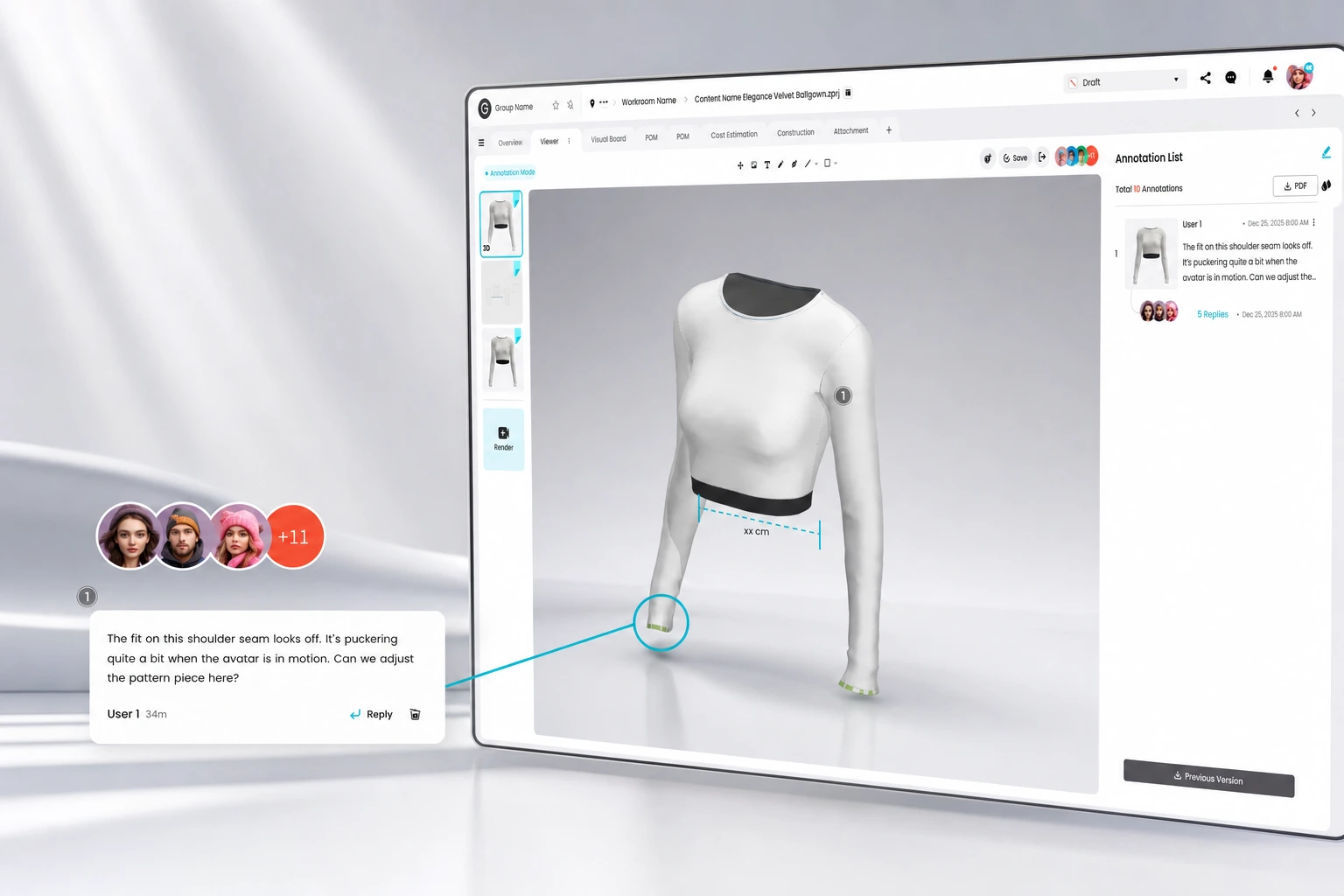
- Review Tools: Documented review surfaces include a 3D Viewer, 2D Pattern Viewer, Quality Render with Depth Peeling, Strain Map, visual Annotation, contextual Comment with AI Translation, Workflow & Status tracking, and 3D Quality Check. Comments, annotations, and status indicators centralize feedback across teams, though they do not automatically constitute a formal, completed approval record.
- Roles & Governance: Access is governed by a hierarchical structure (Group → Company → Brand → Season → Workroom → Content) according to CLO-SET Permission rules. Documented roles include Group Admin, Company Admin, Brand Admin, Collaborator, Editor, Viewer, and Group Operator (a console-only role for IT and finance administration). Viewer upload and download permissions can be configured per implementation via Invite / Share settings.
Style3D Cloud
Style3D Cloud is a collaborative digital asset management platform designed for managing and sharing 3D garments, fabrics, patterns, and digital fashion assets across distributed teams.
- Technical Data & Review: According to Style3D Cloud, the platform introduces a browser-accessible workspace that serves as a single-source repository for technical specifications accessible across devices. It incorporates a simulation engine operating directly on the web with AtelierSimulator integration, allowing pattern engineers and product managers to view, comment on, tweak, and approve designs in real time.
- Asset Management: According to Style3D Cloud, the platform features a Digital Textile Repository that categorizes assets created through fabric simulation technologies, maintaining physical parameters from its fabric database during remote downloads.
- Governance: Corporate administrators can search global assets in its Marketplace and set folder permissions for external manufacturing partners according to Style3D Cloud.
Browzwear ecosystem (VStitcher + Stylezone + Open Platform)
The Browzwear ecosystem combines VStitcher for 3D garment creation and development, Stylezone for browser-based collaboration, and Open Platform for enterprise supply chain integration.
- 3D Garment Creation & Tech Packs (VStitcher): VStitcher supports 3D garment creation, pattern modification, digital sample creation, and tech pack generation. Its VStitcher Colorway Automation Extension stores color combinations in print-ready tech pack formats according to Browzwear.
- Browser Review & Feedback (Stylezone): Stylezone provides a browser-accessible environment where internal teams and external partners can review 3D garments, leave comments, add visual annotations, and track review status without needing desktop CAD licenses.
- Enterprise Integration (Open Platform): According to Browzwear Open Platform, Open Platform connects approved 3D assets, digital samples, and tech pack data into external PLM, ERP, and production systems automatically.
WFX PLM
WFX PLM is a 100% cloud-based Product Lifecycle Management solution designed specifically for fashion brands, apparel manufacturers, and sourcing teams.
- Live Tech Packs & Data Model: According to WFX PLM Blog, the platform features live tech packs that centralize construction, measurement specs, grading tolerances, BOM, trims, and supplier notes in one shared location rather than static spreadsheets. Data models treat fashion attributes like colorways, size runs, and trims as native objects.
- Sample Management & Inspections: The Apparel Sample Feedback and Approval module allows teams to approve, reject, or provide feedback directly on samples, attaching comments, images, annotations with call-outs, and revised measurements to the style according to WFX PLM. Vendors can directly enter sample information or upload sample photos using the 'WFX Click' mobile app according to WFX PLM.
- Architecture & Deployment: According to WFX PLM Blog, the software ships in modular components, allowing teams to automate specific process areas incrementally, with an open REST API for external connectivity and automatic cloud updates.
Centric PLM
Centric PLM is an enterprise product lifecycle management platform developed by Centric Software for fast-moving consumer industries, apparel brands, and retailers.
- Enterprise Product Data: According to Centric Software, Centric PLM acts as an actionable single source of truth for merchandise planning, product development, sourcing, and quality management. It provides drag-and-drop integrated PLM library access for SKU and feature planning according to Centric PLM.
- 3D Workflow & Change Management: Centric 8 PLM version 7.3 enhanced 3D capabilities by adding Rhino file connectivity and Conversations in its 3D viewer for collaborative workflows according to Centric Software. Engineering Change Management features automatically compute and flag the impact of product changes across development lines.
- Scale & Collaboration: The platform connects product teams and suppliers, scaling from 10 to 20,000 users according to Centric PLM.
End-to-end workflow: from 3D asset export to milestone approval
Managing a digital garment review requires structuring handoffs between technical designers, vendor pattern makers, and brand merchandisers.
- Asset Export and Tech Pack Initialization: The vendor or internal developer uploads the completed 3D file to the collaborative workspace. In CLO-SET, non-CLO files can also be registered as Style content. The Web Tech Pack compiles BOM components, construction details, and measurement charts associated with the style.
- Visual Inspection and Fit Annotation: Brand technical designers review the virtual prototype. Using the 2D Pattern Viewer, Strain Map, and visual callouts, reviewers can inspect pattern geometry and distortion between the 2D pattern and the simulated 3D garment before deciding whether further garment iteration is required. Comments can use AI translation to bridge language differences between cross-border teams.
- Specification Reconciliation: Revised measurements or component substitutions are logged against the active product record. In systems like WFX PLM, inspection callouts and measurement revisions attach directly to the style record in the live tech pack. In CLO-SET, updated specifications can be exported to Excel Tech Pack or PDF formats for vendor handoffs.
- Version Lineage and Status Progression: If structural pattern alterations are required, the revised garment can be uploaded as a new Content Version to keep garment revisions organized. Parent-child relationships between related Contents are managed separately through CLO-SET’s Linked Contents feature. Status flags communicate progression through designated workrooms, keeping merchandising and sourcing partners aligned on the current iteration.
Vendor and brand implementation strategies: permissions and adoption
Enterprise collaboration requires separating administrative governance from external partner review:
- Hierarchical isolation: In CLO-SET, permissions cascade from Group and Company levels down to Brand, Season (Line), and Workroom levels according to Permission settings. External vendors can be assigned Viewer or Collaborator roles within specific workrooms, with configurable upload and download permissions via Invite / Share controls to protect proprietary block patterns.
- Folder permissions: According to Style3D Cloud, folder permissions can be established to govern external vendor access across global asset repositories.
- Vendor portals and mobile inputs: In WFX PLM, vendors can directly input sample data and upload photo defect captures via mobile apps, isolating supplier data entry to active sample requests.
Decision framework: collaborative 3D workspaces vs. enterprise PLM
Apparel organizations choose between native 3D collaboration platforms and enterprise PLM suites based on their existing software ecosystem, team size, and primary workflow requirements.
- Browser-Based 3D Review & Visual Feedback
- Shared Digital Assets & Line Assortment Visibility
- Lightweight Vendor Workrooms & External Collaboration
- Evaluate: CLO-SET / Style3D Cloud
- Full Collection Planning & Costing
- End-to-End Sourcing & Compliance
- Complex Enterprise ERP/PLM Scale
- Evaluate: WFX PLM / Centric PLM
- When to prioritize collaborative 3D platforms (e.g., CLO-SET, Style3D Cloud):
- Workflows center around browser-based 3D garment review, visual feedback, and shared digital assets across teams and suppliers.
- Organizations need lightweight, role-governed workspaces or workrooms to share virtual prototypes and technical specifications without deploying full enterprise PLM infrastructure.
- Teams require specialized 3D collaboration tools directly linked to digital assets. Specific inspection and review capabilities vary by platform (for example, CLO-SET provides 2D pattern inspection, Strain Map, and Quality Render with depth peeling).
- When to prioritize enterprise PLM systems (e.g., WFX PLM, Centric PLM):
- Organizations require broad, end-to-end lifecycle governance covering merchandise financial planning, complex fashion costing, supply chain compliance, and factory purchase order execution.
- Sourcing teams require native sample inspection modules that capture physical factory defect photos alongside 3D assets across thousands of SKUs.
- Contact vendor for enterprise tier pricing when scoping enterprise-wide PLM deployments.
Source note
Feature descriptions in this comparison are based on publicly available information from each vendor’s official website, Help Center, or product documentation, reviewed in September 2026. Product capabilities may vary by plan, configuration, region, or subsequent product updates. Where a capability could not be confirmed in the reviewed official materials, it is described as “not verified” rather than assumed to be unavailable.
Official sources reviewed:
- CLO-SET official Help Center / product documentation
- Style3D Cloud official product documentation
- Browzwear official VStitcher, Stylezone, and Open Platform documentation
- WFX PLM official product documentation
- Centric PLM official product documentation
FAQS
Frequently asked questions
How do 3D collaboration platforms keep feedback out of scattered email chains?
3D platforms centralize visual and technical feedback by attaching comments, annotations, and measurement revisions directly to the digital style asset. In CLO-SET, reviewers can add visual annotations in the 3D and 2D Pattern Viewers, while AI-powered translation is available for comments to support cross-language collaboration. In WFX PLM, sample feedback, call-out images, and measurement changes are logged directly against the style record in the live tech pack, eliminating the need to reconcile feedback across disconnected email threads.
What technical data is included in a Web Tech Pack?
A Web Tech Pack compiles the manufacturing specifications necessary to produce a garment. In CLO-SET, the Web Tech Pack contains dedicated sections for Overview, BOM (bill of materials), Measurement, and Construction, with export support for Excel Tech Pack and CSV files. In WFX PLM, live tech packs maintain real-time construction callouts, measurement grading tables, BOM components, trim libraries, and supplier notes in a shared cloud environment.
How does asset version tracking prevent teams from reviewing outdated samples?
Asset version control maintains traceability across iterative design revisions. CLO-SET uses Content Version Upload to manage garment revisions, while Linked Contents separately creates parent-child relationships between related Contents. Component Libraries manage reusable block patterns and trims. The Browzwear ecosystem centralizes design data, avatars, and fabrics with version control across its connected workflow, while Centric PLM provides engineering change management features that automatically compute and flag the operational impact of product modifications.
What roles and permissions are available for external vendor collaboration?
Permissions vary by platform architecture. CLO-SET structures governance across Group, Company, Brand, Season, and Workroom levels according to Permission rules, offering roles such as Group Admin, Company Admin, Brand Admin, Collaborator, Editor, Viewer (with configurable upload/download permissions via Invite / Share), and Group Operator. Style3D Cloud provides folder permissions to control external supplier access to digital asset repositories, while WFX PLM allows vendors to directly enter required sample data and submit inspection photos via mobile applications.
Disclaimer: This comparison reflects official vendor documentation available at the time of review. Features, availability, and terms may change; verify current details on each vendor’s official website before making a decision.
Connect Your 3D Sampling and Tech Pack Workflows
Explore how CLO-SET centralizes 3D asset reviews, web tech packs, and multi-stakeholder feedback in a unified cloud workspace.