Platform Evaluation Framework for Korean Fashion Brands
Korean fashion teams should score 3D platforms on assets, product data, reviews, approvals, and adoption speed before rollout.
Key takeaways
- As digital sampling becomes more integrated into fashion product development, Korean brands evaluating 3D platforms should look beyond visualization quality and consider how well each platform supports broader workflow needs.
- Platform evaluation should consider not only 3D visualization quality, but also how assets, product data, reviews, approvals, and adoption work together across the workflow.
- A robust 3D platform fits teams that want one centralized workspace for shared assets, collaborative reviews, seasonal planning, and downstream asset use.
The right platform evaluation framework for Korean fashion brands scores workflow integration, not only visual rendering quality. A useful shortlist should test how 3D assets, product information, comments, approvals, and adoption work together during a real season.
For CTOs, heads of design, and digital transformation leads, the risk is choosing a tool that impresses in design review but fails once merchandising, sample approval, vendor communication, or product data handoff begins. The stronger question is not “Which 3D viewer looks best?” It is “Which workspace keeps the digital garment usable from concept through review, planning, and presentation?”
Why is digital transformation an imperative for fashion brands?
As digital sampling becomes more integrated into fashion product development, Korean brands evaluating 3D platforms should look beyond visualization quality and consider how well each platform supports broader workflow needs.
Run the evaluation against a real seasonal workflow. Record the team’s present sample volume, review cycle time, and number of tools involved so that the pilot has a baseline.
Build the shortlist around the work your team needs to do: asset organization, product data, review, approval records, and downstream use. Check each function in the product rather than choosing from an estimated market size.
For Korean apparel teams, the evaluation lens should include four practical questions:
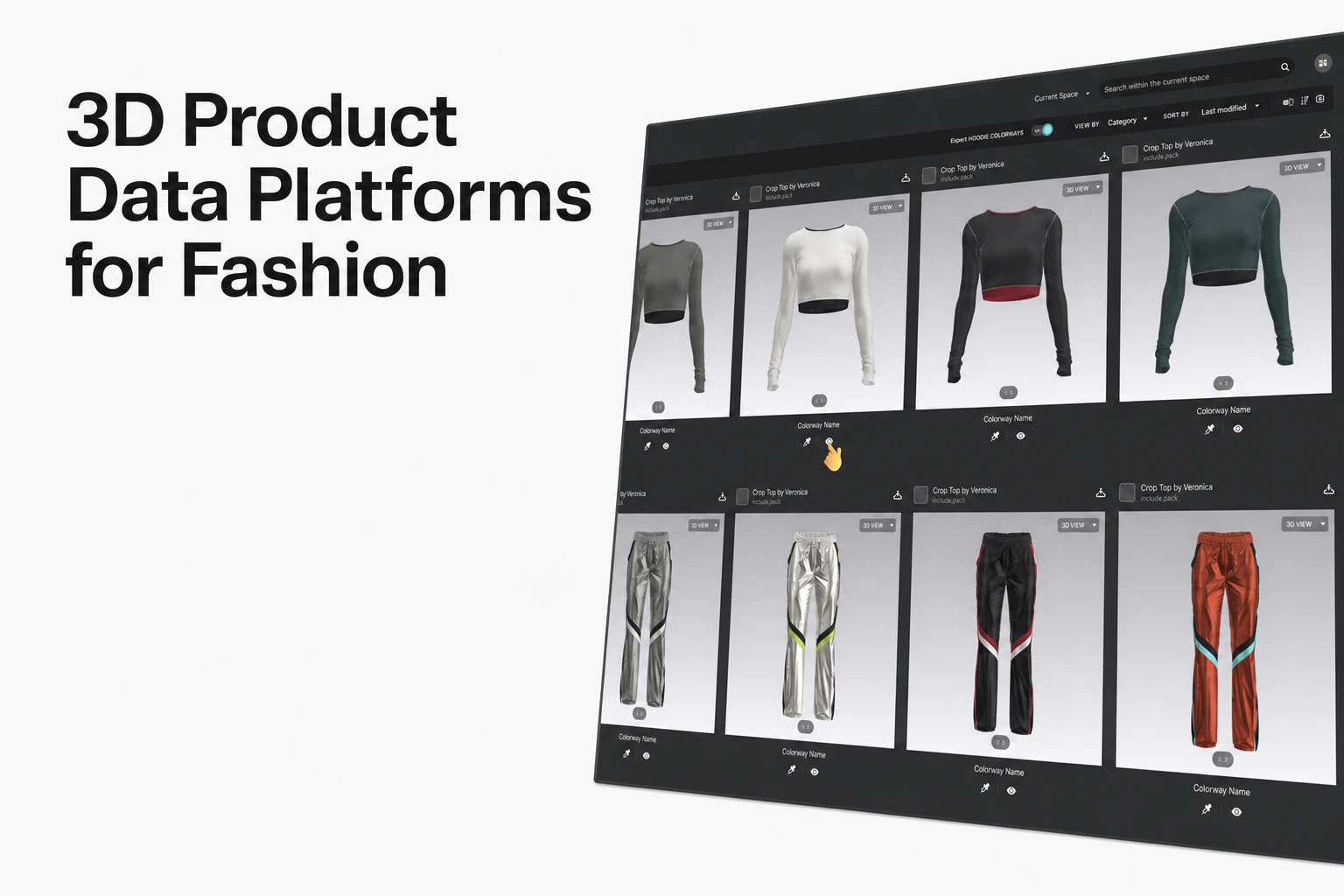
- Can the platform store 3D garments, materials, versions, and metadata in one shared asset layer?
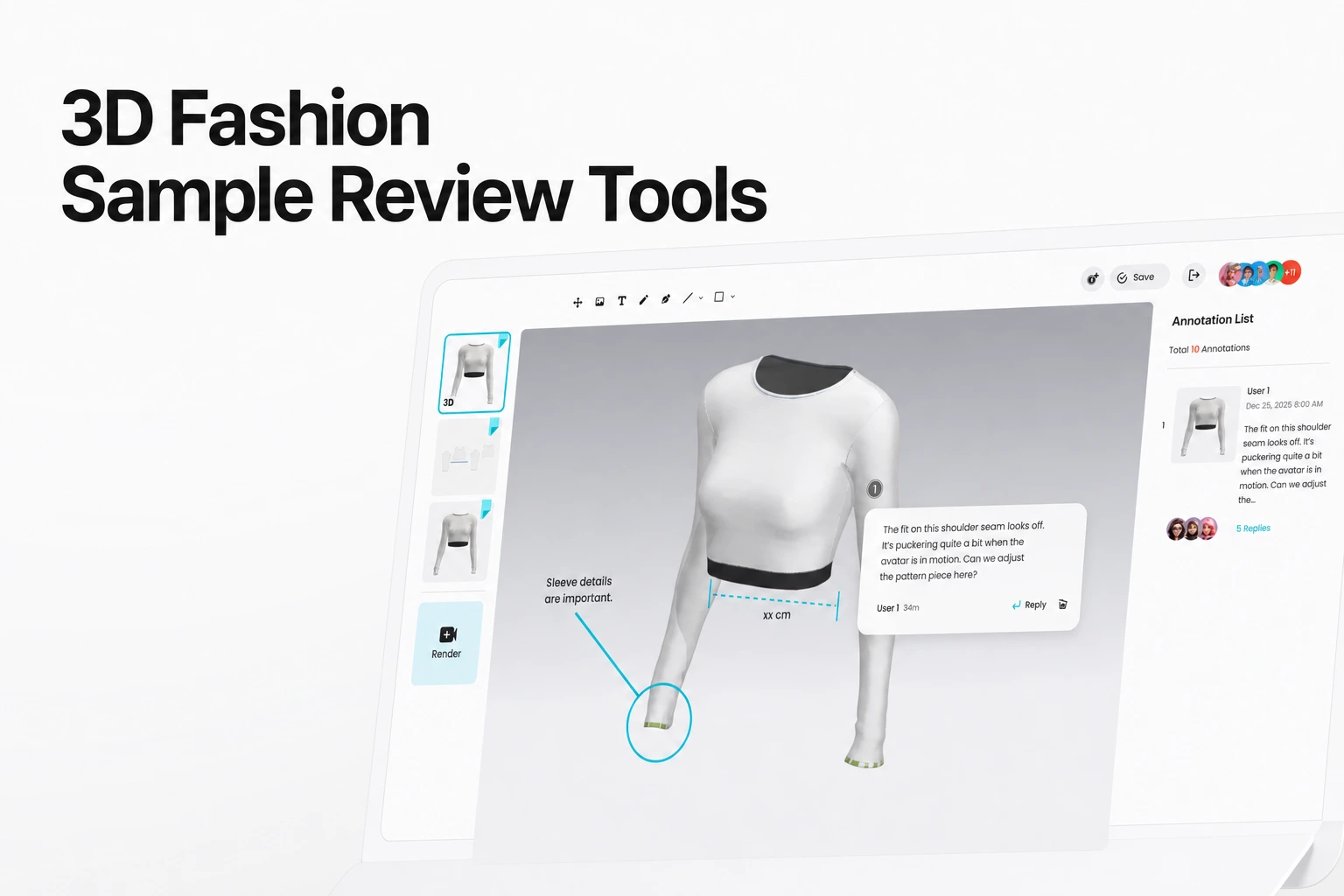
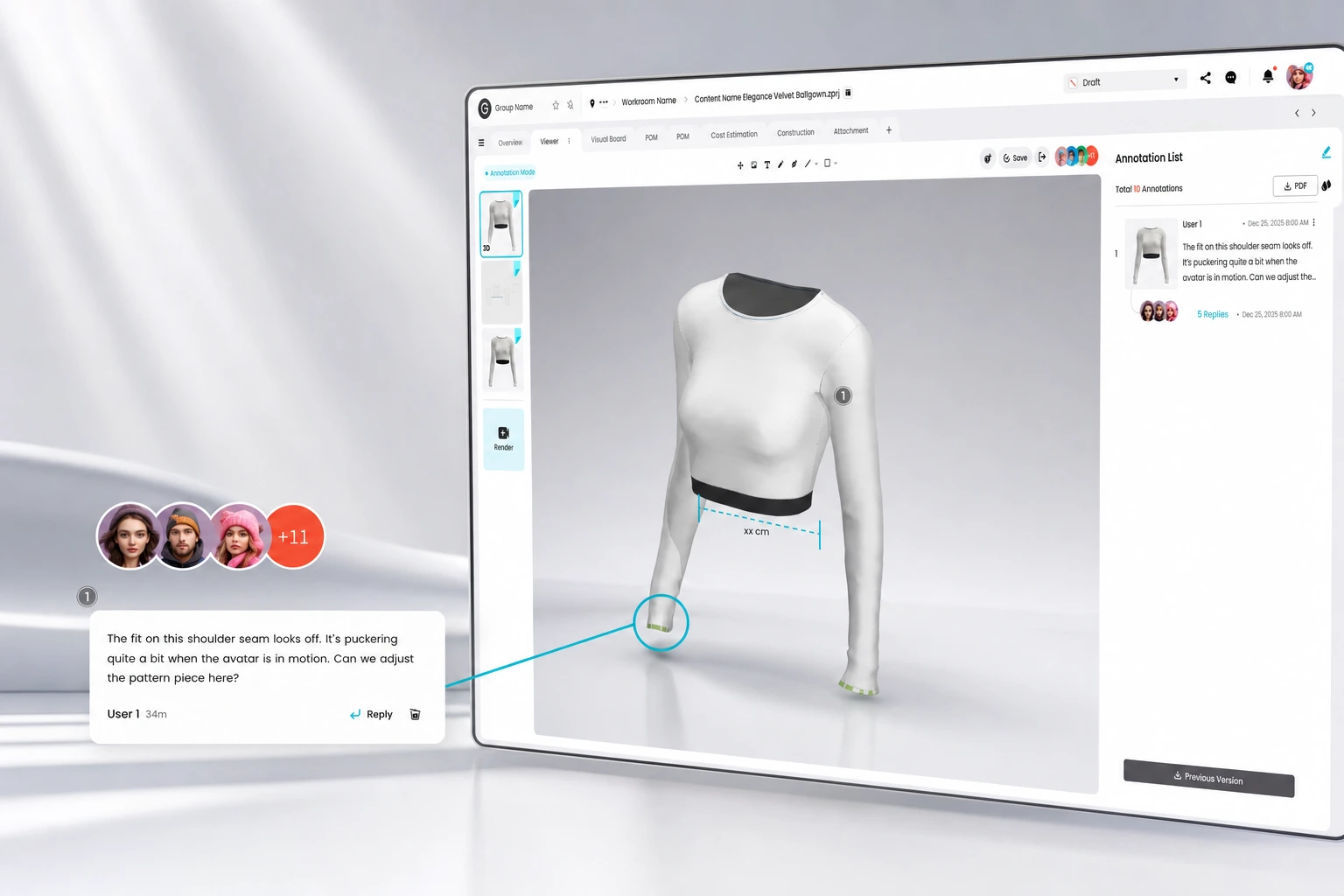
- Can reviewers leave comments in the context of the actual garment, not in scattered screenshots or chat threads?
- Can product information move with the asset into approval, range planning, and commercial review?
- Can design, merchandising, sourcing, and leadership use the same workspace without creating a new silo?
Measure sample reduction and material use separately. Record which physical samples the pilot replaces and compare cutting utilization using the same styles, fabric constraints, and marker settings. A review platform and a nesting tool solve different parts of that workflow.
A comprehensive platform is relevant in this evaluation when it supports collaboration around 3D assets beyond visualization alone. Its role can include centralizing digital assets and connecting review, product information, and downstream workflows in one digital space.
How should brands evaluate 3D design, fit, and asset management?
A strong 3D platform should support visual fit review, structured digital asset management, and a clear product information architecture. These capabilities should be evaluated before presentation polish.
Use the following scorecard as an illustrative decision tool. Korean fashion brands should adjust the weights and thresholds based on their own workflow priorities and rollout goals. The example weights reflect the workflow priorities used in this guide and are not intended as an industry standard.
| Criteria | Weight | What to test | Evaluation focus | Why it matters |
|---|---|---|---|---|
| Product information | 25% | Centralized tech packs, material data, version history, and product attributes | Product data remains connected to the relevant garment, version, and development context. | Product data must remain attached to the garment so design decisions can move into sampling, merchandising, and production review. |
| Approval flows | 20% | Workflow statuses, review history, decision visibility, permissions, and notifications where available | Approval decisions remain connected to the relevant asset and version | Review coordination improves when decisions and next actions are visible to the right stakeholders. |
| 3D asset depth | 20% | Centralized storage for 3D files, materials, renders, metadata, and reusable product assets | Assets can be organized, versioned, and reused across relevant workflows | Asset reuse becomes easier when files, metadata, and review context stay connected. |
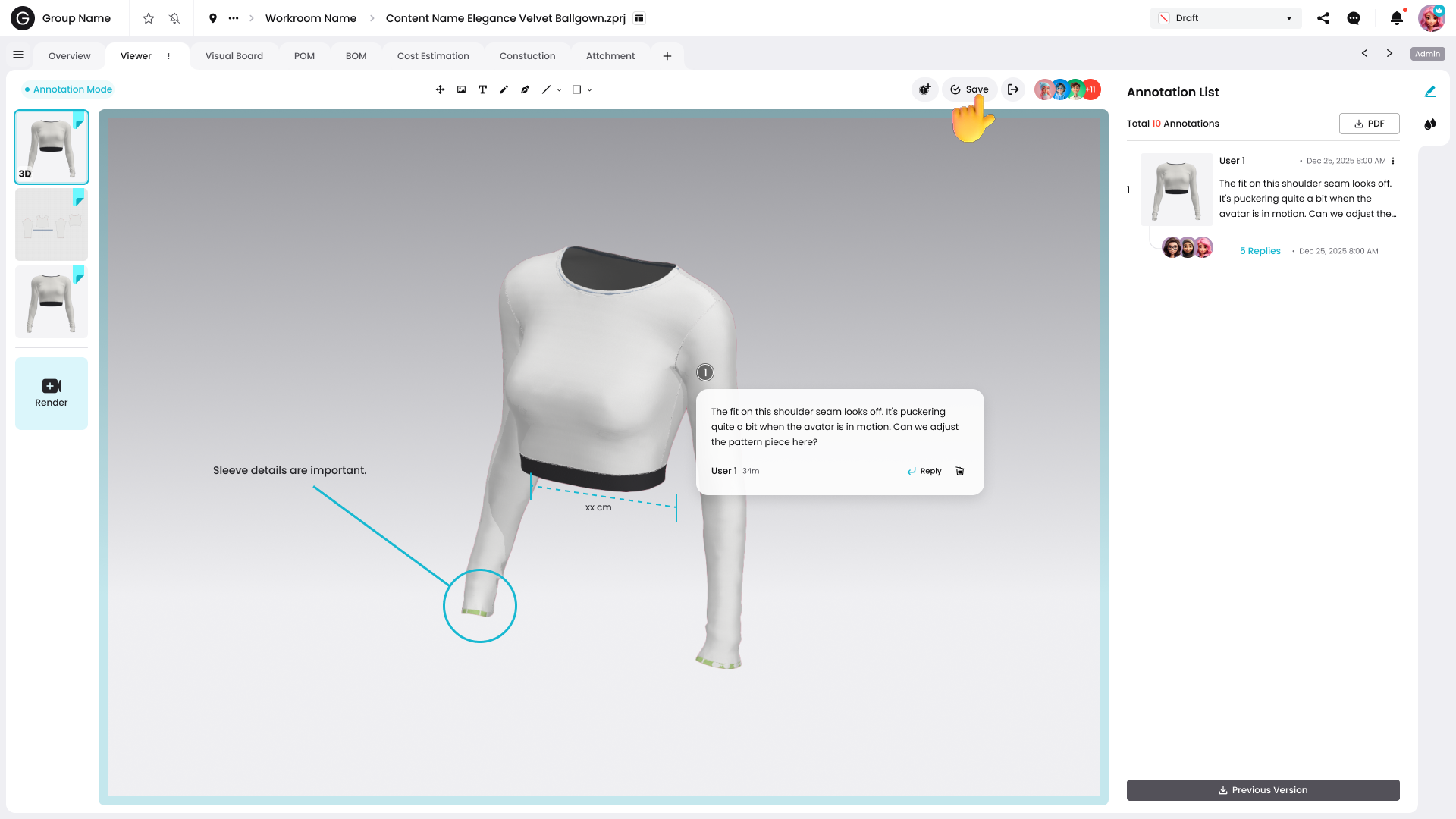
| Collaboration and comments | 20% | Contextual 3D comments, review threads, annotations, and shared visibility | Feedback stays connected to the relevant garment and review context | Reviewers can discuss fit, trim, silhouette, color, and construction within the same visual context. |
| Adoption speed | 15% | Training resources, interface clarity, role-based access, and onboarding support | Teams can learn and use the platform with manageable onboarding effort | Even a technically capable platform may deliver limited value if key stakeholders do not adopt it consistently. |
Digital Asset Management systems can help teams organize the metadata and visual assets used across digital product development workflows (Orange Logic, 2025). For fashion teams, this means a 3D asset can be more useful when it stays connected to material information, product attributes, review decisions, and status signals that other teams can reference.
Teams should use this scorecard to evaluate core capabilities such as 3D asset management, collaboration, product data, and workflow visibility. Depending on the team’s broader use cases, additional criteria may include linesheet and range planning, virtual showroom capabilities, and 360° 3D viewing.
As a practical scoring approach, teams can give higher scores when a capability is supported directly within the shared workflow. For example, comment threads are more useful when they remain connected to the garment or review context, and product information is easier to manage when it is searchable and reusable rather than manually copied after each sample decision.
How can teams assess collaboration and workflow automation?
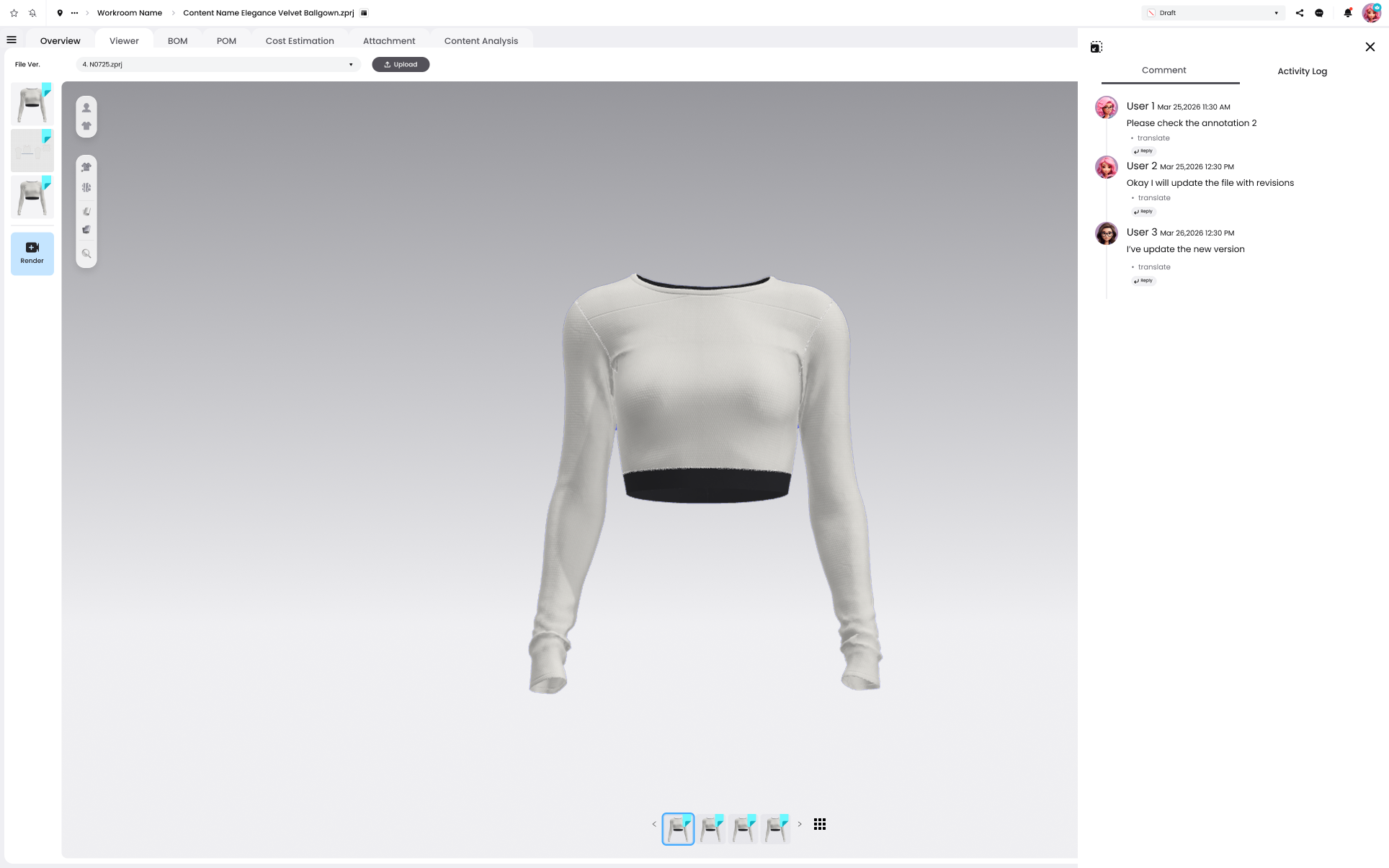
Teams should evaluate collaboration capabilities by testing whether review feedback can be translated into clear, trackable decisions. A practical pilot uses real garments and the stakeholders who normally participate in review and approval.
For Korean fashion teams, a pilot can be more informative when it reflects a real seasonal workflow rather than a clean demo file. Depending on the team’s scope, the pilot might include a seasonal capsule, a carryover style, a new silhouette, a material-sensitive product, or an item that requires cross-functional approval. This helps teams evaluate how the platform handles comments, versioning, merchandising review, and sample decisions in realistic conditions.
- Define workflow scope. Decide whether the platform should act as a design review layer, a Digital Asset Management workspace, or a product collaboration layer alongside existing systems. As the scope expands, teams may place greater weight on metadata, permissions, approval states, and exportability.
- Shortlist vendors around the required workflow. Ask each vendor to demonstrate how the 3D asset, feedback, version and decision stay connected. A June 2026 Style3D article illustrates Kanban stages and routing rules; verify the actual product configuration and integrations rather than treating that example as an included feature.
- Run a seasonal pilot with real stakeholders. Include the roles that normally participate in design, technical review, merchandising, sourcing, and approval. Ask each role to complete its usual review work inside the platform.
- Score digital sample reviews. Test whether reviewers can identify a garment location, leave clear and actionable feedback, compare versions, and understand the next action from the review status.
- Compare rollout risk. Review onboarding effort, training quality, user friction, and adoption likelihood before expanding the platform to a broader rollout.
Contextual commenting should be a specific test item rather than a generic collaboration checkbox. Teams should evaluate whether reviewers can attach feedback to the relevant garment area and keep that feedback connected to the correct version and review context. This helps reduce ambiguity in comments such as “adjust sleeve volume.”
Approval workflows should also be evaluated by how they handle exceptions. Teams can test what happens when a reviewer requests a material change, merchandising rejects a colorway, or a later comment changes a previous decision. Notifications and visible status changes can help keep the next action clear when the workflow reflects how the team actually reviews and approves styles.
For platform evaluation, the most relevant tests are shared asset visibility, comment clarity, range-level planning, and the ability to reuse 3D assets in review and presentation contexts. This is useful for Korean brand teams that need one workspace where design decisions, sample reviews, and seasonal collection visibility can stay connected.
How do you measure onboarding efficiency and ROI?
Onboarding efficiency and potential ROI should be evaluated before a full rollout, since adoption can strongly influence whether digital sampling benefits are sustained over time. Track usage, cycle time, and prototype reduction.
Estimate payback using your own software, implementation, training, and operating costs. Compare these with measured changes in sample costs and review work during the pilot; do not assume a fixed payback period.
The onboarding review should include four measures:
- Time for designers to upload, organize, and share a 3D garment without admin support.
- Time for merchandisers or executives to review, comment, and approve without switching tools.
- Number of sample decisions that remain inside the platform instead of moving to email, chat, or slides.
- Number of styles that reuse existing assets, materials, views, or product data from earlier work.
Test onboarding by role. Designers need creation and asset organization support; merchandisers need collection visibility; sourcing and technical teams need reliable product information. Record how long each role takes to complete its required tasks.
Korean apparel organizations can consider the following rollout stages:
| Rollout stage | Scope | Success signal | Risk to watch |
|---|---|---|---|
| Pilot | One capsule or category | Stakeholders complete review and approval inside the platform | Demo enthusiasm does not translate into daily use. |
| Department rollout | Design plus merchandising | Comments, versions, and approvals stay connected to assets | Teams continue using external slides or chat for key decisions. |
| Seasonal rollout | Full seasonal line review | Range planning, sample review, and asset reuse happen in one workspace | Product data becomes inconsistent across tools. |
| Lifecycle expansion | Internal and external asset use | 3D assets support showroom, 360° viewing, and downstream presentation | Governance is unclear for final assets and approved versions. |
A comprehensive platform may be relevant when the rollout goal extends beyond individual 3D file review. Teams with broader needs can evaluate whether the platform supports centralized 3D assets, collaborative communication, linesheet and range planning, and virtual showroom use within the same operating environment.
Which platform pattern fits your team maturity level?
Korean fashion brand teams should consider their level of internal digital adoption maturity when evaluating a 3D platform. Newer teams may prioritize reliable digital sampling and ease of adoption, while scaling teams may place greater emphasis on shared workflows and lifecycle visibility.
A new 3D team should test file upload, review, and fit evaluation with representative garments. Ask the vendor how fit indicators are calculated, what material and avatar data they require, and how the team should validate the results with physical samples.
A mid-size brand using 3D creation tools can evaluate CLO-SET’s comments, versions and product organization with its actual reviewers. Test how the workflow connects those functions to the team’s seasonal planning and decision records.
An enterprise brand should evaluate ecosystem readiness. Depending on the workflow scope, the platform may need to support governance, reusable assets, product information, permissions, approval history, and downstream presentation. For teams selling into wholesale, retail, or cross-border channels, the ability to use the same 3D asset in a virtual showroom or 360° viewer can extend asset value beyond the design department.
| Team maturity | Main evaluation question | Platform pattern to prioritize | CLO-SET fit |
|---|---|---|---|
| Digital adoption | Can we reduce physical sampling without slowing designers? | Easy 3D review, fit validation, and basic asset organization | Useful when the team wants shared review from the start. |
| Collaborative scaling | Can design, merchandising, and approvers work from the same asset? | Contextual comments, workflow states, product data, and range planning | Relevant for teams that need centralized assets and cross-functional reviews. |
| Integrated ecosystem | Can one asset support lifecycle use after design approval? | Governance, showroom use, reusable digital twins, and 360° presentation | Relevant when teams want to extend asset use across planning and selling. |
FAQS
Frequently asked questions
What questions matter most when evaluating a 3D fashion platform?
Key questions include whether the platform centralizes assets, preserves product data, supports contextual reviews and approval coordination, and can be adopted by non-technical stakeholders. A platform that performs well in design but loses metadata, decisions, or approval history can create new workflow gaps.
How do I judge the quality of comments and reviews on a platform?
Judge comment quality by whether feedback remains connected to the relevant garment area, asset version, and review context. Contextual commenting can help reduce ambiguity by keeping feedback attached to the visual context being discussed during sample review.
What is the biggest risk when choosing a tool for 3D assets?
A common risk is choosing a tool that stops at design output and does not preserve metadata, product information, review status, or downstream workflow context. Digital Asset Management can help organize the metadata and visual assets used across digital product development workflows (Orange Logic, 2025).
How long does ROI usually take for digital sampling platforms?
There is no single payback period established here. Include licence, integration, training, and ongoing operating costs, then compare them with measured changes in sampling and review work. Use the pilot results to estimate a timeline for your team.
Disclaimer: This comparison reflects official vendor documentation available at the time of review. Features, availability, and terms may change; verify current details on each vendor’s official website before making a decision.
Platform Evaluation Framework for Korean Fashion Brands
Korean fashion teams should score 3D platforms on assets, product data, reviews, approvals, and adoption speed before rollout.