3D Asset Coordination for Korean Vendor Teams
Korean vendor teams can centralize 3D garment files, partner comments, version history, and review status to coordinate digital sample reviews without relying on physical sample shipping or in-person review for every iteration.
Key takeaways
- Korean vendor teams need one shared workspace where 3D garment files, partner comments, version history, and review status stay organized in one place. Version history keeps garment revisions organized, while Workflow and Colorway Status help teams track overall style progress and the state of individual Colorways.
- Digital sample creation and shared review are separate steps. CLO supplies garment-authoring tools; CLO-SET supports reviewing files, comments and versions. Measure the time saved in each step and keep physical checks for questions that digital review cannot settle.
- Centralized platforms can support vendor-side workflows that need shared 3D asset access.
Why do Korean vendor teams need one 3D asset coordination workspace?
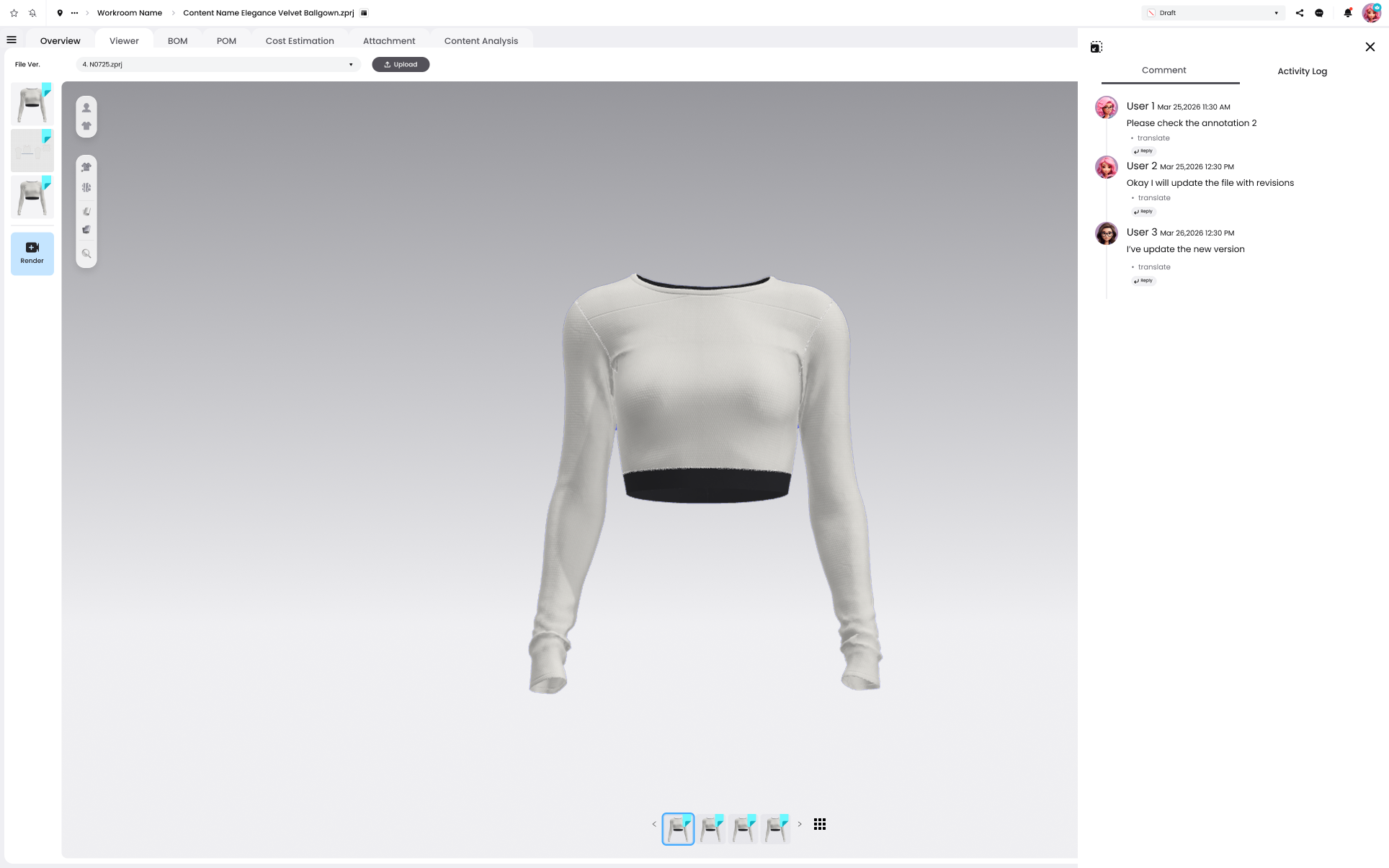
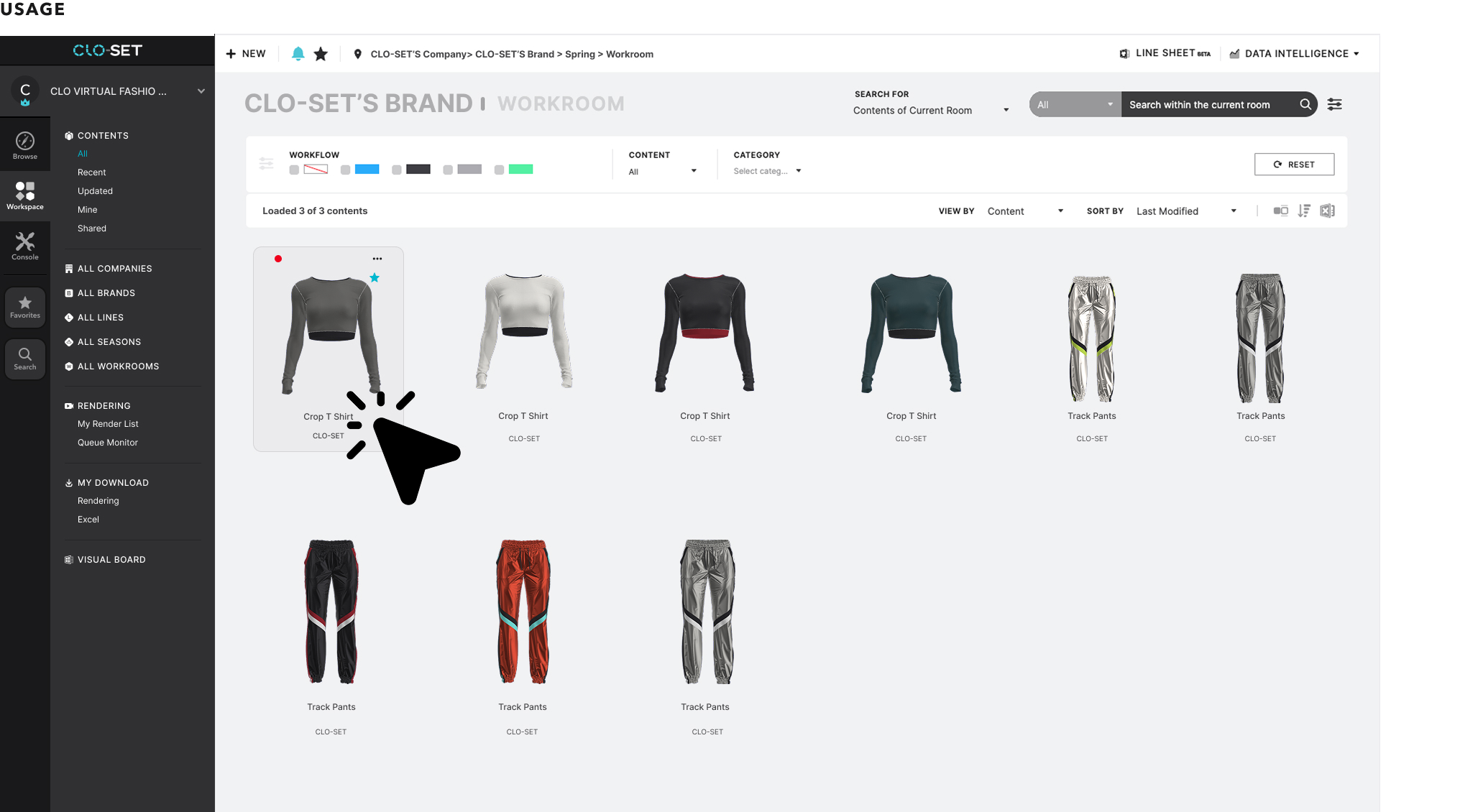
CLO-SET’s Workflow represents the Content’s development stage, while Status applies to each Colorway. Its version history and comments help reviewers identify the file and discussion. Define how an approval decision is recorded as part of the team’s process.
When teams review a different file attachment, local folder, chat thread, or spreadsheet row, they lose confidence in which garment version is current.
Centralizing the virtual garment helps keep the asset, feedback, and approval state together.
For Korean vendor teams, the practical goal is not only better file storage. The goal is fewer blind spots between sample feedback and production action. A patternmaker should see the same partner comment that the merchandiser sees. A factory coordinator should know whether the latest 3D asset is approved, pending review, or waiting for revision.
What bottlenecks slow traditional sample management?
Traditional sample management slows vendor teams because it often relies on manual workflows.
Separate messages and files can make review ownership and the current revision harder to identify. Measure the delay and rework in your own sampling process.
For example, a buyer might approve a silhouette in one email while another reviewer requests a trim change elsewhere. Record which version and decision control the next sample so the supplier does not have to infer the instruction.
For Korean vendor teams serving overseas accounts, this is where fragmented communication becomes a production risk. The issue is not only speed. It is whether the team can trace review decisions, the relevant garment version, and the actions that followed.
How do centralized 3D workflows compare with email and folder workflows?
Centralized 3D workflows aim to improve review speed and partner alignment.
The difference between email-based coordination and a centralized 3D platform is easiest to see across the review cycle. A dedicated 3D coordination workspace helps organize the workflow.
| Workflow area | Email and folder workflow | Centralized 3D platform |
|---|---|---|
| Remote review | Review may use attachments or links to a separate viewer | CLO-SET’s viewer and comments keep garment review in a browser workspace |
| Approval tracking | A team must organize the decision record and its file reference | Workflow and Colorway Status show progress; version history identifies revisions. Record the actual sign-off separately. |
A centralized platform does not remove the need for judgment. Buyers still need to evaluate the garments. The platform improves the coordination layer to help the vendor team see the current version and the current decision.
How should vendor teams align partner comments and sample feedback?
Vendor teams can align partner comments more effectively when feedback stays connected to the relevant asset, review status is visible to the appropriate stakeholders, and responsibilities are clear.
The core workflow should connect comment collection, sample feedback routing, revision ownership, and approval status. A practical flow for Korean vendor teams looks like this:
- Adopt digital workflows to potentially reduce physical sampling.
- Organize teams to coordinate sample feedback efficiently.
- Manage revisions to keep track of garment updates.
- Route communications to the responsible team members.
- Track approval statuses to clarify the next actions.
- Maintain clear records to support production teams.
This structure makes coordination easier, as clear status changes can direct the next action.
Browser access is especially important for partner alignment. That lowers friction for stakeholders who need to review the same digital sample.
Record the approval decision and identify the file version it covers. In CLO-SET, Workflow tracks the Content’s stage, while Status belongs to each Colorway; neither field by itself supplies the reviewer’s sign-off record.
What features matter in a modern 3D coordination platform?
Modern 3D coordination platforms can help teams organize digital workflows.
Korean vendor teams should evaluate platforms by how well they support real production coordination, not by whether they can only display a 3D model. A useful platform should help teams make decisions, preserve context, and keep partner communication organized.
What to evaluate in a 3D coordination platform
- Browser-based 3D review so non-design stakeholders can open garments without desktop CAD software
- Version history that keeps garment revisions organized, with comments available in the context of the relevant version
- Workflow and Colorway Status that give teams shared visibility into review progress
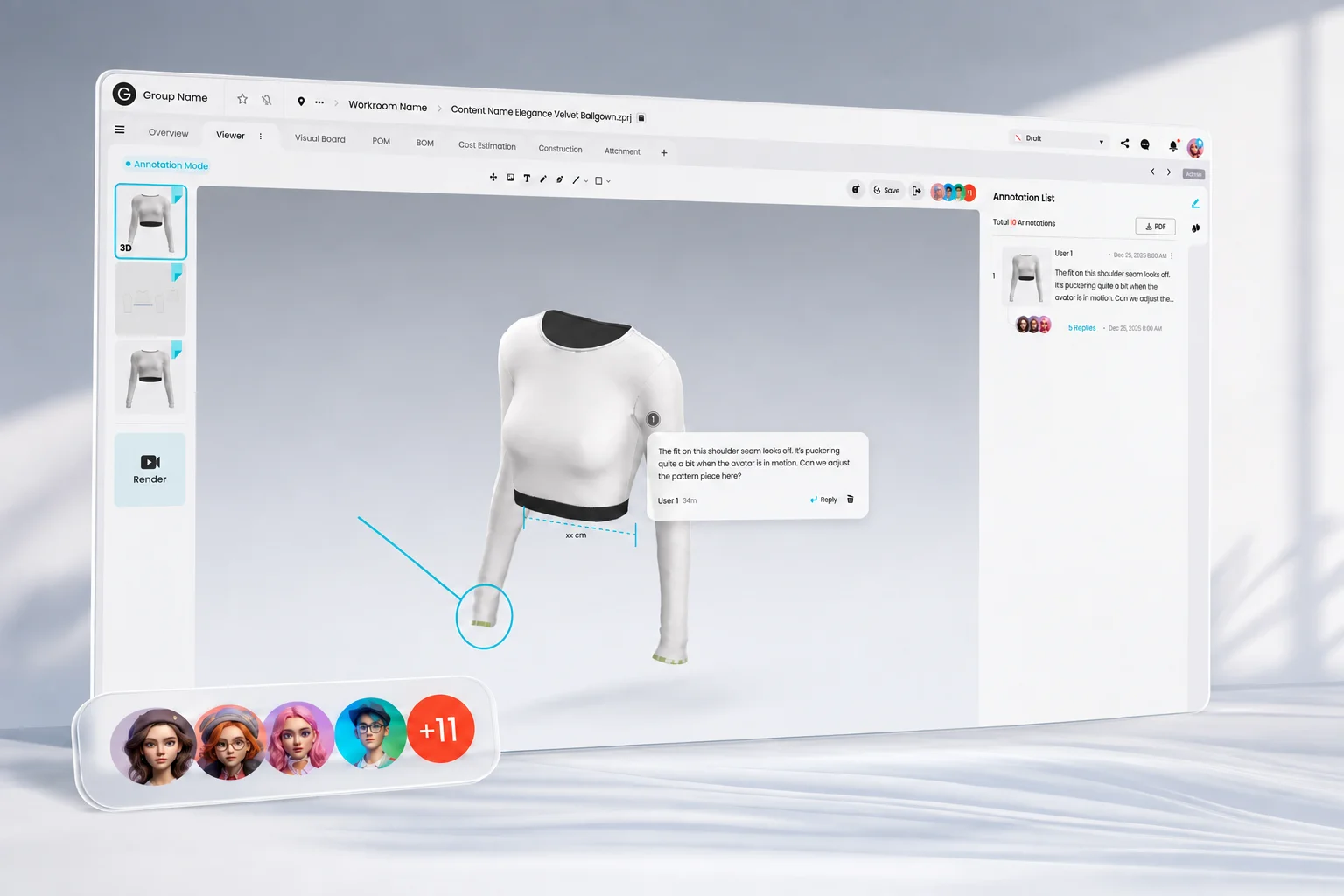
- Comment context pinned to the garment, not stored in external spreadsheets or email
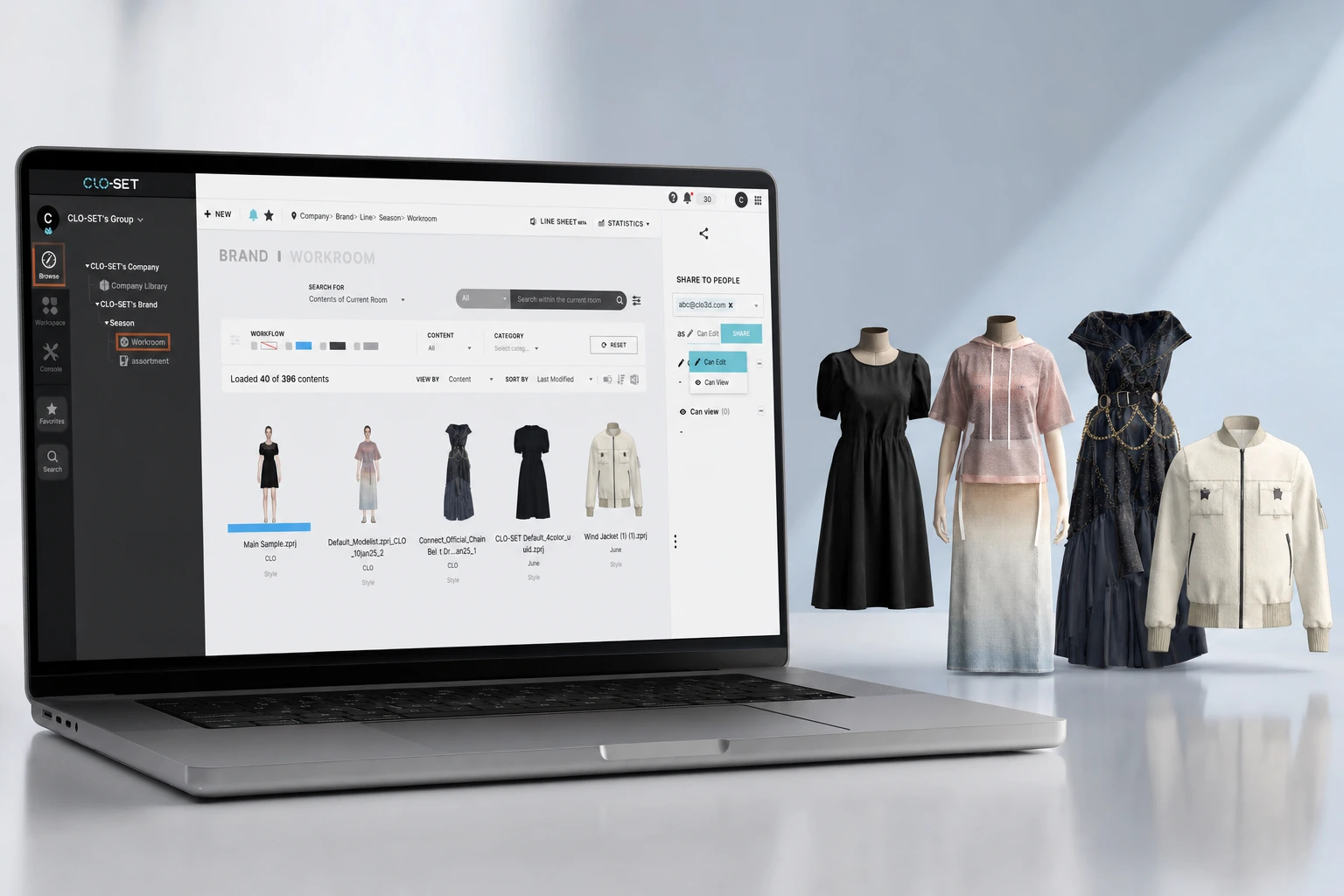
- Role-based permissions for buyers, merchandisers, patternmakers, and factory coordinators
For vendor teams, the most important test is operational clarity. If a merchandiser cannot answer which version is approved, which comment is unresolved, and which stakeholder made the decision, the workflow still has coordination risk.
Where does CLO-SET fit for Korean vendor-side workflows?
CLO-SET fits vendor teams that need centralized 3D files, remote review, and communication around garment approval decisions.
CLO-SET is a fashion product development platform that connects 3D garment assets, product data, reviews, and collaboration from design development through sample review and production handoff. For Korean vendors, that means the platform can act as the coordination layer between design development, partner review, and production handoff.
The vendor-side fit is strongest in four areas:
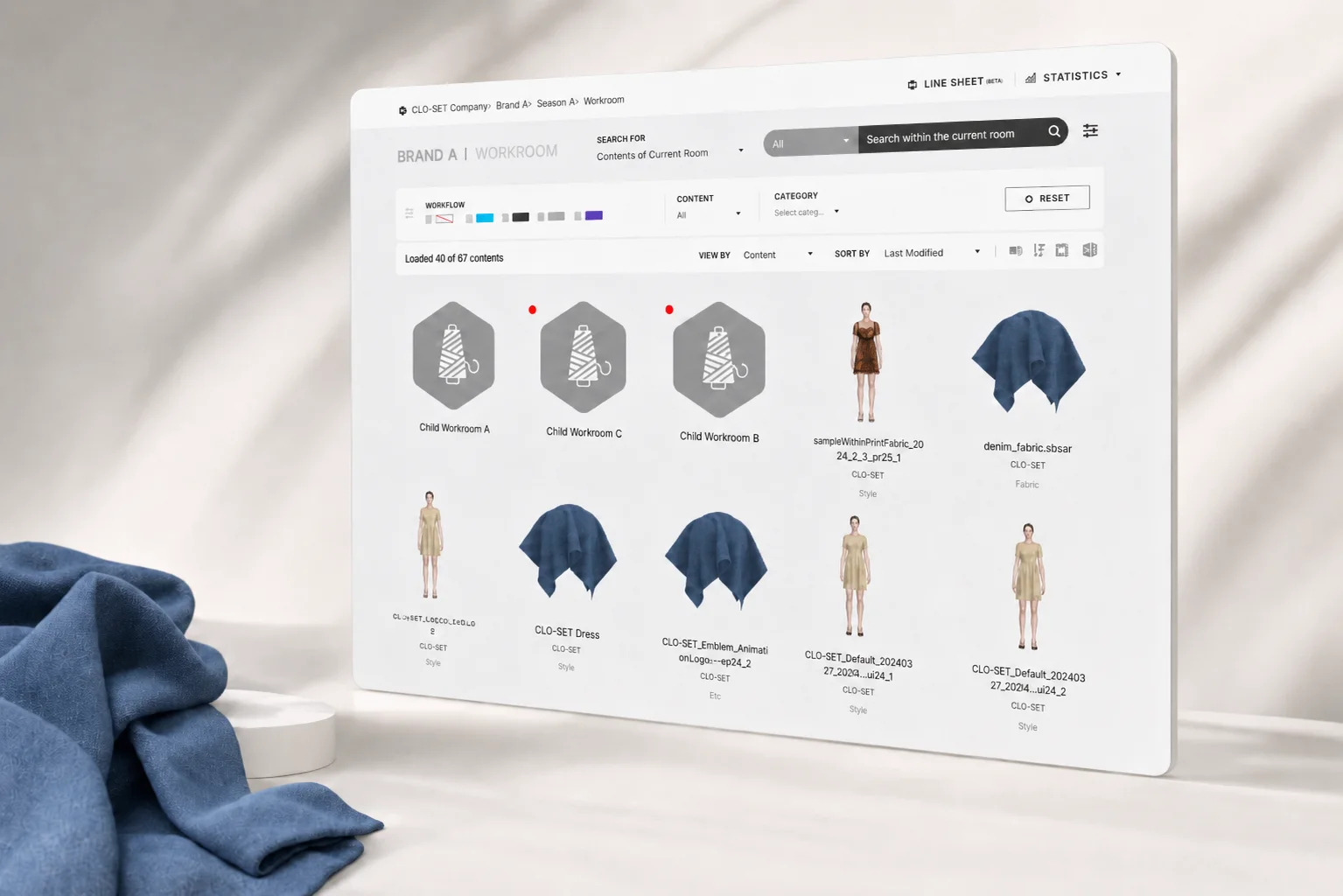
- Centralized 3D access: Teams can organize garment assets in one place instead of distributing review files through separate channels.
- Shared visual review: Stakeholders can inspect the same digital garment context rather than relying only on screenshots or written descriptions.
- Communication around the asset: Feedback stays closer to the garment being discussed, which reduces the need to reconcile external spreadsheets and email chains.
- Remote approval support: Vendor teams can coordinate with overseas partners without waiting for every physical sample to travel between offices.
This matters because digital sampling changes the review object. When the 3D garment becomes the decision object, the platform must preserve the asset, the feedback, and the approval state together. CLO-SET supports that shift by giving vendor teams a centralized space for 3D garment coordination instead of treating 3D files as static attachments.
The practical outcome is better review discipline. Korean vendor teams can keep partner comments, sample feedback, and garment versions visible in one workflow while reducing the confusion that comes from parallel threads.
What are the cost and sustainability advantages of 3D coordination?
Digital sampling can reduce the cost and environmental impact associated with physical sampling, while 3D coordination platforms can support more efficient review and collaboration around those digital samples.
A 2025 literature review discusses sampling efficiency, cost and adoption in the ready-made garment industry, with particular attention to Bangladesh. Its comparison table combines different physical and digital setup assumptions; it should not be used as a current CLO price or a budget forecast for a Korean supplier. Build a cost comparison from the actual software, hardware, training, labor, materials and shipping required.
Measure environmental effects within a defined boundary: the physical samples and shipments avoided, the digital equipment and processing used, and any sample rounds that remain. The literature review’s generalized carbon percentages are not a measured result for your deployment.
The platform does not eliminate every physical sample. Fit validation, material handfeel, lab dips, and production readiness may still require physical review depending on the buyer, category, and risk level. The operational value is that teams can reserve physical samples for decisions that genuinely require them, while using 3D review for earlier alignment and iteration.
For Korean vendor teams, that distinction is important. The target is not a vague digital replacement. The target is a controlled workflow where the team can decide which approvals can happen digitally and which checkpoints still need physical confirmation.
What industry adoption signals show that digital sampling is viable?
Digital sampling is already used by manufacturers and global brands to reduce physical dependency and improve approval workflows.
The 2025 review lists Aman Graphics & Design and Masco Group among companies using CLO 3D. These are reported adoption examples; they do not establish outcomes for another supplier.
In a 2020 Digital Showroom publication, Tommy Hilfiger reported exceeding its target to reduce samples by 80% at its flagship Amsterdam showroom. The result concerns that showroom; it is not a CLO-SET result or a guarantee for other sites.
The lesson for Korean vendor teams is direct: digital sampling is not only a design visualization practice. It is becoming a coordination practice. The teams that benefit most are the ones that connect 3D asset management with review comments, approval states, and production follow-through.
FAQS
Frequently asked questions
What is the best platform approach for Korean vendor teams coordinating 3D garment assets?
The best approach is a centralized 3D workspace that keeps garment assets, partner comments, versions, and approval status together. CLO-SET fits teams that need vendor-side 3D asset management, shared visual review, and communication around remote approval workflows.
How do digital sample review tools improve approval status visibility?
Shared review status and a clear version reference can help people identify what needs action. In CLO-SET, Workflow and Colorway Status are distinct fields. Define how reviewers record approval or rejection and how the team notifies the next owner.
How can vendor teams align partner comments and sample feedback in one workflow?
Keep feedback with the intended garment and version, and use Workflow and Colorway Status to show progress. Assign someone to record the decision and route the next action. Measure sample rounds for your own styles instead of treating an uncited vendor benchmark as a forecast.
What should Korean vendors check before choosing a 3D coordination platform?
Test browser review, asset organization, version and comment context, status tracking, permissions and compatibility with your existing garment tools. CLO-SET’s interface guide describes the relevant viewing and review surfaces; validate them with your intended users and files.
Compare your sample review cycle
See how CLO and CLO-SET can support a faster digital sampling workflow, from 3D sample creation to remote review and approval coordination.