How an Independent Designer Gets Samples Right the First Time with CLO & CLO-SET
Can one designer develop an entire collection from first sketch to factory-ready samples, alone? For Lane Odom, founder of Brooklyn-based Vane Studios, the answer this season was yes, with a result most production teams rarely see: every piece was cut once and sewn once, with no repeated sampling rounds and no back-and-forth over unclear specs. He designed in CLO, managed every version and asset in CLO-SET, and handed his sample maker a tech pack generated straight from his 3D files.
The result is impressive. But the more useful story, if you design alone, is how the work was arranged so that one person could do it at all. Odom ran the full fashion product development cycle himself, from planning and design through development to physical production, work that most brands split across several teams.
[Watch the Full Story Behind Lane Odom’s Collection]
What results did a one-person studio get from using a 3D-first workflow?
Vane Studios is an independent label that draws on archival imagery of American style, from jazz-era tailoring to Cotton Club-era silhouettes, and reinterprets it as an evolving American heritage. Odom designs, patterns, and grades the entire collection virtually by himself, six years into working in CLO. His latest line demonstrates the direct impact of that process:
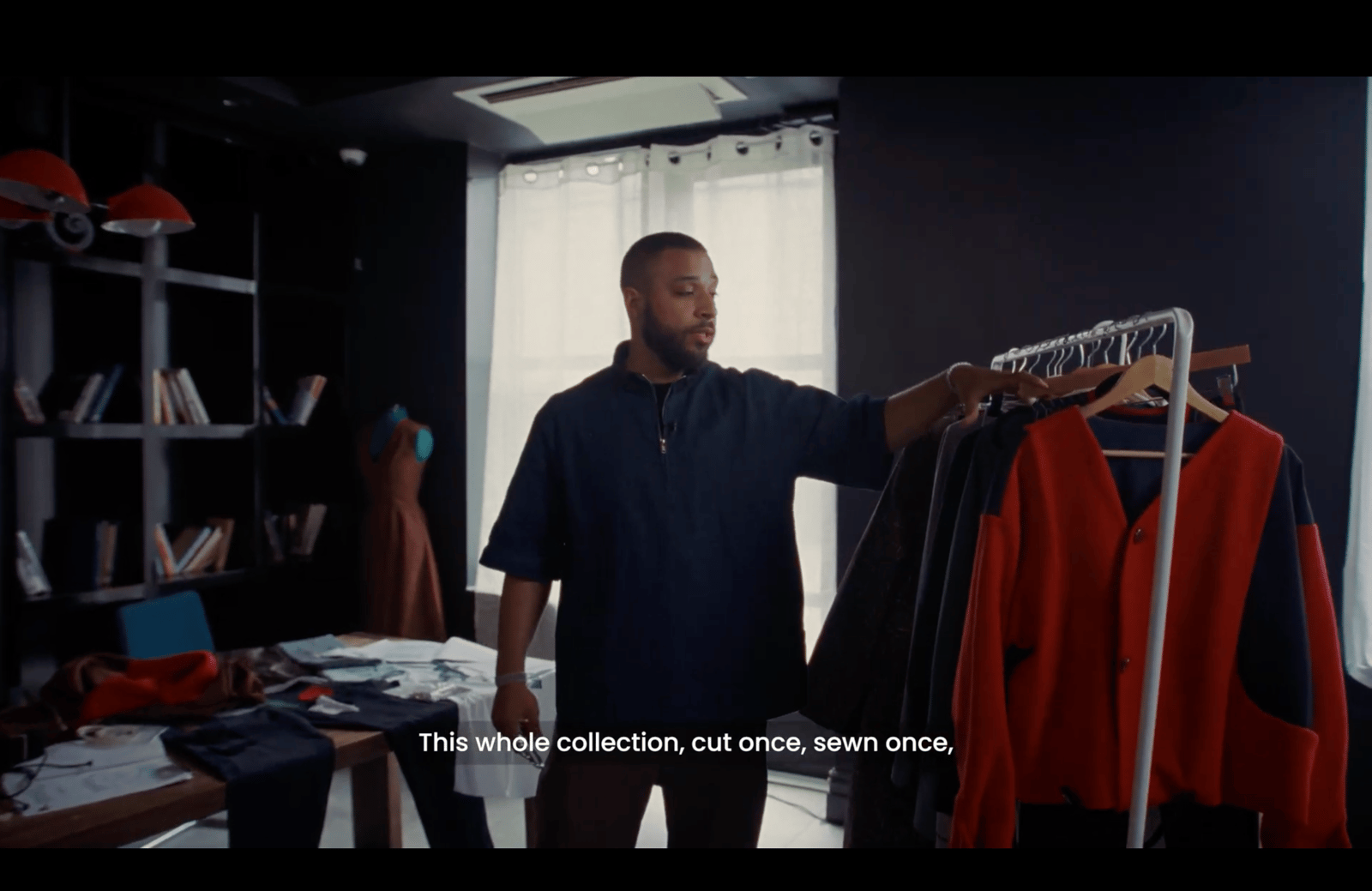
• Cut once, sewn once. The entire collection was sampled right on the first physical make, where several rounds per garment had been the norm.
• Around 50 design iterations at zero fabric cost. All exploration happened in 3D before any pattern was printed.
• A factory handoff with no ambiguity. Auto-generated tech packs gave the sample maker exact measurements and trims, and gave the designer a cost breakdown before production started.
• Instant grading for non-standard sizing. Patterns scaled to a 6’4" model with every proportion intact, without manual redrafting.
How do you make 50 design decisions before cutting fabric once?
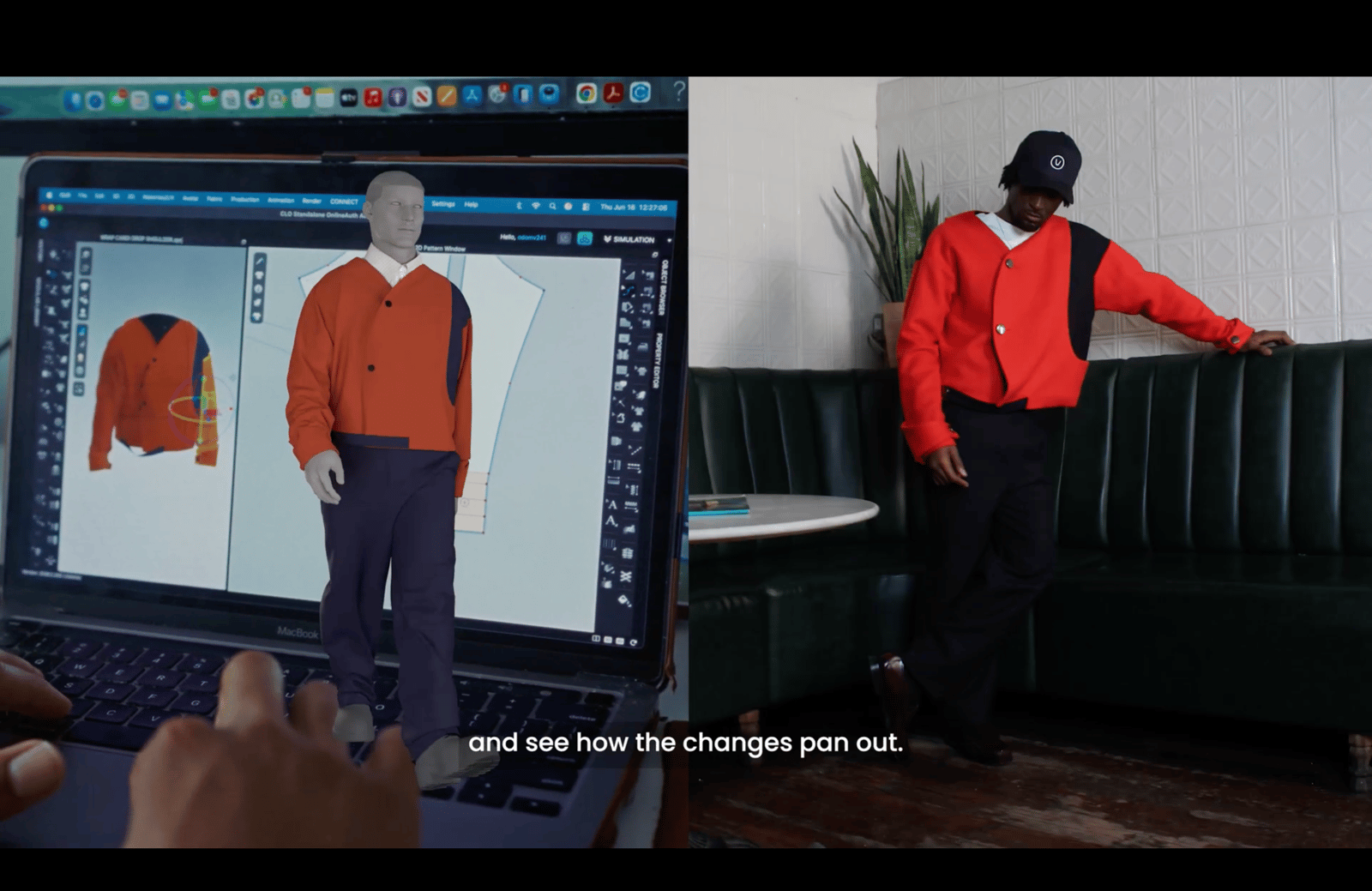
Odom starts his day at 5:30 AM in collection-building mode, iterating garments in CLO. For one complicated piece, he went through about 50 versions digitally, adjusting drape, proportion, and construction on a 3D avatar instead of on muslin. By the time a pattern is printed, the design decisions are already made.
“Ultimately, CLO and CLO-SET allow me to try more and make more decisions earlier. That helps me be the designer I want to be,” Odom says.
If you still test every idea in fabric, this is the part worth sitting with. Every design decision tested physically means another cut, another sew, another day. The 50 digital versions cost nothing but time at a screen, and the one physical sample that follows becomes a confirmation, not an experiment. Moving these decisions to the front of the fashion product development process is what makes the later stages predictable.
How does a solo designer keep 50 versions organized?
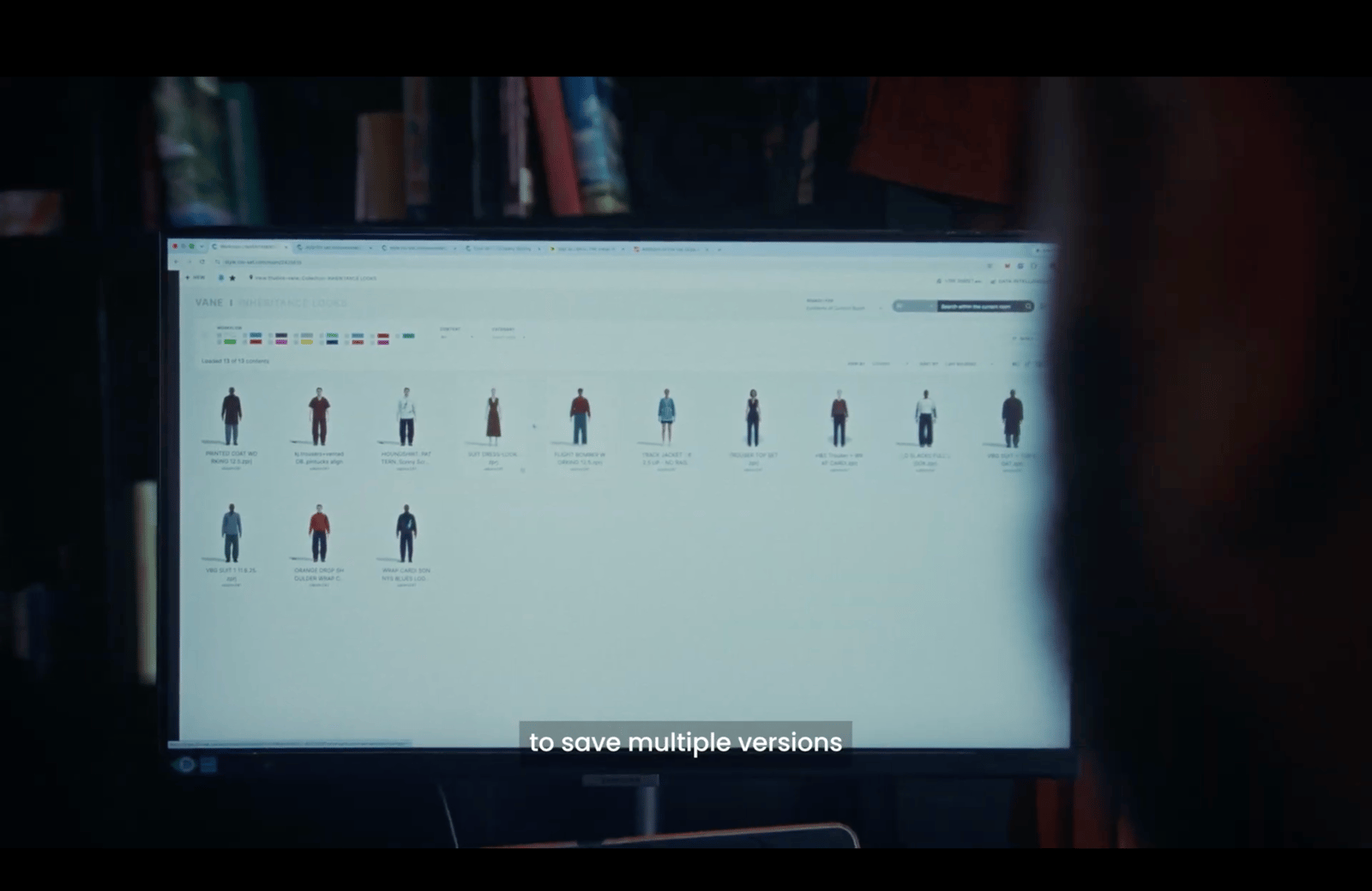
Every iteration gets saved to CLO-SET. Odom keeps multiple versions of each garment file in one place, so the full history of a design, from first draft to approved sample, stays organized and retrievable. His entire collection lives there as browsable 3D assets: suit dresses, flight bombers, track jackets, trouser sets, each with its colorways and revision trail.
In fashion product development, this is the stretch where a design goes from first idea to the version that's ready to sample. In CLO-SET, each version can be reviewed in the 3D viewer without reopening the source file.
For a solo designer, this replaces the folder chaos that usually swallows old versions. For a team, it means everyone pulls from the same source of truth.
What does a factory-ready tech pack change at the workshop?
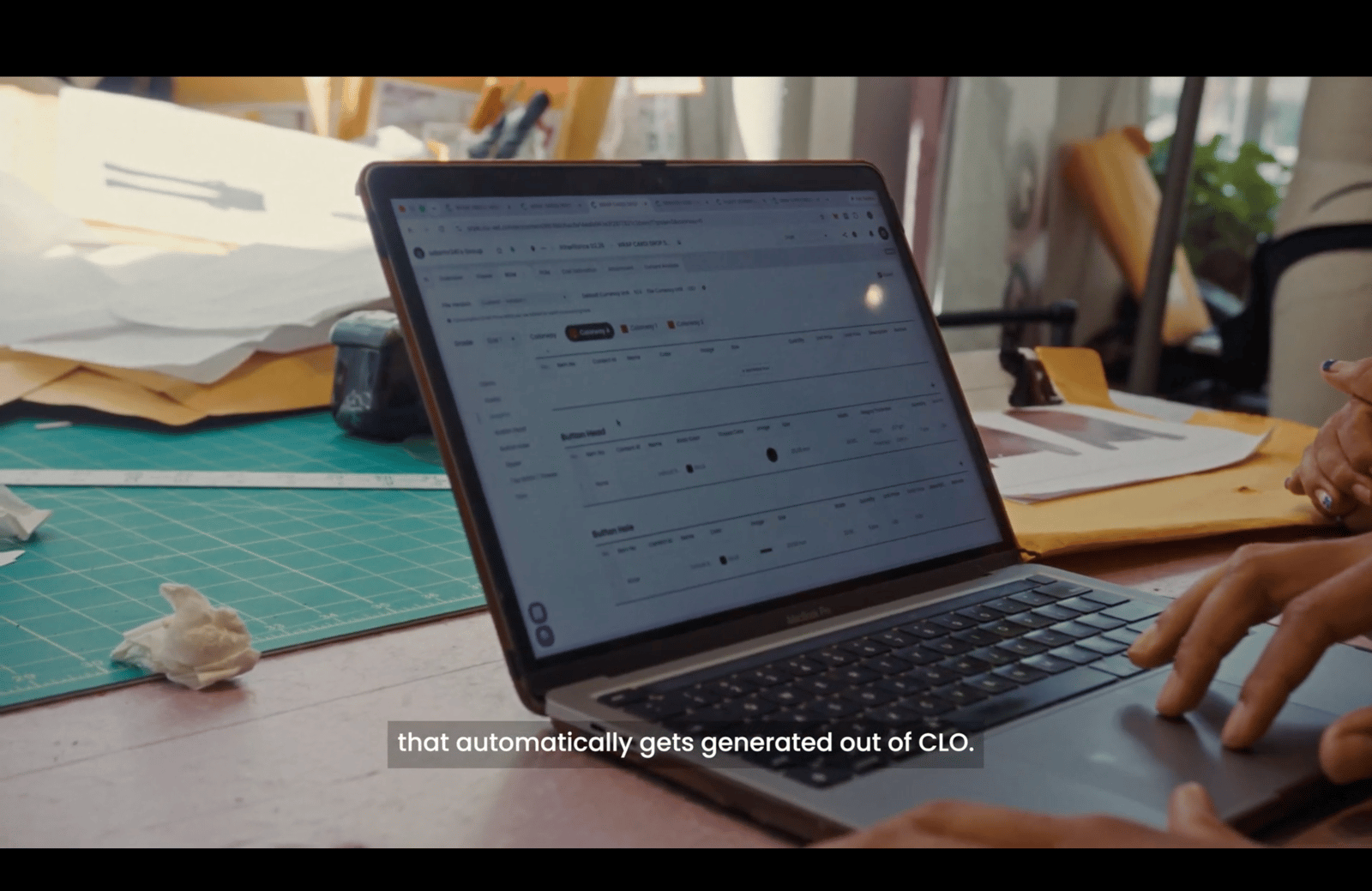
The first physical sample is where fashion product development moves from screen to fabric, and where unclear specs get expensive. When Odom hands patterns to Zoila, his sample maker in Manhattan’s Garment District, he doesn’t hand over a sketch and a verbal explanation. He opens the tech pack that CLO-SET generates automatically from his CLO file.
The tech pack gives the workshop the exact button size, the buttonhole measurement, button head specs, and every trim going into the garment. It also gives Odom a cost breakdown covering fabric, elastic, buttons, zippers, labor, and transportation before production starts.
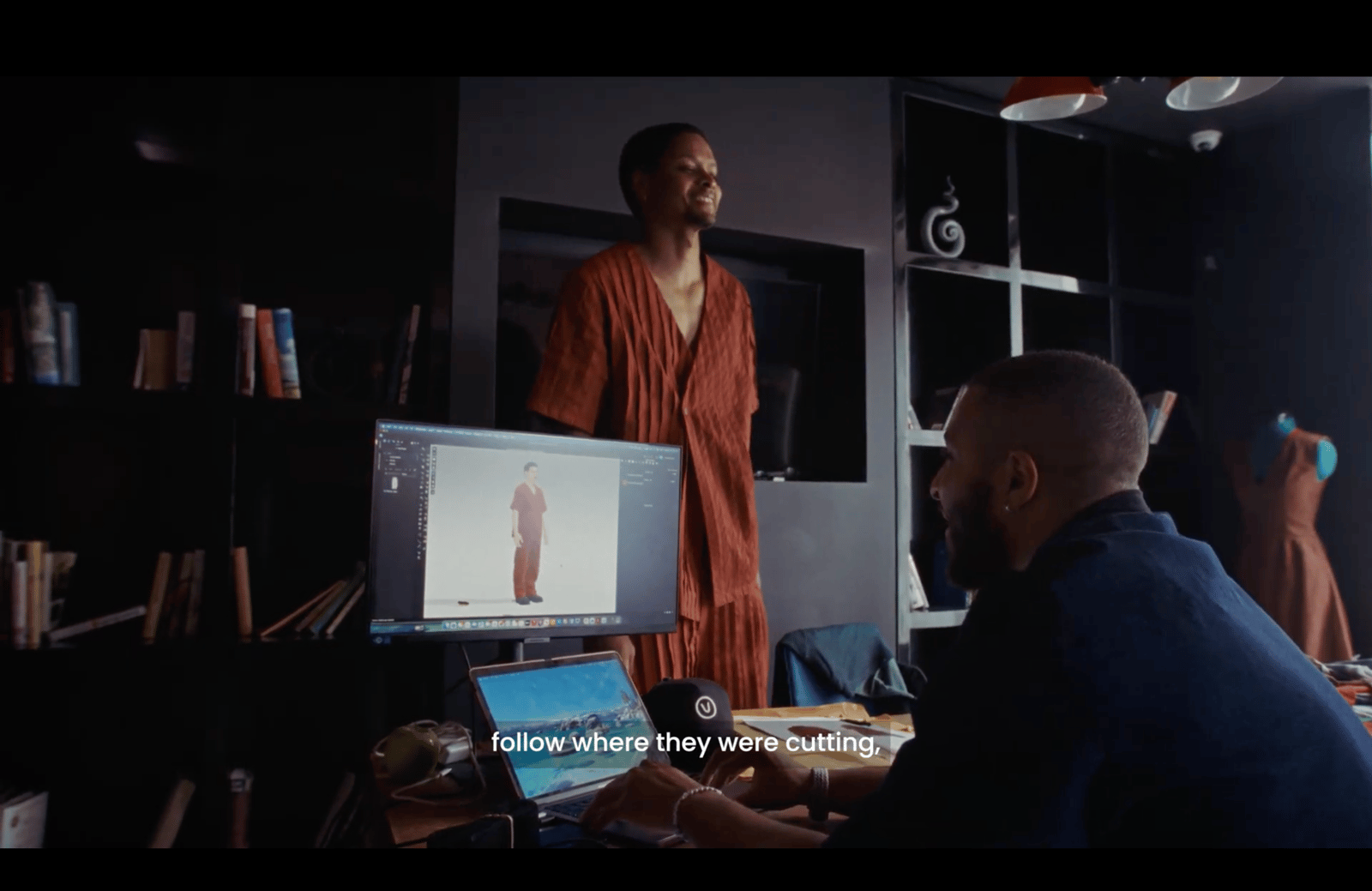
The collection’s hardest piece put that spec to the test: a pleated look with dozens of pintucks. Odom mapped every pintuck flat on the pattern as straight lines and sized everything digitally before printing, so the workshop could follow the lines where they were cutting without interpreting the construction themselves. This matters because factory communication is where solo-designer budgets usually leak. A sample maker needs exact measurements and placements, and when those live in the designer’s head or in scattered files, the workshop fills the gaps with guesses, and guesses become extra sampling rounds. Keeping the 3D asset, its versions, and the tech pack in one shared place means the workshop works from the same information the designer does.
How do you grade for a 6’4" model without redrafting?
The collection needed to fit Carmese, a model well outside standard sizing. Instead of redrafting patterns manually, Odom used the auto grading tool to grade the pattern quickly while keeping every proportion the same, and the garment went to the fitting without any manual adjustments.
The sample maker’s verdict
Numbers reported by a designer about his own workflow deserve a second opinion, and the closest thing to an external assessor in a sampling story is the person who had to sew it.
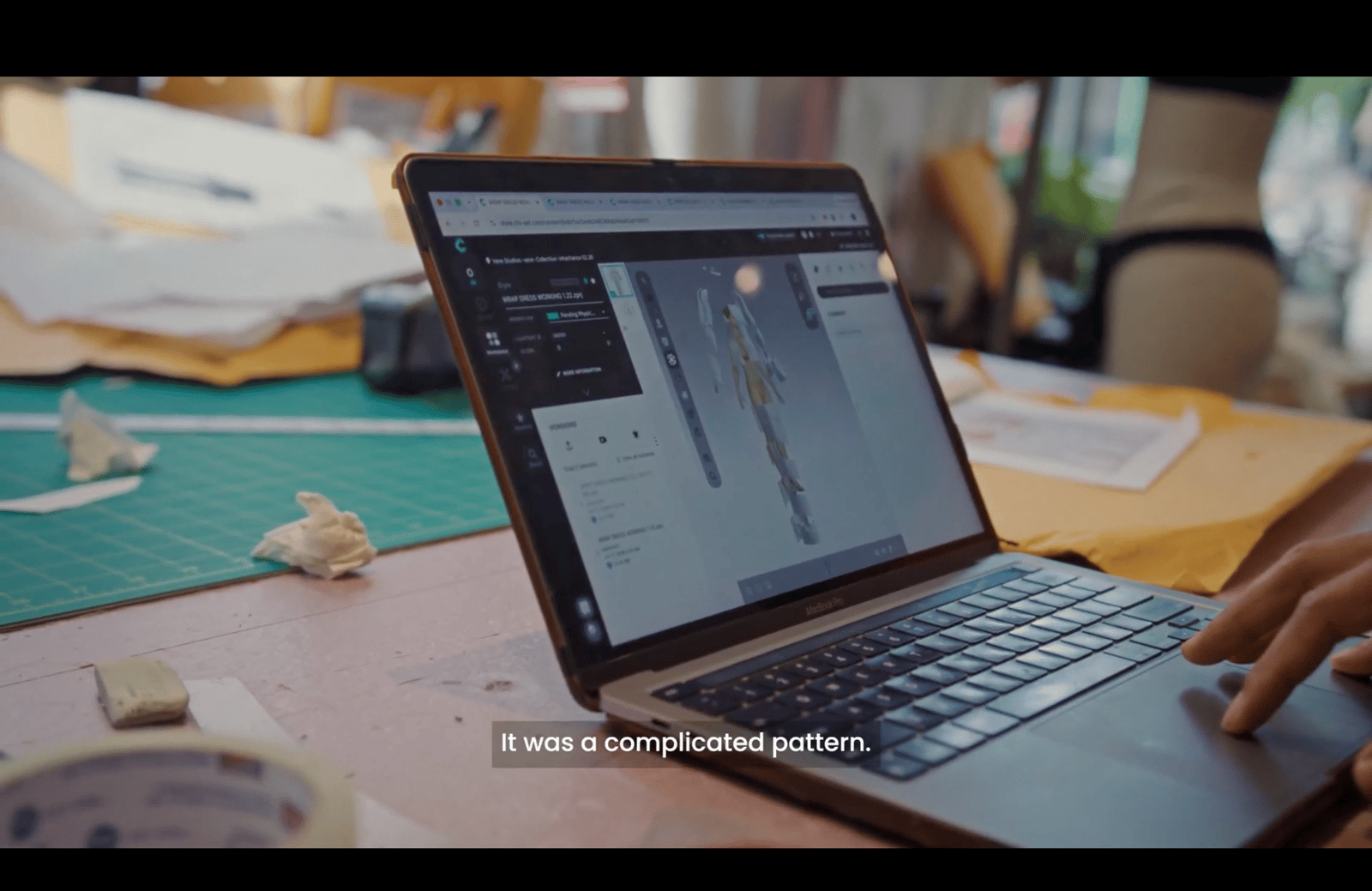
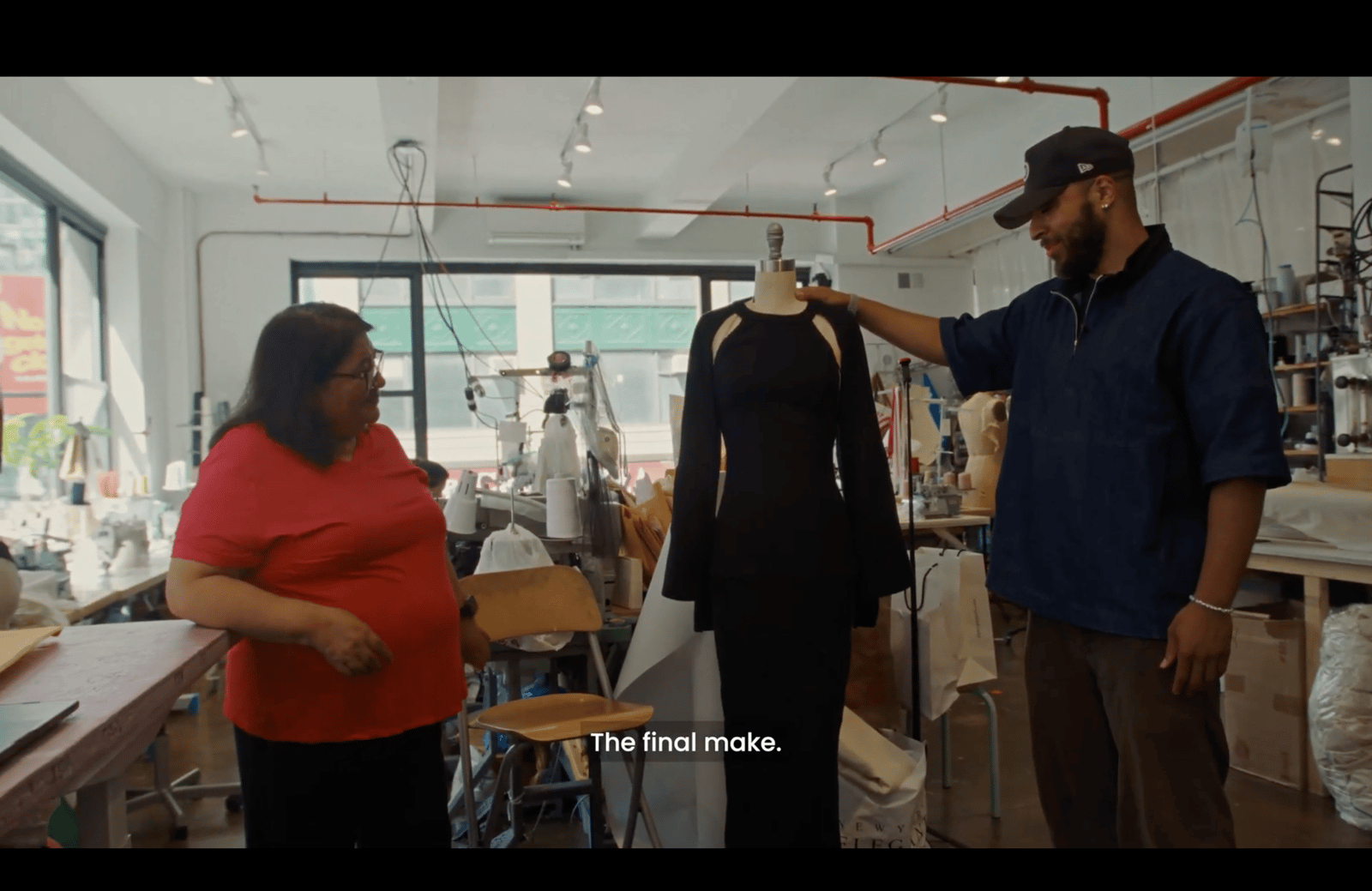
“It was a complicated pattern,” Zoila says of the final make. “I feel good when I put it on the mannequin. It looked like it did in 3D.”
The final collection, designed, patterned, graded, and costed by one person, was cut and sewn in New York.
What can other designers borrow from this?
Three moves in Odom's workflow transfer to any studio, whatever its size, and each maps to a stage of fashion product development.
Iterate before you print. Exhaust the cheap medium first. Fifty digital versions and one physical sample beats three physical samples arrived at by guesswork, and your eye for drape and proportion works the same on an avatar as on a form. Where the line between digital and physical rounds falls is a longer question, and we mapped it in 3D sample review vs physical sample rounds.
Keep every version in one destination. The value shows up months later, when a production question needs the exact state of a design from March, and it’s still there.
Hand the workshop a spec, not a sketch. A tech pack generated from the garment file carries the measurements the sample maker actually needs. The mechanics are covered in how to automatically generate a fashion tech pack from a 3D garment.
And Odom’s own advice for making the move: “Don’t try and overhaul your entire process in one night. Set time aside to practice with 3D, and have fun with it. And then you’ll realize you don’t need a huge team to build a collection.”
Frequently asked questions
What is CLO-SET?
CLO-SET is a cloud platform for fashion product development and digital collaboration. It stores and version-controls 3D garment files from CLO, auto-generates tech packs with measurements, trims, and cost breakdowns, and lets designers share exact specifications with factories and sample makers.
How does CLO-SET support the fashion product development process?
It connects the stages that usually live in separate tools. During planning and design, 3D garments from CLO are saved as browsable assets. During development, every version is stored and reviewable in the 3D viewer, so teams and partners discuss the same file. For sampling, the tech pack generated from that file gives the sample maker exact specs and costs before the first physical sample is made.
How does CLO-SET reduce sampling rounds?
Designers iterate in 3D with CLO before cutting fabric, then hand factories an auto-generated tech pack with exact specs: button sizes, buttonhole measurements, trims, and placement lines. Fewer guesses at the workshop mean fewer physical samples. Vane Studios sampled an entire collection with one round per garment.
Can CLO-SET generate tech packs automatically?
Yes. Tech packs are generated from the CLO garment file and include measurements, trim specifications, and itemized costs covering materials, labor, and transportation, updating from the source 3D file.
Does CLO-SET handle version management?
Yes. Multiple versions of a garment file are saved in one place, keeping the full revision history of each design organized and shareable. For brands working with vendors, CLO-SET also manages the steps that follow in fashion product development, including sample approvals and production requests, so both sides work from the same file and status. This is where teams typically see ROI: fewer sampling rounds, faster and more accurate reviews and approvals, and less back-and-forth between brand and vendor.
Who is CLO-SET for?
Fashion brands, manufacturers, and vendors that design in 3D and need a shared workspace for product development, from global teams working across multiple partners to independent designers like Odom. Teams use it to plan the season, manage versions of each style, share assets, and send production-ready specs to partners in one place.
Continue lendo
Ver tudoWhat 8 Years of 3D Adoption Actually Delivers: 50% Lower Sampling Costs and 80% Faster Strike-Offs
How much does 3D garment simulation actually save a fashion business? For Australian fashion group APG & Co — the company behind Saba, Sportscraft and Jag — the answer in FY25 was a 50% reduction in development and fit sampling costs and an 80% time reduction on print strike-offs, with 100% of styles across all three brands developed and managed on CLO and CLO-SET. Those results earned APG & Co a

How Murph Studio Made Client Reviews 40% Faster with Shareable 3D Product Reviews
CLO-SET helps studios turn client reviews from a back-and-forth of static images into a shared 3D experience. CLO-SET helps studios turn client reviews from a back-and-forth of static images into a shared 3D experience. For a design studio, the product isn't finished when the garment is. It's finished when the client says so. And that's where time disappears: clients receive flat images or
How Fadinha 3D Studio Reduced Review Cycles by 67% with Connected Product Development
CLO-SET helps teams keep assets, versions, and feedback connected throughout product development. In fashion product development, every style goes through multiple rounds of reviews, revisions, and approvals before reaching production. As styles, stakeholders, and review iterations multiply, teams need a single source of truth. Without connected product information, even small delays in locating