How Murph Studio Made Client Reviews 40% Faster with Shareable 3D Product Reviews
CLO-SET helps studios turn client reviews from a back-and-forth of static images into a shared 3D experience.
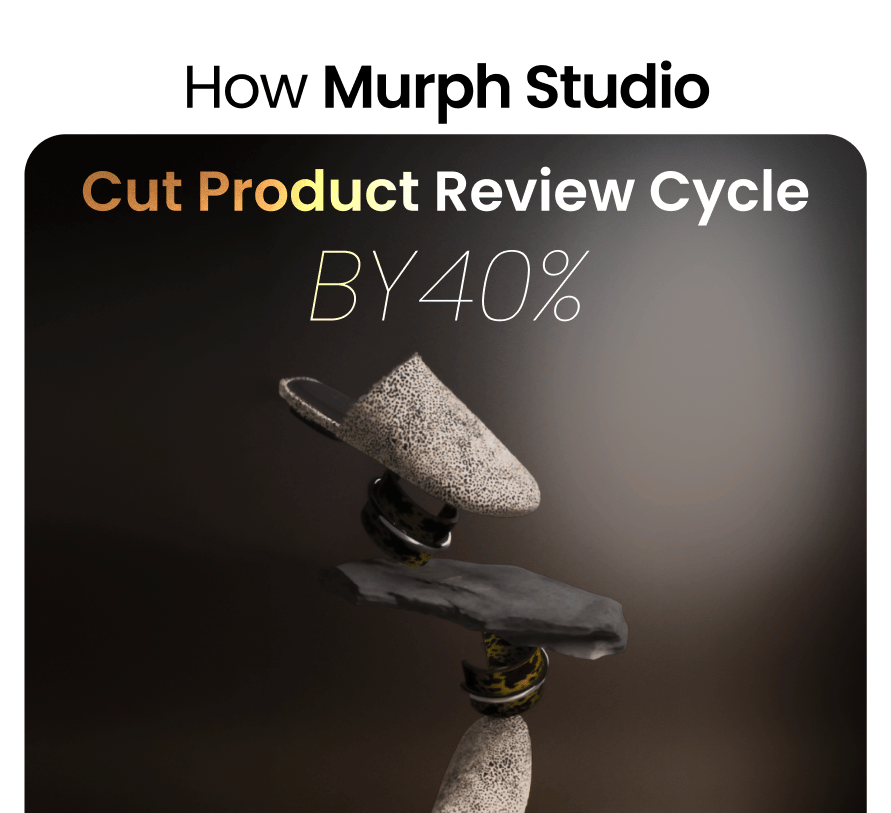 CLO-SET helps studios turn client reviews from a back-and-forth of static images into a shared 3D experience.
CLO-SET helps studios turn client reviews from a back-and-forth of static images into a shared 3D experience.
For a design studio, the product isn't finished when the garment is. It's finished when the client says so. And that's where time disappears: clients receive flat images or technical files they can't fully read, questions pile up over email and WhatsApp, and every revision means another round of exports and explanations.
Ana Carolina Barbosa knows both sides of that cycle. After graduating in Fashion Design, she spent years working with major retailers in Brazil, then left one of the country's largest to found Murph Studio, a São Paulo-based 3D studio that develops digital garments and product visuals for fashion brands. "My goal was to help clients solve the same problems I had seen firsthand every day," she says. The studio was founded to solve exactly those problems: development that took months, wasted materials, endless rounds of physical samples, and final products that fell short simply because time had run out.
Today, Murph Studio develops full collections digitally. Designs are built and simulated in CLO, while reviews, product information, and delivery run through CLO-SET. Three workflows carry the client-facing side.
01 — Product reviews clients can actually open
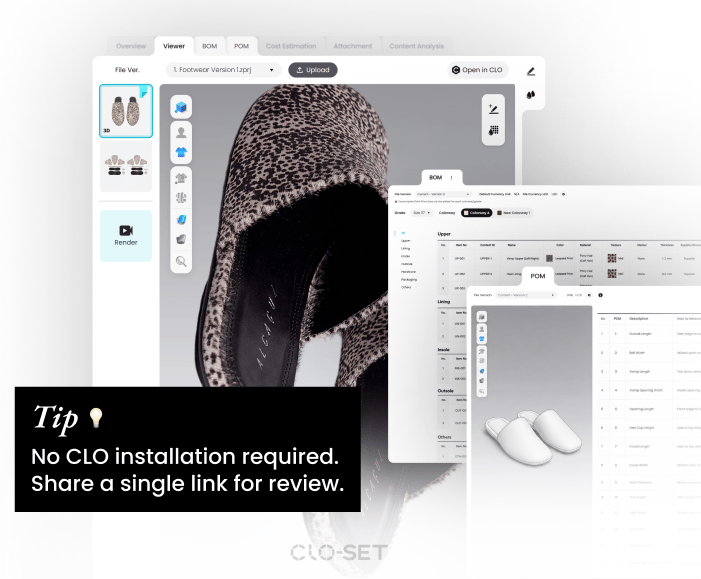 Instead of technical files or static images, Murph Studio's clients explore the garment itself: an interactive 3D viewer, 2D pattern viewer, tech packs, and product information in one place. Clients don't need a CLO installation or a license, just one shared link in a browser. "You don't need to convert files, or download and send them via email or WhatsApp," Carol says. "And there's no need to worry about whether you've sent the correct version." Clients often see their product truly finished for the first time in 3D, with the right fabric, right pattern, and right hardware, before anything is produced.
02 — Photorealistic renders, without pausing design work
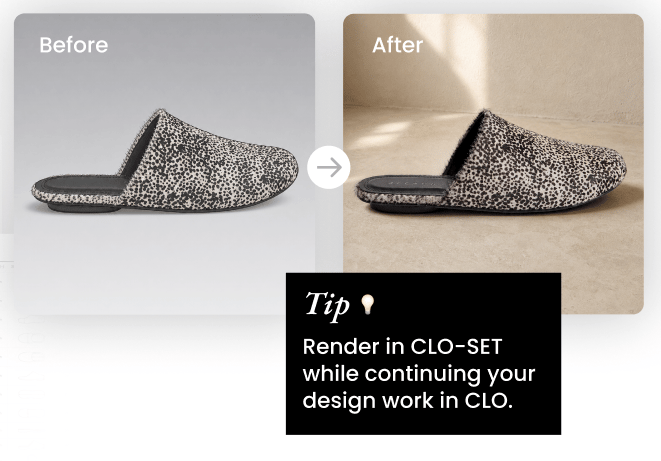 For decisions that need more than a simulation view, the studio generates photorealistic flat renders with CLO-SET's cloud rendering while design work continues in CLO. Renders communicate color, texture, and detail at a level clients can judge confidently, and the studio doesn't lose hours to local rendering.
03 — Feedback that stays on the product
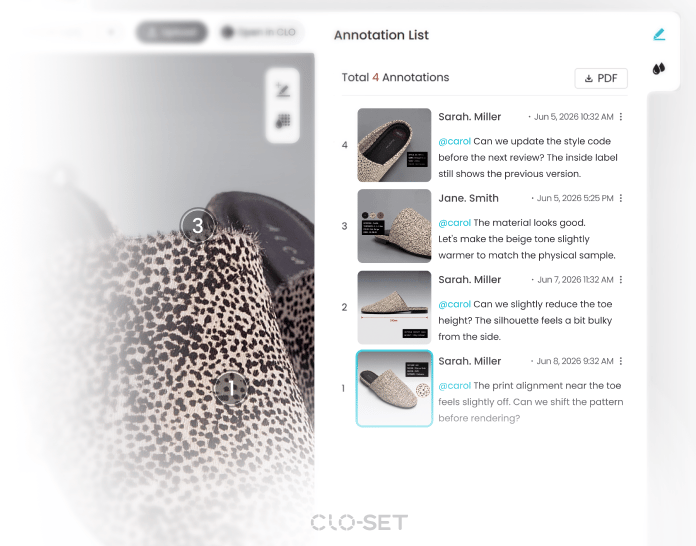 Comments and annotations attach directly to the latest version of the garment, not to a screenshot in an email thread. Every discussion stays organized and connected to the product as it evolves, so nothing gets lost between rounds or reopened after them.
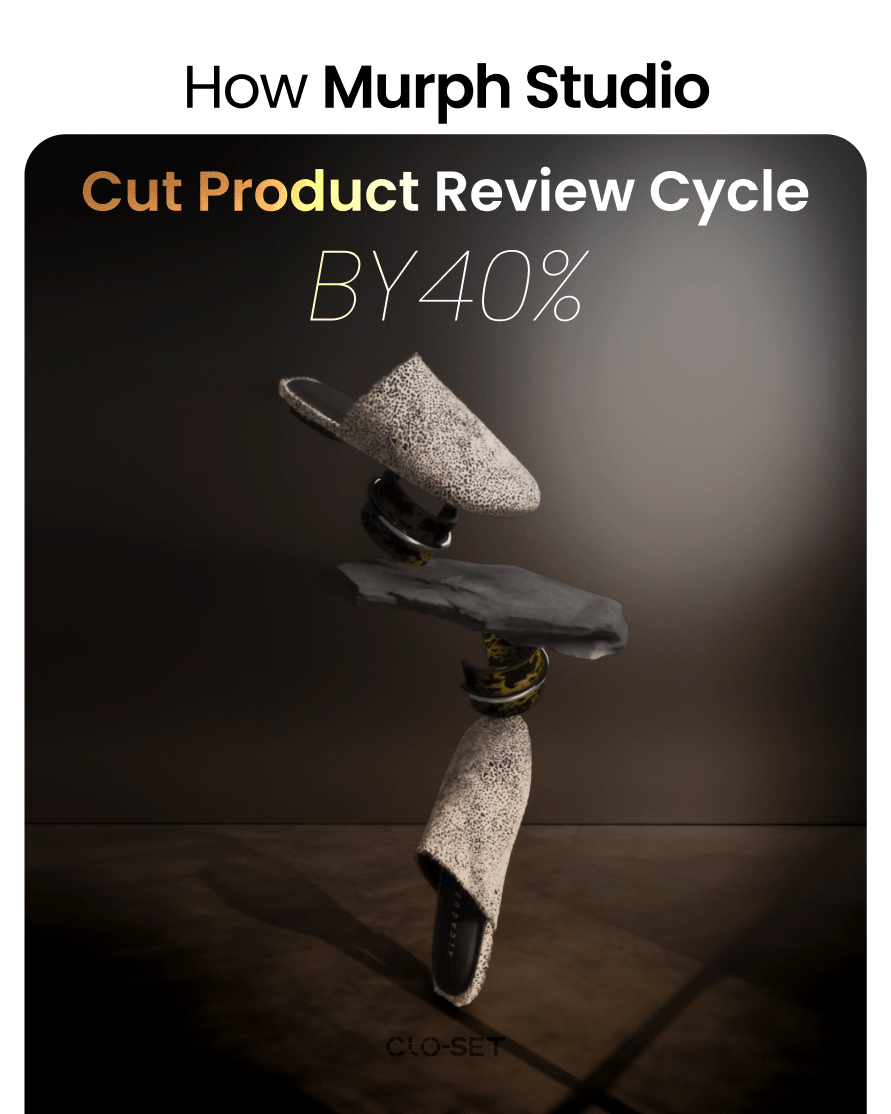
Together, these workflows reduced client review time by approximately 40%. "What used to take weeks to be seen in a physical sample can now be approved in minutes or hours on screen," Carol says. "Without CLO and CLO-SET, it would be impossible to maintain this level of precision and speed."
The result is less waiting and less back-and-forth, and clients can see the precision from the very first review.
Sigue leyendo
Ver todoWhat 8 Years of 3D Adoption Actually Delivers: 50% Lower Sampling Costs and 80% Faster Strike-Offs
How much does 3D garment simulation actually save a fashion business? For Australian fashion group APG & Co — the company behind Saba, Sportscraft and Jag — the answer in FY25 was a 50% reduction in

How Fadinha 3D Studio Reduced Review Cycles by 67% with Connected Product Development
CLO-SET helps teams keep assets, versions, and feedback connected throughout product development. In fashion product development, every style goes through multiple rounds of reviews, revisions, and ap
Top 5 3D Product Collaboration Tools for Fashion Brands (2026)
Ask a fashion team why they’re looking at 3D collaboration tools and the answer is rarely about 3D. It’s about the Tuesday a vendor built a sample from the version that got superseded on Monday, or th