如何管理和共享3D服装文件:时尚团队的实用工作流程
一件3D服装最初只是一个文件。然后是配色方案、版型修改、供应商样稿、销售团队渲染图——一个季度下来,一个款式就变成了散落在电子邮件、共享硬盘和某人桌面上的十五个文件。如果你的团队使用3D软件,文件混乱就不是存储空间的问题了。它会拖慢每一次审核,而且迟早会有人用错误的版本缝制样品。
简而言之:将所有 3D 资源集中在一个工作区,采用统一的命名和版本控制规范,集中管理面料和辅料库,并共享浏览器可查看的链接,而不是原始项目文件。衡量一个系统好坏的标准很简单——团队中的任何成员,包括供应商,都能找到最新版本并直接打开,无需安装任何软件。
为什么 3D 文件比平面文件更难管理
技术资料包 PDF 文件是独立的,而 3D 服装文件则不是。
大小。包含高分辨率纹理的项目文件通常会达到数百兆字节——太大,无法通过电子邮件发送,在普通共享驱动器上传输速度也很慢。
依赖关系。服装文件引用了面料物理预设、装饰、图形和头像。如果移动该文件时未包含其资源,则文件打开时会损坏。
版本不断增多。每次版型修改×配色×使用场景(设计、渲染、供应商交接)都会生成一个新的文件。三个款式几周内就可能变成五十个文件。
软件锁定。原始项目文件只能在创建它的 3D 工具中打开。销售人员、采购员和工厂通常没有相应的权限或培训。
通用云盘无法解决这些问题;它们可以存储文件,但无法预览文件、跟踪服装版本或管理资产依赖关系。因此,3D团队最终需要的是工作流程,而不仅仅是存储空间。
第一步:坚持使用单一的真理来源
确定每件服装的主版本存放位置——一个统一的工作区,而不是分散在多个硬盘和邮箱中。其他所有内容(发送给供应商的副本、渲染导出文件、存档文件)都由此生成。确保这一点的关键在于:如果文件不在工作区中,就等于不存在。审核、批准和交接都只参考这个中心副本,因此“哪个文件是最新的?”这个问题将不复存在。
步骤 2:给文件命名,以便日后查找。
命名规则只有足够简短,人们才会真正遵守。一个行之有效的模式是:
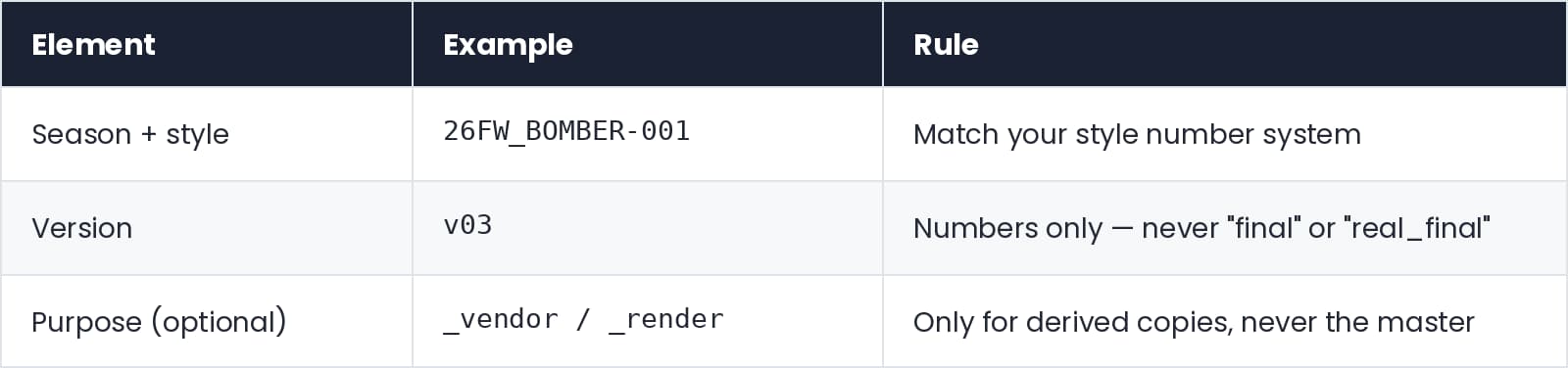 每次重大变更时,版本号都应向前更新,旧版本应保留(而非覆盖),以便追溯何时做出合适的版本选择。如果您的平台内置版本历史记录功能,则会自动执行此操作,文件名只需包含“季节 + 款式”即可。
步骤 3:集中管理面料和辅料库
3D团队中重复工作最多的不是服装,而是面料。如果每个设计师都拥有自己的面料文件夹,那么同一种棉斜纹布就会被重新制作十次,每次的物理设置都略有不同,最终用这些面料制作的服装版型也会有所差异。因此,应该维护一个共享的、经过审核的面料、辅料和图形库,并明确规定谁负责添加和审核新条目。新服装的设计应该基于这个库,而不是从零开始。(我们将在后面的视频中展示这在实际工作环境中是如何实现的。)
步骤 4:分享可查看的链接,而不是原始文件
审核服装的人通常不需要修改它——他们只需要查看服装,翻转它,放大查看某个接缝,然后留下评论。发送原始项目文件就显得多余,而且还会产生另一个多余的副本。建议分享一个基于浏览器的3D视图链接:
评论者无需安装软件或购买许可证即可查看服装的 3D 模型。
反馈将以评论的形式显示在服装上,而不是通过单独的电子邮件线程发送。
链接始终指向您分享的版本——无需在每次修订后重新附加。
对于外部合作伙伴来说,这也是更安全的方式:工厂可以在无需持有您的可编辑文件的情况下,以 3D 形式查看施工情况。
步骤 5:按角色设置访问权限
并非所有人都能看到所有内容,而能够编辑的内容就更少了。简单的权限划分就能满足大多数团队的需求:设计师可以编辑,内部审阅者可以评论,外部供应商只能查看与他们共享的内容。只需在工作区级别设置一次权限,而不是针对每个文件单独设置——文件级权限是信息泄露和错误频发的根源。
步骤 6:保持 3D 资产与产品数据连接
如果 3D 文件与其产品数据(例如物料清单、尺寸、配色方案)分离,每次迁移都需要手动重新描述。而当 3D 模型及其数据位于同一系统中时,服装文件就成为下游文档的源文件,而不是需要保持同步的另一个数据。我们曾撰文介绍过一个最清晰的例子:直接从 3D 服装生成技术包。
CLO-SET 如何处理这个问题
CLO-SET 是一个专为这种工作流程而构建的云工作空间。团队将 CLO 服装文件和相关资源上传到共享工作区,每个文件都配备一个基于浏览器的 3D 查看器——合作者和供应商无需 CLO 许可证即可查看服装。每个文件都有版本历史记录,评论直接附加到资源上,访问权限在工作区级别进行控制。由于服装数据已经结构化,因此可以从同一文件生成技术包,而无需手动重新构建。
在实践中,它看起来是这样的——将面料、辅料、版型和模型整理到工作区中,对其进行分类以便搜索,并在服装开发过程中直接将其导入 CLO:
[免费试用 CLO-SET ]
常问问题
3D服装文件有哪些格式?
原生项目格式(例如 CLO 的 .zprj/.zpac)包含完整的可编辑服装数据——包括版型、面料和模拟设置。而像 glTF、OBJ 或 FBX 这样的交换格式则只包含可供其他工具使用的视觉模型,会丢失可编辑的服装数据。请将原生文件作为主文件保存;将导出文件视为派生副本。
如何与没有3D软件的人分享3D服装设计图?
使用带有基于浏览器的 3D 查看器的平台,并发送链接——收件人可以在任何浏览器中旋转、缩放和评论服装。屏幕截图和旋转视频可以用于快速查看,但它们无法回答 3D 查看器可以回答的后续问题。
我们应该保留多少个版本?
在合理范围内,尽可能保留所有版本——存储成本远低于重新协商版本选择的成本。关键在于版本顺序要清晰,并且最新版本必须明确无误。具有自动版本历史记录功能的平台无需遵循任何文件命名规则即可处理版本问题;而在共享驱动器上,只有强制执行命名规则才能确保版本一致性。
继续阅读
查看全部5 3D Product Collaboration Tools for Fashion Brands (2026)
Ask a fashion team why they are looking at 3D collaboration tools and the answer is rarely about 3D alone. The challenge often appears when multiple teams and external partners need to review the same garment, follow revisions, and keep feedback connected to the correct product version. 3D collaboration platforms approach that problem in different ways. Some focus on fashion product development,
3D Sample Review vs Physical Sample Rounds: Cost, Lead Time, and When You Still Need the Real Thing
The pitch for 3D sampling usually overshoots. Somebody demos a garment rotating in a browser and the conclusion lands as “we can stop making samples,” which isn’t true and sets the project up to be judged against a promise it can’t keep. The defensible version of the argument is narrower: some of your sample rounds exist to answer questions that don’t require fabric. Those are the rounds 3D takes,
Pre-Production Sample Review: What to Check, Who Signs Off, and When It Happens
By the time a pre-production sample arrives, the interesting decisions are over. The silhouette was settled at proto. The fit was settled two rounds ago. What’s left is the dullest and most expensive question in the whole calendar: can this factory, on this line, with these materials, make this garment correctly, over and over? Approve it and bulk fabric gets cut. Approve it carelessly and you