How an Independent Designer Gets Samples Right the First Time with CLO & CLO-SET
Can one designer develop an entire collection from first sketch to factory-ready samples, alone? For Lane Odom, founder of Brooklyn-based Vane Studios, the answer this season was yes, with a result most production teams rarely see: every piece was cut once and sewn once, with no repeated sampling rounds and no back-and-forth over unclear specs. He designed in CLO, managed every version and asset in CLO-SET, and handed his sample maker a tech pack generated straight from his 3D files.
The result is impressive. But the more useful story, if you design alone, is how the work was arranged so that one person could do it at all. Odom ran the full fashion product development cycle himself, from planning and design through development to physical production, work that most brands split across several teams.
[Watch the Full Story Behind Lane Odom’s Collection]
What results did a one-person studio get from using a 3D-first workflow?
Vane Studios is an independent label that draws on archival imagery of American style, from jazz-era tailoring to Cotton Club-era silhouettes, and reinterprets it as an evolving American heritage. Odom designs, patterns, and grades the entire collection virtually by himself, six years into working in CLO. His latest line demonstrates the direct impact of that process:
• Cut once, sewn once. The entire collection was sampled right on the first physical make, where several rounds per garment had been the norm.
• Around 50 design iterations at zero fabric cost. All exploration happened in 3D before any pattern was printed.
• A factory handoff with no ambiguity. Auto-generated tech packs gave the sample maker exact measurements and trims, and gave the designer a cost breakdown before production started.
• Instant grading for non-standard sizing. Patterns scaled to a 6’4" model with every proportion intact, without manual redrafting.
How do you make 50 design decisions before cutting fabric once?
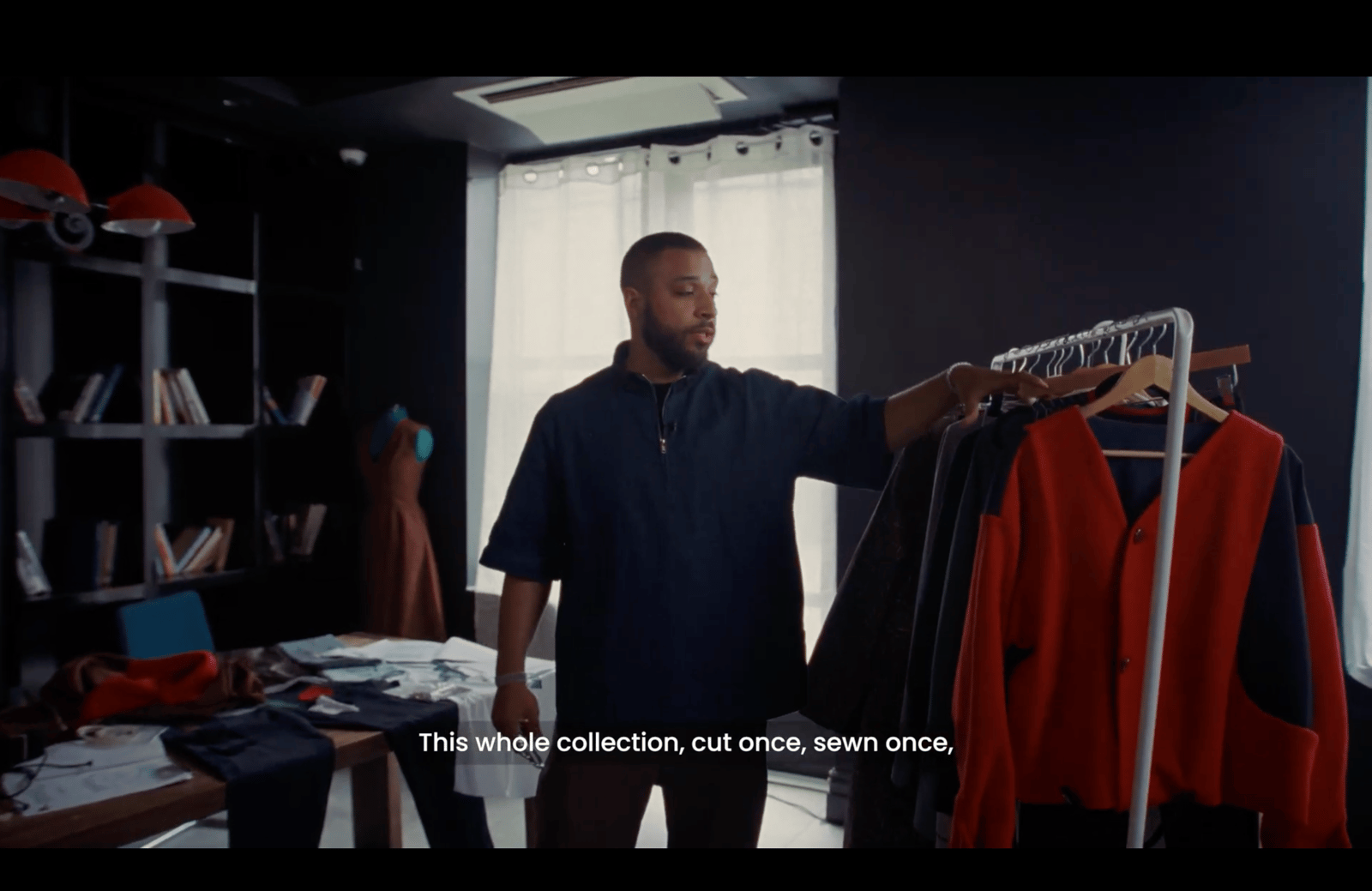
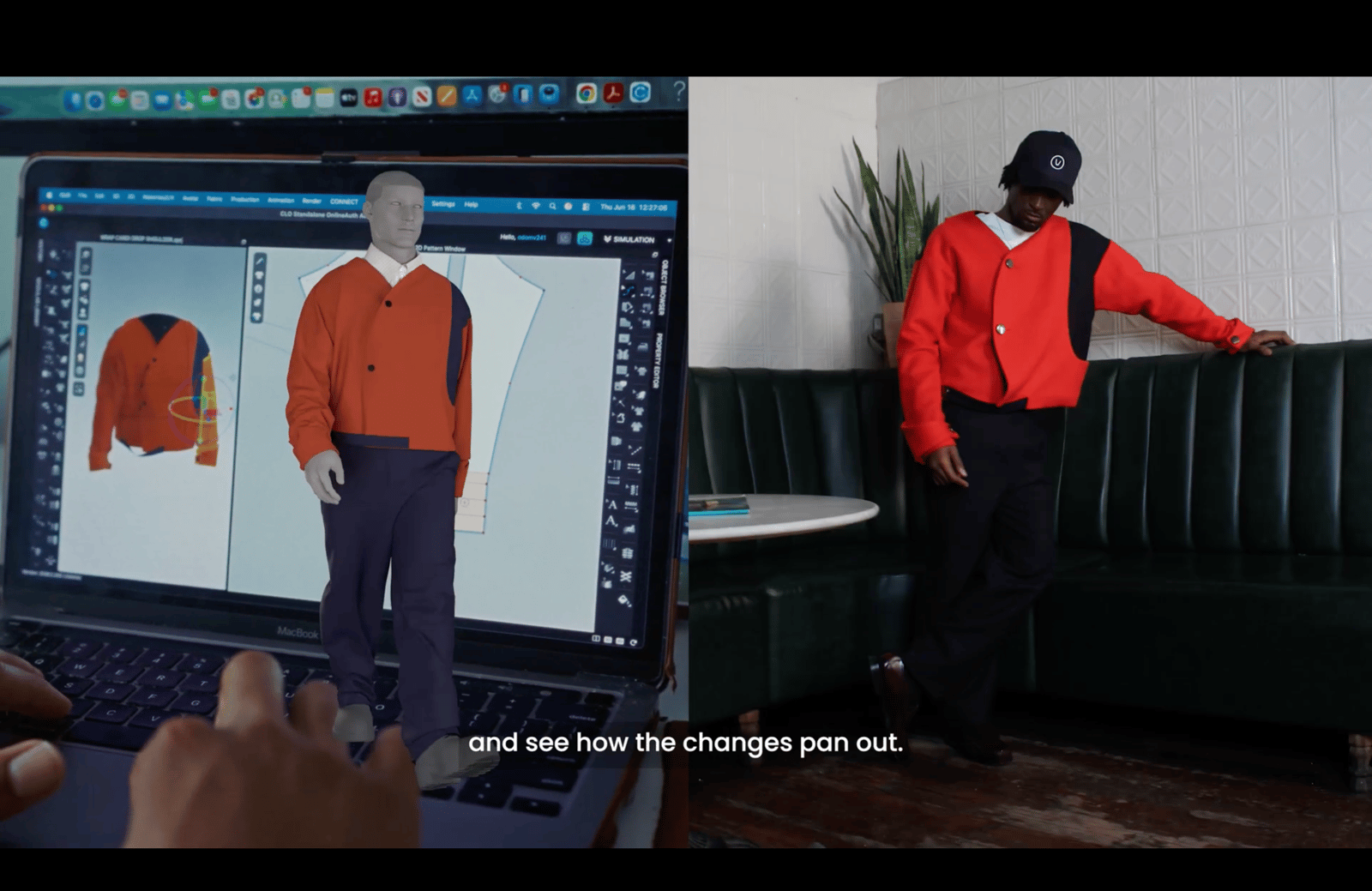
Odom starts his day at 5:30 AM in collection-building mode, iterating garments in CLO. For one complicated piece, he went through about 50 versions digitally, adjusting drape, proportion, and construction on a 3D avatar instead of on muslin. By the time a pattern is printed, the design decisions are already made.
“Ultimately, CLO and CLO-SET allow me to try more and make more decisions earlier. That helps me be the designer I want to be,” Odom says.
If you still test every idea in fabric, this is the part worth sitting with. Every design decision tested physically means another cut, another sew, another day. The 50 digital versions cost nothing but time at a screen, and the one physical sample that follows becomes a confirmation, not an experiment. Moving these decisions to the front of the fashion product development process is what makes the later stages predictable.
How does a solo designer keep 50 versions organized?
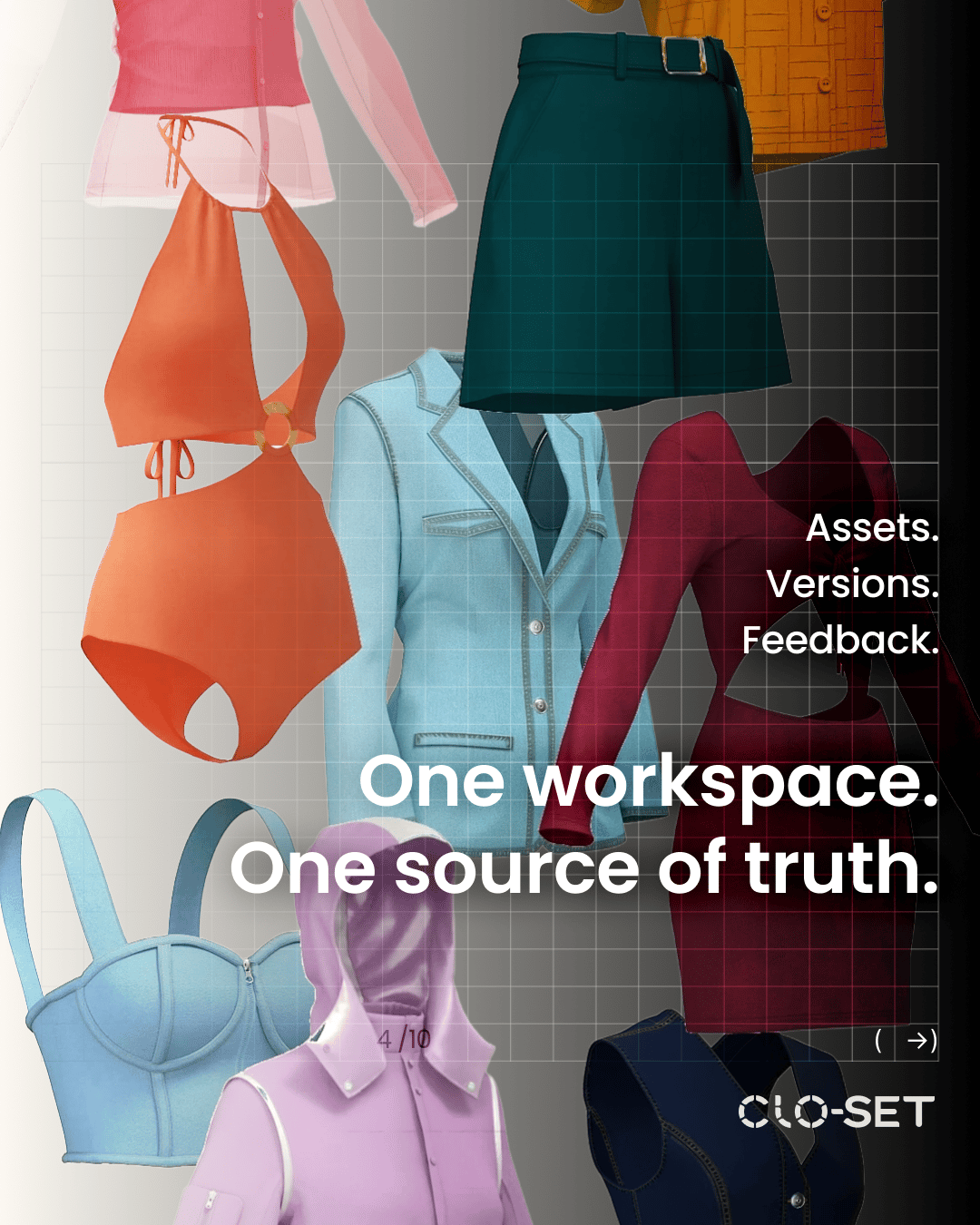
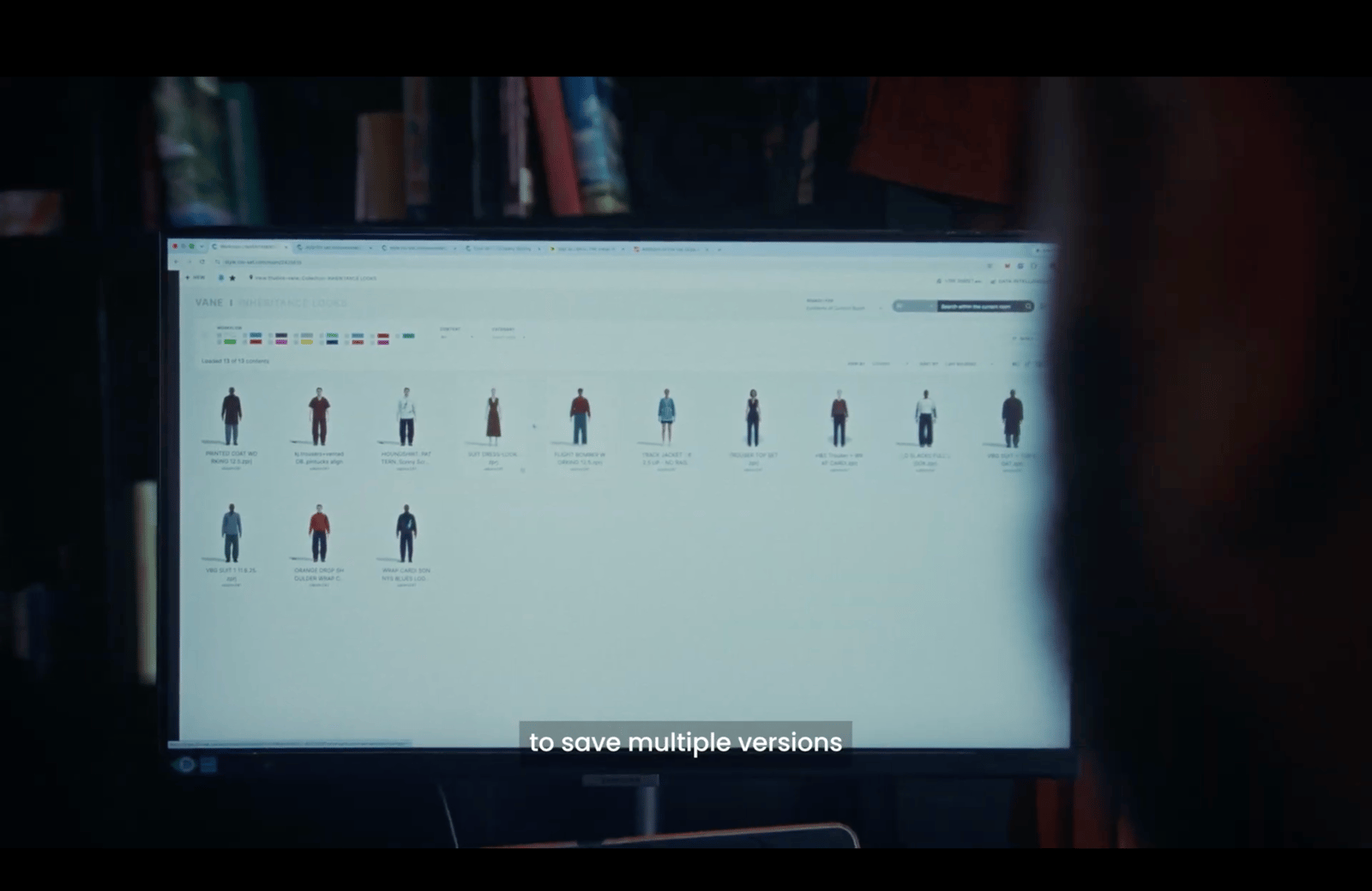
Every iteration gets saved to CLO-SET. Odom keeps multiple versions of each garment file in one place, so the full history of a design, from first draft to approved sample, stays organized and retrievable. His entire collection lives there as browsable 3D assets: suit dresses, flight bombers, track jackets, trouser sets, each with its colorways and revision trail.
In fashion product development, this is the stretch where a design goes from first idea to the version that's ready to sample. In CLO-SET, each version can be reviewed in the 3D viewer without reopening the source file.
For a solo designer, this replaces the folder chaos that usually swallows old versions. For a team, it means everyone pulls from the same source of truth.
What does a factory-ready tech pack change at the workshop?
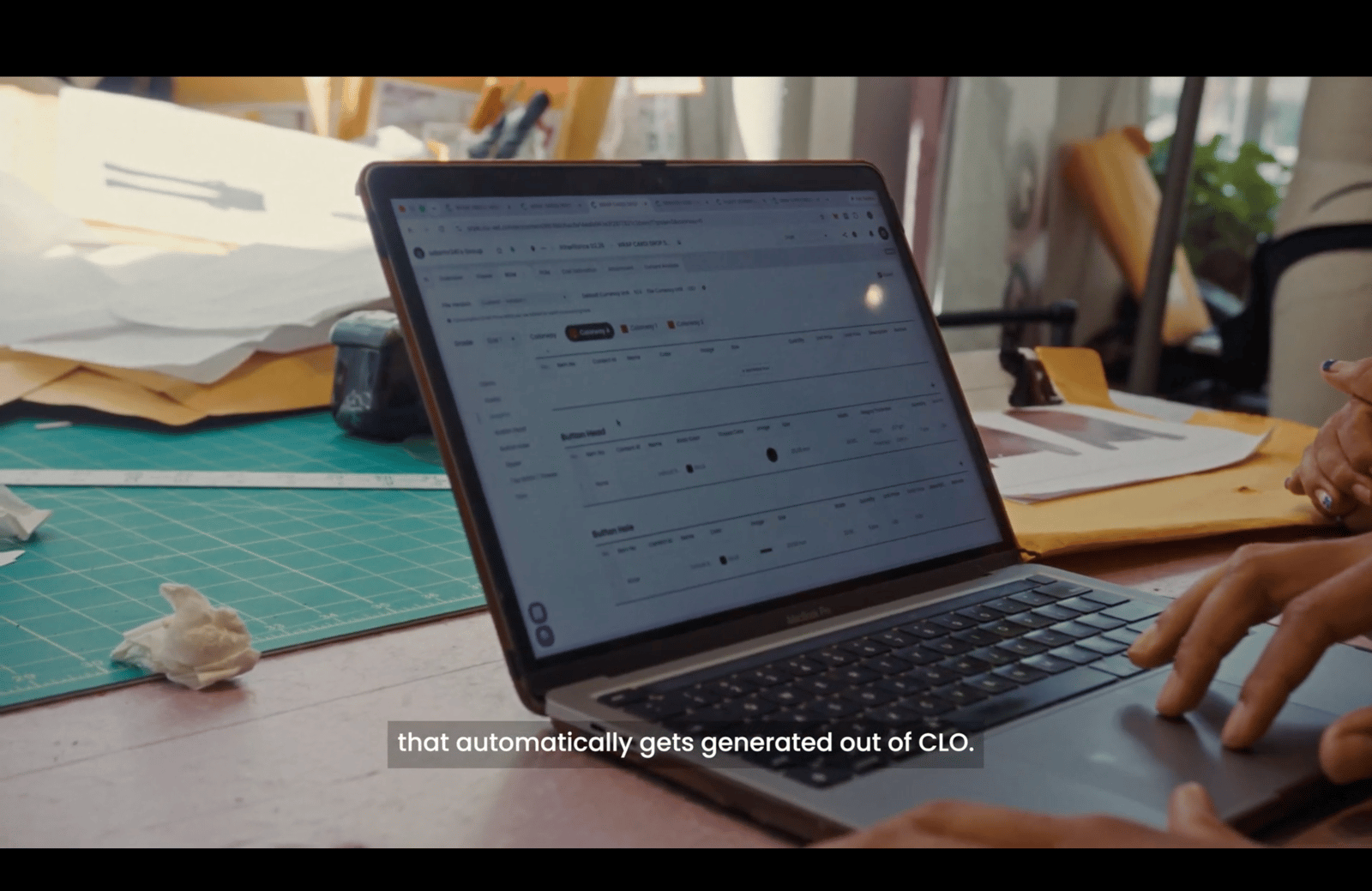
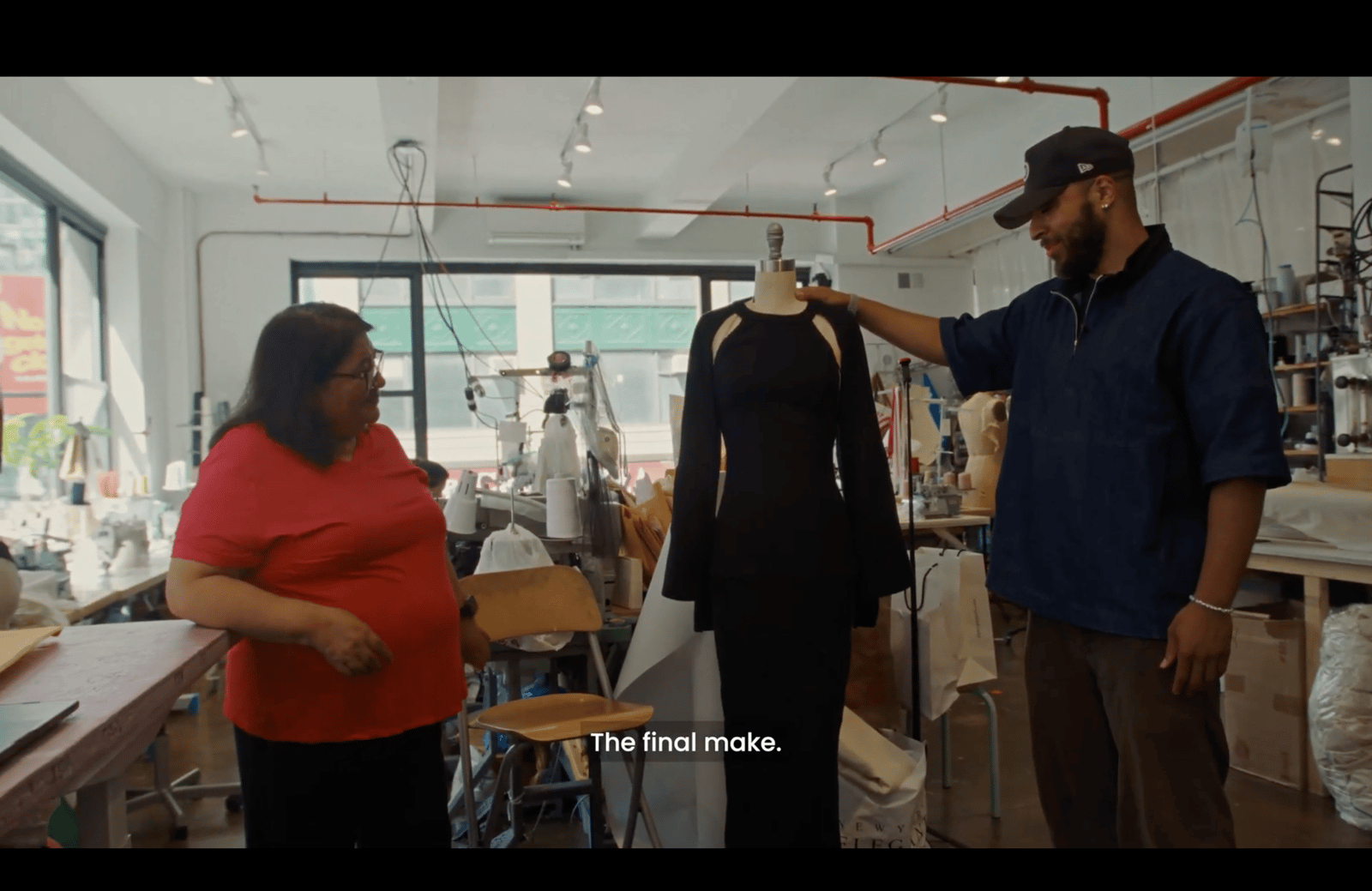
The first physical sample is where fashion product development moves from screen to fabric, and where unclear specs get expensive. When Odom hands patterns to Zoila, his sample maker in Manhattan’s Garment District, he doesn’t hand over a sketch and a verbal explanation. He opens the tech pack that CLO-SET generates automatically from his CLO file.
The tech pack gives the workshop the exact button size, the buttonhole measurement, button head specs, and every trim going into the garment. It also gives Odom a cost breakdown covering fabric, elastic, buttons, zippers, labor, and transportation before production starts.
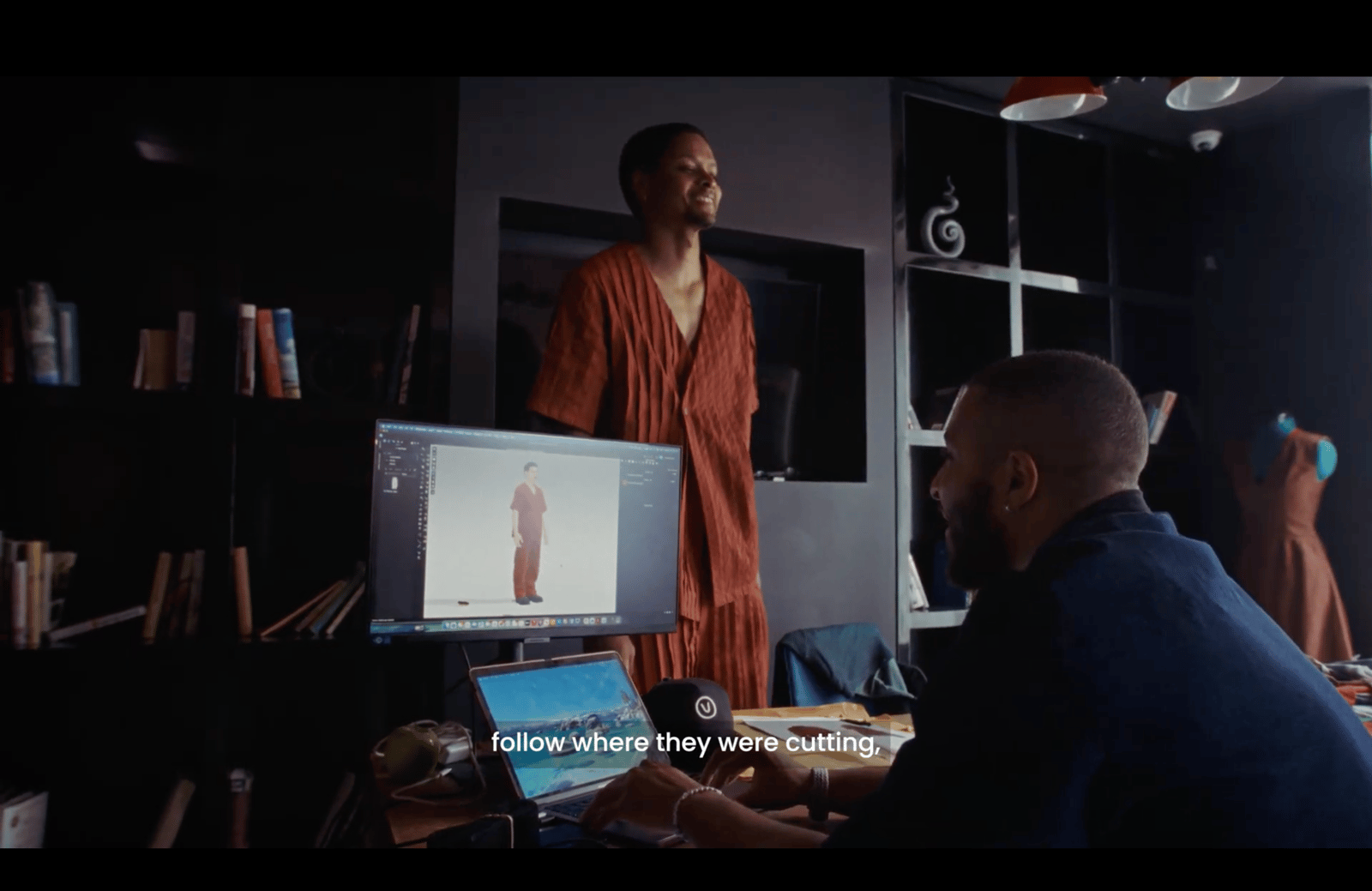
The collection’s hardest piece put that spec to the test: a pleated look with dozens of pintucks. Odom mapped every pintuck flat on the pattern as straight lines and sized everything digitally before printing, so the workshop could follow the lines where they were cutting without interpreting the construction themselves. This matters because factory communication is where solo-designer budgets usually leak. A sample maker needs exact measurements and placements, and when those live in the designer’s head or in scattered files, the workshop fills the gaps with guesses, and guesses become extra sampling rounds. Keeping the 3D asset, its versions, and the tech pack in one shared place means the workshop works from the same information the designer does.
How do you grade for a 6’4" model without redrafting?
The collection needed to fit Carmese, a model well outside standard sizing. Instead of redrafting patterns manually, Odom used the auto grading tool to grade the pattern quickly while keeping every proportion the same, and the garment went to the fitting without any manual adjustments.
The sample maker’s verdict
Numbers reported by a designer about his own workflow deserve a second opinion, and the closest thing to an external assessor in a sampling story is the person who had to sew it.
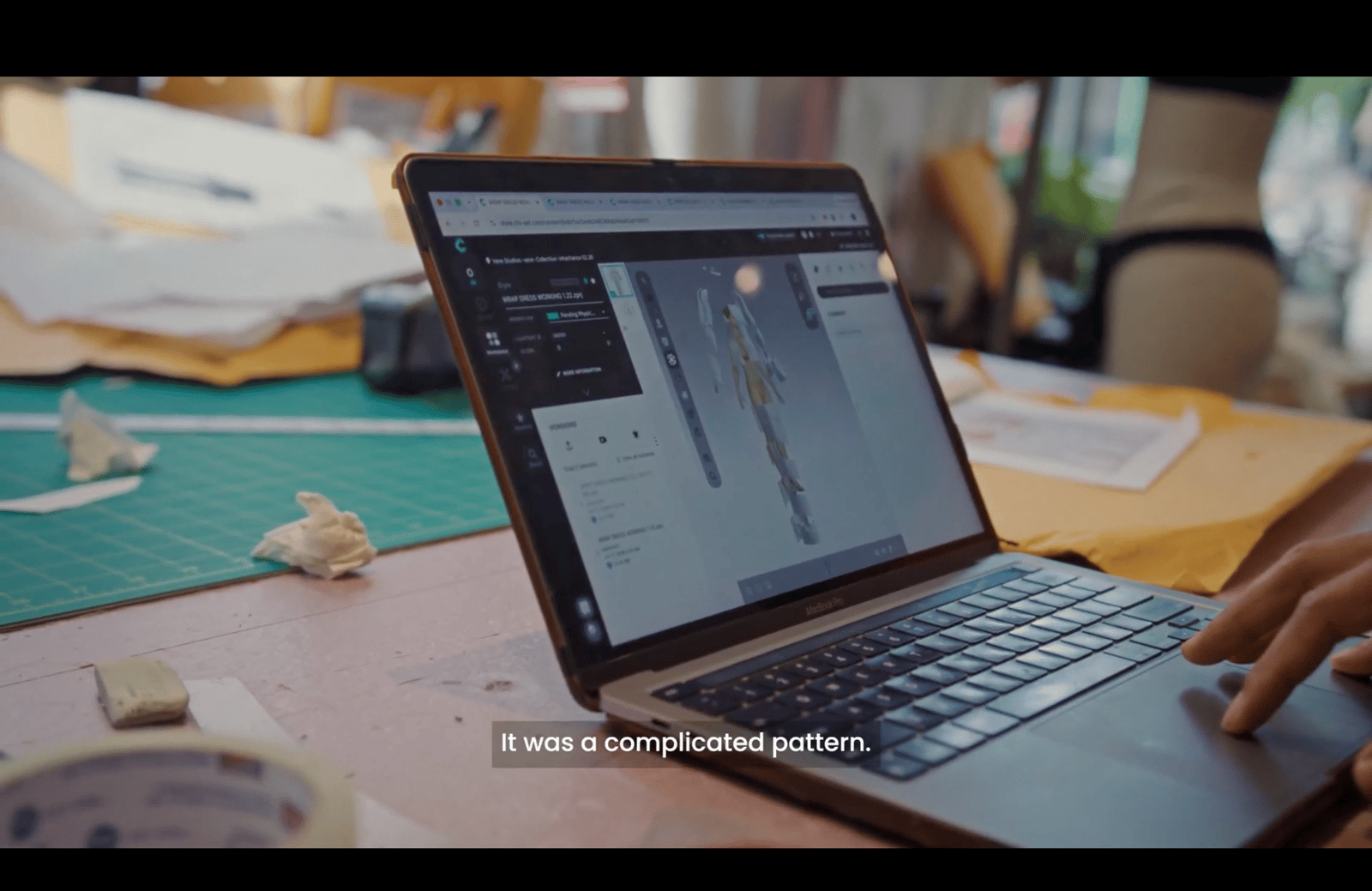
“It was a complicated pattern,” Zoila says of the final make. “I feel good when I put it on the mannequin. It looked like it did in 3D.”
The final collection, designed, patterned, graded, and costed by one person, was cut and sewn in New York.
What can other designers borrow from this?
Three moves in Odom's workflow transfer to any studio, whatever its size, and each maps to a stage of fashion product development.
Iterate before you print. Exhaust the cheap medium first. Fifty digital versions and one physical sample beats three physical samples arrived at by guesswork, and your eye for drape and proportion works the same on an avatar as on a form. Where the line between digital and physical rounds falls is a longer question, and we mapped it in 3D sample review vs physical sample rounds.
Keep every version in one destination. The value shows up months later, when a production question needs the exact state of a design from March, and it’s still there.
Hand the workshop a spec, not a sketch. A tech pack generated from the garment file carries the measurements the sample maker actually needs. The mechanics are covered in how to automatically generate a fashion tech pack from a 3D garment.
And Odom’s own advice for making the move: “Don’t try and overhaul your entire process in one night. Set time aside to practice with 3D, and have fun with it. And then you’ll realize you don’t need a huge team to build a collection.”
Frequently asked questions
What is CLO-SET?
CLO-SET is a cloud platform for fashion product development and digital collaboration. It stores and version-controls 3D garment files from CLO, auto-generates tech packs with measurements, trims, and cost breakdowns, and lets designers share exact specifications with factories and sample makers.
How does CLO-SET support the fashion product development process?
It connects the stages that usually live in separate tools. During planning and design, 3D garments from CLO are saved as browsable assets. During development, every version is stored and reviewable in the 3D viewer, so teams and partners discuss the same file. For sampling, the tech pack generated from that file gives the sample maker exact specs and costs before the first physical sample is made.
How does CLO-SET reduce sampling rounds?
Designers iterate in 3D with CLO before cutting fabric, then hand factories an auto-generated tech pack with exact specs: button sizes, buttonhole measurements, trims, and placement lines. Fewer guesses at the workshop mean fewer physical samples. Vane Studios sampled an entire collection with one round per garment.
Can CLO-SET generate tech packs automatically?
Yes. Tech packs are generated from the CLO garment file and include measurements, trim specifications, and itemized costs covering materials, labor, and transportation, updating from the source 3D file.
Does CLO-SET handle version management?
Yes. Multiple versions of a garment file are saved in one place, keeping the full revision history of each design organized and shareable. For brands working with vendors, CLO-SET also manages the steps that follow in fashion product development, including sample approvals and production requests, so both sides work from the same file and status. This is where teams typically see ROI: fewer sampling rounds, faster and more accurate reviews and approvals, and less back-and-forth between brand and vendor.
Who is CLO-SET for?
Fashion brands, manufacturers, and vendors that design in 3D and need a shared workspace for product development, from global teams working across multiple partners to independent designers like Odom. Teams use it to plan the season, manage versions of each style, share assets, and send production-ready specs to partners in one place.
继续阅读
查看全部8 年 3D 转型带来的实际成效:打样成本降低 50%,印花打样提速 80%
3D服装模拟究竟能为时尚企业节省多少成本? 对于澳大利亚时尚集团 APG & Co(旗下拥有 Saba、Sportscraft 和 Jag 品牌)而言,2025 财年的答案是:开发和试身打样成本降低了 50%,印花打样时间缩短了 80%,且旗下三个品牌 100% 的款式都在 CLO 和 CLO-SET 上进行开发和管理。这些显著成果使 APG & Co 入围了 2026 年澳大利亚时尚产业大奖“最佳技术应用”(Best Use of Technology at the 2026 Australian Fashion Industry Awards) 的最终候选名单。 这些数据令人印象深刻。但对于任何正在评估数字产品开发的品牌来说,更有价值的故事在于这些数据是如何得来的——因为它们并非仅仅归功于设计软件本身。 品牌可以从3D服装模拟中获得哪些结果?

Murph Studio 如何利用可分享的3D产品评论将客户审款速度提升 40%
CLO-SET 帮助不少工作室将客户反馈从静态图的来回沟通转变为可共享的3D审款体验。 对设计工作室而言,产品并非在服装完成时才算完成,而是在客户确认后。而时间也正是在这里消耗:客户收到的是他们无法完全理解的平面图或技术文件,问题在邮件和WhatsApp上堆积如山,每一次修改都意味着又一轮的导出和解释。 Ana Carolina Barbosa 深谙这一循环的正反两面。从时装设计专业毕业后,她曾在巴西多家大型零售商工作多年,最终离开巴西最大的零售商之一,创立了位于圣保罗的3D工作室 Murph Studio,专门为时尚品牌开发数字服装和产品视觉。“我的目标是帮助客户解决我每天都亲眼目睹的那些问题,”她说。这家工作室正是源于这些问题而诞生的:耗时数月的开发、材料浪费、没完没了的实样制作——最终产品因时间紧迫而达不到预期效果。 如今,Murph Studio
Fadinha 3D Studio 如何通过关联的产品开发将产品评审周期缩短 67%
CLO-SET 帮助团队在整个产品开发过程中保持文件资产、文件版本和评审反馈之间的互联。 在时尚产品开发中,每款产品在投入生产前都要经过多轮审款、改款和审批。随着款式数量、相关人员和审核流程次数增加时,维护 单一数据源 就变得愈发重要。如果缺乏关联的产品信息,即使是小的延迟,如翻找最新文件或重新理解过往决策等,都可能会拖慢产品开发进度、延长审款周期,并给团队间带来不必要的重复沟通。 Fadinha 3D Studio 的创始人兼时装设计师 Monica 也面临着这些挑战,因为她的作品系列和客户项目都在不断增加。管理大量款式意味着在每个开发阶段都需要协调渲染图、材料参照、客户反馈和设计修改等工作。随着更多项目人员的参与,确保每个人都了解最新的产品信息就变得与设计工作本身同等重要。